
You are using an out of date browser. It may not display this or other websites correctly.
You should upgrade or use an alternative browser.
You should upgrade or use an alternative browser.
Forgotten great players
- Thread starter Gol15
- Start date

Argentinians and Serie A (Part II): Omar Sívori.
[SIZE=.92857rem]Argentinians and Serie A (Part II): Omar Sívori – [/SIZE]
[SIZE=.92857rem]June 23, 2015thegentlemanultra[/SIZE]
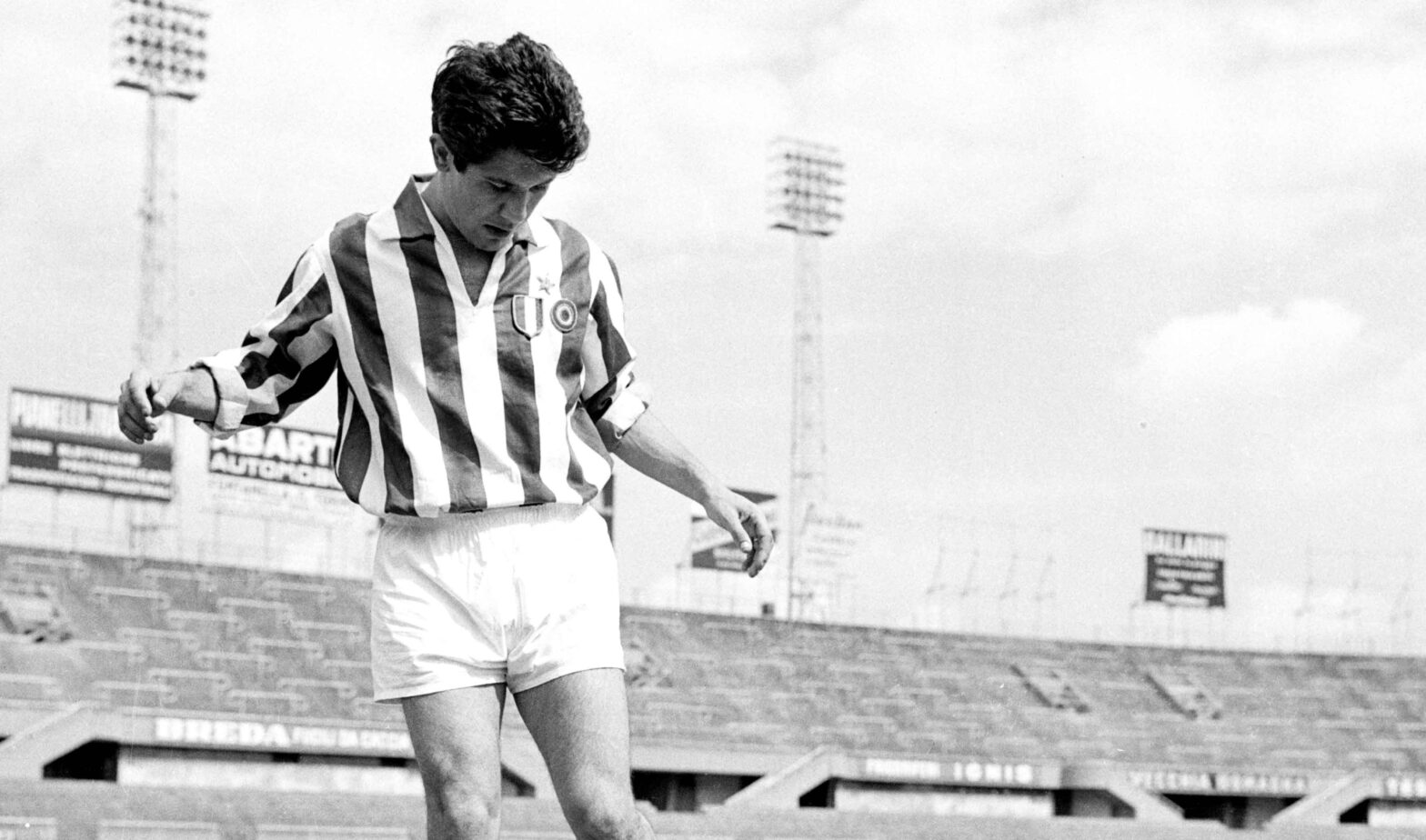
In 1957, Juventus opened their cheque book and signed Argentinian inside forward Omar Sívori for a world record transfer fee, remunerating River Plate with a staggering ten million pesos (£91,000).
Italy, now free from Fascism, was experiencing an economic boom; whilst Argentina was still in political turmoil after president Juan Perón had been overthrown in a coup d’état led by the Revolución Libertadora two years previously. The lure of earning a big salary in Italy was still bringing top Argentinian players to Serie A, and the same season saw two other talented Argentines recruited after Antonio Angelillo was signed by Inter and Humberto Maschio by Bologna.
Together, the three were nicknamed the “trio of death” thanks to their intrepid attitude and ruthless finishing skills which saw them amass a combined 299 Serie A goals in 660 appearances.
Like the 1934 World Cup Oriundi before them, their Italian heritage allowed them to play for the Italian national team, despite having previously played for Argentina. La Albiceleste; who were in with a good chance of winning the 1958 World Cup after their triumph at the 1957 South American Championship, played without their three heroes who had departed for Italy.
The Argentines were duly humiliated in the tournament and the players, regarded as deserters and traitors, were banned from representing Argentina in the future. They went on to be capped for the Italian national side, before the ban on playing for more than one country was imposed not long after.
Insult would later be added to injury when in 1961, Sívori scored twice for Italy in their 4-1 friendly win over Argentina in Florence. Nicknamed Cabezón (big head), Sívori’s personality was as immense as his footballing skill. At Juventus he played in an attacking trident made up of the clubs second all-time top scorer Giampiero Boniperti and Il Gigante Buono (The Gentle Giant), Englishman John Charles.
With 167 goals for the Bianconeri, Sívori joins Boniperti among their all-time top scorers, sitting in fifth spot. The prolificacy of this front three led to Scudettowins in 1958, 1960 and 1961 for the Turin club. Boniperti remembers Sívori’s ‘winning mentality’ fondly, recalling his attempt to show a lack of fear to his opponents by playing with his socks rolled down.
Standing at just 5’5”, Sívori terrorised his opponents with his speed, dazzling ball control and for outwitting his opponents with his penchant for a nutmeg. His sublime skill and dominant displays (he scored six goals in one match against Inter), earned him the European Footballer of the Year award in 1961. This award would not be won by another Argentinian until Lionel Messi was voted winner in 2009. But by then, Sívori was representing his adopted nation of Italy, since he had earned Italian citizenship in the same year.
Often in trouble with referees, his ungoverned personality led to the end of his time at Juventus in the 1964-65 season after he fell out with coach Heriberto Herrera. However, by this time, he had firmly cemented his place in the hearts of the Vecchia Signora faithful. Sívori did not enjoy anything like the same kind of success in his subsequent move to Napoli. He spent four seasons with the Azzuri, ravaged by injury and lack of discipline, letting his fiery temper get the better of him. He was released after his final game; ironically against Juventus, when he was banned for kicking Erminio Favalli.
After the curtain had fallen on his playing career, Sívori became a coach in his homeland of Argentina and even coached the national team between 1972 and 1973. His emblematic status in Italy also saw him play himself in two films; Idoli controluce in 1965 and Presidente del Borgorosso Football Club in 1970.
His life sadly came to a premature end when he died from pancreatic cancer in 2005, aged 69. However he has undoubtedly left a unique legacy behind him. His sale from River Plate to Juventus raised enough money for the Argentinian club to build the fourth and final stand of the iconic El monumental stadium in his name.
As an oriundo, he became one of the select few in footballing history that have played for more than one country at international level, and his achievements for Juventus has seen him go down in history as one of their greatest ever players. His short stature, audacious attitude and his brilliance on the field has naturally seen him compared to Diego Maradona, himself an Argentine export who made history in Serie A.
By Chloe Beresford: @ChloeJBeresford
[SIZE=.92857rem]Argentinians and Serie A (Part II): Omar Sívori – [/SIZE]
[SIZE=.92857rem]June 23, 2015thegentlemanultra[/SIZE]
In 1957, Juventus opened their cheque book and signed Argentinian inside forward Omar Sívori for a world record transfer fee, remunerating River Plate with a staggering ten million pesos (£91,000).
Italy, now free from Fascism, was experiencing an economic boom; whilst Argentina was still in political turmoil after president Juan Perón had been overthrown in a coup d’état led by the Revolución Libertadora two years previously. The lure of earning a big salary in Italy was still bringing top Argentinian players to Serie A, and the same season saw two other talented Argentines recruited after Antonio Angelillo was signed by Inter and Humberto Maschio by Bologna.
Together, the three were nicknamed the “trio of death” thanks to their intrepid attitude and ruthless finishing skills which saw them amass a combined 299 Serie A goals in 660 appearances.
Like the 1934 World Cup Oriundi before them, their Italian heritage allowed them to play for the Italian national team, despite having previously played for Argentina. La Albiceleste; who were in with a good chance of winning the 1958 World Cup after their triumph at the 1957 South American Championship, played without their three heroes who had departed for Italy.
The Argentines were duly humiliated in the tournament and the players, regarded as deserters and traitors, were banned from representing Argentina in the future. They went on to be capped for the Italian national side, before the ban on playing for more than one country was imposed not long after.
Insult would later be added to injury when in 1961, Sívori scored twice for Italy in their 4-1 friendly win over Argentina in Florence. Nicknamed Cabezón (big head), Sívori’s personality was as immense as his footballing skill. At Juventus he played in an attacking trident made up of the clubs second all-time top scorer Giampiero Boniperti and Il Gigante Buono (The Gentle Giant), Englishman John Charles.
With 167 goals for the Bianconeri, Sívori joins Boniperti among their all-time top scorers, sitting in fifth spot. The prolificacy of this front three led to Scudettowins in 1958, 1960 and 1961 for the Turin club. Boniperti remembers Sívori’s ‘winning mentality’ fondly, recalling his attempt to show a lack of fear to his opponents by playing with his socks rolled down.
Standing at just 5’5”, Sívori terrorised his opponents with his speed, dazzling ball control and for outwitting his opponents with his penchant for a nutmeg. His sublime skill and dominant displays (he scored six goals in one match against Inter), earned him the European Footballer of the Year award in 1961. This award would not be won by another Argentinian until Lionel Messi was voted winner in 2009. But by then, Sívori was representing his adopted nation of Italy, since he had earned Italian citizenship in the same year.
Often in trouble with referees, his ungoverned personality led to the end of his time at Juventus in the 1964-65 season after he fell out with coach Heriberto Herrera. However, by this time, he had firmly cemented his place in the hearts of the Vecchia Signora faithful. Sívori did not enjoy anything like the same kind of success in his subsequent move to Napoli. He spent four seasons with the Azzuri, ravaged by injury and lack of discipline, letting his fiery temper get the better of him. He was released after his final game; ironically against Juventus, when he was banned for kicking Erminio Favalli.
After the curtain had fallen on his playing career, Sívori became a coach in his homeland of Argentina and even coached the national team between 1972 and 1973. His emblematic status in Italy also saw him play himself in two films; Idoli controluce in 1965 and Presidente del Borgorosso Football Club in 1970.
His life sadly came to a premature end when he died from pancreatic cancer in 2005, aged 69. However he has undoubtedly left a unique legacy behind him. His sale from River Plate to Juventus raised enough money for the Argentinian club to build the fourth and final stand of the iconic El monumental stadium in his name.
As an oriundo, he became one of the select few in footballing history that have played for more than one country at international level, and his achievements for Juventus has seen him go down in history as one of their greatest ever players. His short stature, audacious attitude and his brilliance on the field has naturally seen him compared to Diego Maradona, himself an Argentine export who made history in Serie A.
By Chloe Beresford: @ChloeJBeresford
Last edited by a moderator:
Sad news of this Real Madrid recent passing.PACO GENTO: THE HABITUAL EUROPEAN CUP WINNER
29/12/2015 by GIRI ANANTHA
www.thesefootballtimes.co

FRANCISCO GENTO MAY NOT BE A NAME that many of today’s younger supporters will recognise, however he is one of the most successful and decorated players of all time at club level.
Though he didn’t know it at the time, Francisco Gento’s sixth European Cup winner’s medal in 1966 would create a record that still stands nearly half a century later.
Paco, as he was known, also collected a record 12 La Liga titles with the great Real Madrid sides of the 1950s and 1960s. He also played in European club finals in three different decades, a wholly rare achievement. He achieved it feat by playing in European Cup finals in the 1950s and 1960s, and he was still there when he played for Real Madrid against Chelsea in the 1971 European Cup Winners’ Cup final.
He is also the only player to play in the European Cup for 15 consecutive seasons.
All in all, he played in the final on eight occasions, winning six. His record of eight finals was finally matched by Paolo Maldini, though Maldini only won it on five occasions.
At international level, Gento represented Spain in two World Cups, in 1962 and 1966, but was unfortunate in 1964 when he wasn’t selected for the European Championships, which Spain went on to win.
It was Spain’s first major success at international level, a feat they would not repeat for another 44 years until they won it again in 2008. Despite missing out on international success, he is still considered one of La Roja’s greatest ever players.
It’s perhaps strange to consider that the legendary Real player failed make a positive early impression in his first few games. Reminiscing about his first few months at Santiago Bernabéu, he said: “They [the fans] used to say that I’d run so fast I’d run off the pitch, leaving the ball behind. But everything can change depending on your willpower and the sacrifices you’re willing to make. You have to really love football and want to be the best.”
Paco Gento was born in 1933 in Guarnizo, a village in the community of Cantabria. As a youngster, he played football but was also succeeding in athletics. It was his participation in the 100 metres where he undoubtedly developed his phenomenal speed, which later became his trademark.
It’s alleged that at his peak with Real Madrid, he could clock 100 metres in around 11 seconds and was just as fast with the ball as without it.
It’s little wonder, then, that he is considered one of the best left-wingers in the history of the game. Defenders must have loathed to see the sight of a charging Paco coming towards them, beating them fore trickery and speed and leaving nothing but his dust in their faces.
He was the son of a chauffeur and the young and humble Paco had to leave school to help support the family early in his teenage years. He would eventually break into professional football, not with Real, but with his local side Racing Santander. His time at Santander was short-lived; he played just 10 games, scoring twice, before he was snapped up by Real Madrid. There would be no stopping the winger now.
Timing and luck can sometimes mean everything and for Paco, these vital ingredients materialized at just the right moment. He stepped into a part of Real Madrid’s history at precisely the right juncture and rode the tremendous wave of unprecedented success in which he was a part of everything. In this respect, the same could be said of Phil Neal at Liverpool and Ryan Giggs at Manchester United. Just like Paco Gento, they too came into a team and won everything along the way.
Gento played with some of the biggest names in football, namely Alfredo Di Stéfano, Ferenc Puskás and Raymond Kopa. Kopa was voted European Footballer of the Year in 1958 with the ‘Blond Arrow’, Di Stéfano, winning the accolade either side of Kopa. It’s quite unbelievable that the Ferenc Puskas, ‘The Galloping Major’, never won the coveted award, but he was still a legendary name, having played for the powerful Magical Magyars of the 1950s who many regarded as the best national side in the world at the time.
Despite such big names in the team, Paco’s brilliance on the wing provided many a goal for his more illustrious teammates. He was no slouch himself, scoring 128 times in 428 appearances in the league, a world-class return for a winger. He had lightning speed and got to loose balls first, despite opponents having a head start on him, and he possessed two great feet and liked taking powerful long shots with either leg.
Although known for his speed, he possessed a magical left foot with great, close control in tight situations and dribbled his way past two or three players before disappearing again down the wing to put in another inch-perfect cross. Playing in the shadows of more famous names, it speaks volumes about Gento that his medal haul more impressive than those of Di Stéfano or Puskás.
Having won the European Cup for the first five years since its inception, it’s actually his sixth and last victory, against Partizan Belgrade in 1966, which fills him with most joy and satisfaction. He was the experienced campaigner now, as well as the captain. The team were now known as the Yé-yé Real Madrid, with Yé-yé being a reference to The Beatles song “She Loves You” with its “Yeah Yeah Yeah”in the chorus.
After that sixth success, Catalan paper La Vanguardia, notoriously stingy in its praise of anything Madrid, reported: “Paco Gento embodies the old guard, the glory days, the flash of lightning launched on its way by a ball from Rial or Di Stéfano. No team ever played football the way that Real Madrid side did.
Di Stéfano, Gento and Puskás
“With the passage of time, Gento’s prodigious qualities have faded somewhat. His dribbles are performed more slowly and his galloping runs are no longer imperceptible to the naked eye. He’s still lightning, though the flashes come less frequently. Nevertheless, his presence on the field encourages his colleagues and brings order to the whole team.”
The times were changing and it was the Swinging Sixties with The Beatles being at the height of their fame. Around this time, there was a photograph of Paco surrounded by several of his teammates wearing Beatle mop top wigs. They were The Beatles of the football world.
His last European Cup triumph was in a side that was managed by a former teammate, Miguel Muñoz. Muñoz was captain when Real won its first two European Cups. He led them to success in 1960 and 1966, and became the first person to win the European Cup as both a player and manager.
With all of the success Paco enjoyed, particularly in the European Cup, it’s ironic that when the competition first started, he and the other Real players had no idea as to what the new tournament was about. They did not fully comprehend the importance of the new competition, like many others around the continent, and how big it would eventually become.
Real played their first game against Servette in Geneva in September 1955 but there doesn’t appear to be any footage of the game. Gento said: “I must confess that we had no idea how significant the tournament would become. We went to play and that was it. Nobody explained to us what would happen, neither the competition format nor that it was going to be something important for many years to come. I don’t think we really realised what it all meant until we won the first title in the final in Paris. Then we were able to see what the European Cup was all about. It was something indescribable.
“There was no television, no videos. I would love to be able to show my grandchildren those images from 60 years ago. Now that we see everything, I miss being able to have more of my things from that era.”
In 1960, Gento participated in the inaugural match – a two-legged affair back then – of the Intercontinental Cup between the winners of the Copa Libertadores, at the time Peñarol of Uruguay, and Real Madrid, the European champions. The winner would be considered the best club team in the world. Real Madrid dismantled Peñarol 5-1 on aggregate with Paco Gento getting his name on the scoresheet. Unofficially, Real, and Paco, could now claim to be world champions.
In 1971, after a glorious career, Gento made the difficult decision to call time on his career. After all, Father Time catches up with all of us and the decision to hang up his boots was not an easy one. In fact, for any professional footballer, retirement after so many years of doing something one loves can be incredibly difficult to take. Little wonder that there are players who cannot cope with the emptiness retirement leaves them with. Many have hit the bottle or even taken their own life. Agostino Di Bartolomei, the former Roma captain comes to mind. Shortly after retiring, he suffered from depression and shot and killed himself. It’s an emotional time, almost like the greatest chapter of one’s life being closed forever.
Paco decided to stay in the game and undertook some coaching but he failed to reach the heights of his playing career. He ended up taking an ambassadorial role with Los Blancos.
In December 2015, it was announced that Real Madrid president Florentino Pérezwould be proposing a move to make Francisco Gento the honorary president of the club. The event was presented by Emilio Butragueño, a former Real legend and currently the director of international relations. Pérez said: “Gento is here with us today, he is one of Real Madrid’s legends and won six European Cups. Much of what we are today, we owe to the side he played in along with Di Stéfano. The Board of Directors is going to propose appointing him as honorary president of Real Madrid.
“I want us to continue to remember our beloved Alfredo Di Stéfano. His memory accompanied us each year and is still present among us. May these words serve as a tribute to the best player of all time. Along with Santiago Bernabéu, Alfredo Di Stéfano and Paco Gento transmitted the values that continue to be sacred for every Real Madrid fan, regardless of their nationality, language, culture, ideology or religion. These values showed us that this shirt and badge never give in. Together, and united until the end, Real Madrid has managed to become the best club in the world.”
Gento recalled his great teammate Di Stéfano saying it would be up to him (Gento) to win their third successive European Cup final in 1958. How prophetic Di Stéfano’s trust in his teammate would turn out to be. It was indeed Gento who scored the crucial winning goal in a 3-2 victory against AC Milan that kept the trophy in Madrid. It was obvious that despite all the big stars Madrid had at their disposal during these golden years, the biggest names actually had such faith and respect in the ability of their speedy friend on the left wing. During this era, Gento was the one constant, an almost permanent figure that delivered the goods time and time again.
Even Sir Bobby Charlton, one of the world’s greatest players himself, said of Gento when he was watching him playing: “I was just sitting there, watching, thinking it was the best thing I had ever seen.”
Francisco Gento is not just a Real Madrid legend but a Spanish one as well. It would be fitting to bestow upon him the title of honorary president, succeeding his old friend and teammate from all those years ago, Alfredo Di Stéfano, who passed away in 2014. With so much hard work he put in for Real’s cause, there is no one better than Gento, one of only three players along with Di Stéfano and José María Zárraga, who played in all the first five European Cup successes, to be named honorary president of the club that he served for so long and with such great distinction.
By Giri Anantha
REMEMBERING THE MISUNDERSTOOD GENIUS OF ENZO SCIFO
27/02/2020 by DAN CANCIAN

In December 2017, Gareth Southgate and England fans breathed a sigh of relief as the Three Lions were drawn against Tunisia, Panama and Belgium in their World Cup group. England’s history at the World Cup shows they can turn a seemingly innocuous group into an ordeal but, with respect to Panama and Tunisia, it was hard to fathom the two European sides not qualifying for the next round.
After a barren 25 years, Belgium have developed into the flavour of the month as far as international football is concerned, helped by a glut of supremely talented players. The likes of Romelu Lukaku, Thibaut Courtois, Youri Tielemans, Axel Witsel, Dries Mertens, Kevin De Bruyne and Eden Hazard form the spine of a side that many predict can and will land and major international trophy.
If the aforementioned duo epitomise variety in the modern playmaker, Belgium also boasted a fine exponent of the role when they previously met England at a major tournament, at the 1990 World Cup. Enzo Scifo – Vincenzo, to give him his full name – might not have commanded the same attention as his modern counterparts but the Belgian was earmarked by Bobby Robson as the main source of danger when the two sides squared off in Bologna for their round of 16 clash.
Blessed with supreme vision and an eye for the goal – he scored a very respectable 121 goals in 478 league appearances throughout his career – Scifo epitomised the trademark number 10 in the 1980s and 90s. Like most of his contemporaries in the role, what he lacked in speed he more than made up for with technique and the ability to pick the kind of pass some of his peers wouldn’t have even dreamt about.
But even the purest of talents can struggle to overcome obstacles off the pitch and, in Scifo’s case, such barriers stemmed from his heritage. Born in La Louvière – a city in Belgium’s mining belt about 30 miles from Brussels which, incidentally, is also the birthplace of the Hazard brothers – to Italian parents, Scifo, like many sons of immigrants, faced the struggle of being accepted in the country of his birth.
In the 1970s, some Belgians retained a sense of diffidence towards those born in Belgium to foreign parents, and while young Vincenzo would relinquish his Italian citizenship in 1984, acceptance was far from forthcoming. “It was a tough area,” Scifo once said of his birthplace. “It doesn’t matter how old you are when you start, the important thing is to be ready for it. Even back then I wanted to be involved and was mature for my age. That helped me make my mark. I was lucky enough to spend my formative years in a big team, though you have to be mentally strong, which is not always the case when you’re that young. All I had to do then was show that I deserved an opportunity.”

On the pitch, Scifo let his football do the talking. Signed by local side Louvieroise at the age of seven, he would go on to score a jaw-dropping 432 goals in four seasons at youth level, which earned him the nickname “Little Pelé”.
As a youngster, he quickly realised that football could prove to the ticket to a better life, a luxury his father, who moved to Belgium from Sicily in 1957 to work in a mine, could never afford. “I soon realised that football was about the only talent I had which offered a better life than that of my father,” he recalled. “I used to see him come home from the mine every night and he’d tell us about his day and about what sounded like hell – the mud, the dirt, the danger, and working on your knees buried away from the sun and the sky.”
Belgium’s biggest clubs were quickly alerted to the young midfielder’s exploits and Scifo moved to Anderlecht in 1982, before making his professional debut the following season at just 17. If the move to Belgium’s most successful club fazed him, he didn’t let it show, slotting seamlessly into the starting side and establishing himself as a regular.
Scifo’s first season with Paars-wit ended in disappointment as Anderlecht lost the UEFA Cup final on penalties to Tottenham. The Belgians, who had won the trophy the previous season by beating Benfica 2-1 on aggregate, lost only once until the semi-final where they met Nottingham Forest. At the City Ground, two late goals from Steve Hodge looked to have put Brian Clough’s men on the brink of the final, only for Scifo to open the scoring in the second leg and inspire a famous comeback, capped by Erwin Vanderbergh’s crucial goal two minutes from time.
In the final, Anderlecht came up against another English side, this time in the shape of Tottenham. The defending champions rescued a home draw with a late goal and looked to have done enough at White Hart Lane to retain the trophy, only for Graham Roberts to score with six minutes and force the game into extra-time. With no goals in the additional 30 minutes, penalties were required to determine the winner, and while Scifo converted his, his teammates Morten Olsen and Arnor Gudjohnsen – whose son, Eidur, will go on to play for Chelsea – didn’t and Spurs stole glory for themselves.
Anderlecht quickly overcame the disappointment as the following campaigns returned two consecutive league titles, which elevated Scifo as one of the brightest prospects of European Football.
With the playmaker expertly pulling the strings in midfield, Belgium finished fourth at the 1986 World Cup, as a Diego Maradona-inspired Argentina eliminated the Rode Duivels one step away from what would have been their first World Cup final.
Maradona, who had put England to the sword in the previous round, scored both goals in a 2-0 win, which left a strong impression on Scifo, who was named Best Young Player at the finals. “I have a special affection for Maradona,” said the Belgian. “I’ve never tried to measure myself against anyone. I just had admiration for a player like him, even if he was my opponent.
“I came up against a few great players in my career, but Maradona is among the ones who impressed me the most, and not simply because of his style of play. He had his own unique moves, but he also had an ability to always be clinical and change games single-handedly. I wondered how he did it. That’s why everyone admired him. He had a game intelligence that allowed him to be decisive at any moment.”
Scifo wouldn’t have to wait too long before facing the Argentine maestro yet again: after making it three titles in as many seasons with Anderlecht in the following campaign, the lure of Serie A proved too strong to resist. “He’s the only European footballer who can genuinely be considered my successor,” said Michel Platini, who faced Scifo at Euro 84, when the Belgian landed in Italy.
However, Scifo’s first foray in his family’s homeland proved to be a huge disappointment for he and Internazionale, who had forked out 7.5bn lire to secure his services. Four goals in 28 league appearances and a lack of playing time soon convinced him it was time to pack his bags again and cross the Alps.
A move to Bordeaux appeared to have reinvigorated him but the feel-good factor proved to be short-lived once again, as a series of fitness issues and conflicts with senior members of staff spelt the end of the Belgian’s time on the banks of the Garonne. Again, observers wonder whether Scifo’s enormous talent was not supplemented by the kind of personality required to cut it in the sport’s upper echelon.
Belgium’s legendary goalkeeper, Jean-Marie Pfaff, who mentored the midfielder in the early stage of his career, once famously quipped he did not fancy playing with someone who “was afraid of ruining his hairstyle on the pitch”.
Despite being just 23-years-old and still being widely regarded as one Europe’s most talented midfielders, Scifo considered hanging up his boots for good, only to be rescued by Guy Roux, who built a team around him at Auxerre. With Scifo as the chief creator, Auxerre achieved respectable fifth and sixth-place finishes in the 1988/89 and 1989/90 seasons, with the Belgian netting 11 and 14 league goals in the process.
If the experiences with Inter and Bordeaux left Scifo scarred, it also taught him a series of valuable lessons. “If I had the chance to do it all over again, I would do things exactly the same way,” he reflected later in his career. “Arsène Wengeronce said that every player should go through a bad patch in their careers so they can learn how to handle disappointment. In my opinion you should come face to face with it as early as possible in your career, and I can honestly say that I don’t have any regrets.”
Rejuvenated by his campaigns in Burgundy, a return to Serie A beckoned. Scifo had already begun to challenge his perception in Italy with an impressive 1990 World Cup campaign, which saw Belgium fall in the round of 16 as David Plattscored a minute from the end of extra-time to take England through to the quarter-finals.
In the group stage, however, Scifo had lit up his team’s campaign with an effort so outstanding that in 2002 it was voted in the top 10 greatest goals ever scored at the World Cup. With Belgium 1-0 up against Uruguay in their second group game in Verona, Jan Ceulemans won the ball before laying it off to a teammate, who then transferred it to Franky Van der Elst. The Club Brugge legend subsequently played it towards the left flank, before receiving it back. With very little seemingly happening for Belgium, Van der Elst opted to play a slide-rule pass across the pitch for Scifo, in an area that had been momentarily vacated by Uruguay players, who had been dragged towards the box.
As the ball moved towards him, the onrushing Scifo ever so slightly adjusted his stride and opened his body to ensure the angle of impact was just right. “Scifo might try one,” said the commentator as the Belgian’s foot made contact with the ball, before travelling 40 yards and nestling in the bottom left corner.
Following his World Cup’s exploits, it was time for Scifo to grace Serie A’s grounds again, this time with Torino, who were building an exciting mixture of talent and youth under Emiliano Mondonico. Under the Mole Antonelliana, the Belgian was a crucial figure in i Granata’s thrilling run to the 1992 UEFA Cup final, knocking out Real Madrid in the process. Against A**x in the final, however, they were denied in the cruellest of fashion, as a 2-2 draw in Turin was followed by a 0-0 draw in Amsterdam, which saw the visitors hit the woodwork three times and have a late penalty appeal turned down.
Scifo eventually brought a six-year search for a winners medal to an end the following season, when Torino lifted their first trophy in 17 years after beating Roma in the Coppa Italia final. However, rather than a promising start, the triumph in Rome proved to be a bitter end as i Granata, beset by financial difficulties, were forced to sell off their prized assets.
Scifo was among the first through the departure gate and returned to France with Mondonico’s scathing words still ringing in his ears. “He never made the difference,” the Torino manager said of Scifo. “He plays well when the team does well, but he completely disappears when the team is up against it. That’s typical of someone lacking in personality.”
Like artists in all walks of life, however, the Belgian felt he had been misunderstood. “They have never fully understood me,” he said after leaving Serie A for the last time. “The manager who buys me has to build a team around me. It’s not me who has to adapt.”
Four years with Monaco saw him add a Ligue 1 crown to his personal trophy cabinet and spend just over one season playing for Arsène Wenger. However, disappointment at the 1994 and 1998 World Cups and an increasingly strained relationship with coach Georges Leekens prompted him to quit international football, after becoming one of the only three Belgians to have appeared in four World Cups.
Having returned home at the beginning of the 1997/98 season, Scifo arrived in time to lift one more title with Anderlecht at the age of 36, before suffering a major health scare when he developed pulmonary edema after mundane shoulder surgery. Despite being told he would never play football again, Scifo defied the naysayers one last time, returning as player-manager of Charleroi before, eventually, bowing out of football in December 2000.
Typically, he had one final parting shot to aim at his detractors. “A lot of people have accused me of never fulfilling my potential and always falling short of my goals,” he said. “These people should try to find players who can boast records similar to mine. There are a few, of course, but only a few. And I’m happy with that.”
www.thesefootballtimes.co
27/02/2020 by DAN CANCIAN
In December 2017, Gareth Southgate and England fans breathed a sigh of relief as the Three Lions were drawn against Tunisia, Panama and Belgium in their World Cup group. England’s history at the World Cup shows they can turn a seemingly innocuous group into an ordeal but, with respect to Panama and Tunisia, it was hard to fathom the two European sides not qualifying for the next round.
After a barren 25 years, Belgium have developed into the flavour of the month as far as international football is concerned, helped by a glut of supremely talented players. The likes of Romelu Lukaku, Thibaut Courtois, Youri Tielemans, Axel Witsel, Dries Mertens, Kevin De Bruyne and Eden Hazard form the spine of a side that many predict can and will land and major international trophy.
If the aforementioned duo epitomise variety in the modern playmaker, Belgium also boasted a fine exponent of the role when they previously met England at a major tournament, at the 1990 World Cup. Enzo Scifo – Vincenzo, to give him his full name – might not have commanded the same attention as his modern counterparts but the Belgian was earmarked by Bobby Robson as the main source of danger when the two sides squared off in Bologna for their round of 16 clash.
Blessed with supreme vision and an eye for the goal – he scored a very respectable 121 goals in 478 league appearances throughout his career – Scifo epitomised the trademark number 10 in the 1980s and 90s. Like most of his contemporaries in the role, what he lacked in speed he more than made up for with technique and the ability to pick the kind of pass some of his peers wouldn’t have even dreamt about.
But even the purest of talents can struggle to overcome obstacles off the pitch and, in Scifo’s case, such barriers stemmed from his heritage. Born in La Louvière – a city in Belgium’s mining belt about 30 miles from Brussels which, incidentally, is also the birthplace of the Hazard brothers – to Italian parents, Scifo, like many sons of immigrants, faced the struggle of being accepted in the country of his birth.
In the 1970s, some Belgians retained a sense of diffidence towards those born in Belgium to foreign parents, and while young Vincenzo would relinquish his Italian citizenship in 1984, acceptance was far from forthcoming. “It was a tough area,” Scifo once said of his birthplace. “It doesn’t matter how old you are when you start, the important thing is to be ready for it. Even back then I wanted to be involved and was mature for my age. That helped me make my mark. I was lucky enough to spend my formative years in a big team, though you have to be mentally strong, which is not always the case when you’re that young. All I had to do then was show that I deserved an opportunity.”
On the pitch, Scifo let his football do the talking. Signed by local side Louvieroise at the age of seven, he would go on to score a jaw-dropping 432 goals in four seasons at youth level, which earned him the nickname “Little Pelé”.
As a youngster, he quickly realised that football could prove to the ticket to a better life, a luxury his father, who moved to Belgium from Sicily in 1957 to work in a mine, could never afford. “I soon realised that football was about the only talent I had which offered a better life than that of my father,” he recalled. “I used to see him come home from the mine every night and he’d tell us about his day and about what sounded like hell – the mud, the dirt, the danger, and working on your knees buried away from the sun and the sky.”
Belgium’s biggest clubs were quickly alerted to the young midfielder’s exploits and Scifo moved to Anderlecht in 1982, before making his professional debut the following season at just 17. If the move to Belgium’s most successful club fazed him, he didn’t let it show, slotting seamlessly into the starting side and establishing himself as a regular.
Scifo’s first season with Paars-wit ended in disappointment as Anderlecht lost the UEFA Cup final on penalties to Tottenham. The Belgians, who had won the trophy the previous season by beating Benfica 2-1 on aggregate, lost only once until the semi-final where they met Nottingham Forest. At the City Ground, two late goals from Steve Hodge looked to have put Brian Clough’s men on the brink of the final, only for Scifo to open the scoring in the second leg and inspire a famous comeback, capped by Erwin Vanderbergh’s crucial goal two minutes from time.
In the final, Anderlecht came up against another English side, this time in the shape of Tottenham. The defending champions rescued a home draw with a late goal and looked to have done enough at White Hart Lane to retain the trophy, only for Graham Roberts to score with six minutes and force the game into extra-time. With no goals in the additional 30 minutes, penalties were required to determine the winner, and while Scifo converted his, his teammates Morten Olsen and Arnor Gudjohnsen – whose son, Eidur, will go on to play for Chelsea – didn’t and Spurs stole glory for themselves.
Anderlecht quickly overcame the disappointment as the following campaigns returned two consecutive league titles, which elevated Scifo as one of the brightest prospects of European Football.
With the playmaker expertly pulling the strings in midfield, Belgium finished fourth at the 1986 World Cup, as a Diego Maradona-inspired Argentina eliminated the Rode Duivels one step away from what would have been their first World Cup final.
Maradona, who had put England to the sword in the previous round, scored both goals in a 2-0 win, which left a strong impression on Scifo, who was named Best Young Player at the finals. “I have a special affection for Maradona,” said the Belgian. “I’ve never tried to measure myself against anyone. I just had admiration for a player like him, even if he was my opponent.
“I came up against a few great players in my career, but Maradona is among the ones who impressed me the most, and not simply because of his style of play. He had his own unique moves, but he also had an ability to always be clinical and change games single-handedly. I wondered how he did it. That’s why everyone admired him. He had a game intelligence that allowed him to be decisive at any moment.”
Scifo wouldn’t have to wait too long before facing the Argentine maestro yet again: after making it three titles in as many seasons with Anderlecht in the following campaign, the lure of Serie A proved too strong to resist. “He’s the only European footballer who can genuinely be considered my successor,” said Michel Platini, who faced Scifo at Euro 84, when the Belgian landed in Italy.
However, Scifo’s first foray in his family’s homeland proved to be a huge disappointment for he and Internazionale, who had forked out 7.5bn lire to secure his services. Four goals in 28 league appearances and a lack of playing time soon convinced him it was time to pack his bags again and cross the Alps.
A move to Bordeaux appeared to have reinvigorated him but the feel-good factor proved to be short-lived once again, as a series of fitness issues and conflicts with senior members of staff spelt the end of the Belgian’s time on the banks of the Garonne. Again, observers wonder whether Scifo’s enormous talent was not supplemented by the kind of personality required to cut it in the sport’s upper echelon.
Belgium’s legendary goalkeeper, Jean-Marie Pfaff, who mentored the midfielder in the early stage of his career, once famously quipped he did not fancy playing with someone who “was afraid of ruining his hairstyle on the pitch”.
Despite being just 23-years-old and still being widely regarded as one Europe’s most talented midfielders, Scifo considered hanging up his boots for good, only to be rescued by Guy Roux, who built a team around him at Auxerre. With Scifo as the chief creator, Auxerre achieved respectable fifth and sixth-place finishes in the 1988/89 and 1989/90 seasons, with the Belgian netting 11 and 14 league goals in the process.
If the experiences with Inter and Bordeaux left Scifo scarred, it also taught him a series of valuable lessons. “If I had the chance to do it all over again, I would do things exactly the same way,” he reflected later in his career. “Arsène Wengeronce said that every player should go through a bad patch in their careers so they can learn how to handle disappointment. In my opinion you should come face to face with it as early as possible in your career, and I can honestly say that I don’t have any regrets.”
Rejuvenated by his campaigns in Burgundy, a return to Serie A beckoned. Scifo had already begun to challenge his perception in Italy with an impressive 1990 World Cup campaign, which saw Belgium fall in the round of 16 as David Plattscored a minute from the end of extra-time to take England through to the quarter-finals.
In the group stage, however, Scifo had lit up his team’s campaign with an effort so outstanding that in 2002 it was voted in the top 10 greatest goals ever scored at the World Cup. With Belgium 1-0 up against Uruguay in their second group game in Verona, Jan Ceulemans won the ball before laying it off to a teammate, who then transferred it to Franky Van der Elst. The Club Brugge legend subsequently played it towards the left flank, before receiving it back. With very little seemingly happening for Belgium, Van der Elst opted to play a slide-rule pass across the pitch for Scifo, in an area that had been momentarily vacated by Uruguay players, who had been dragged towards the box.
As the ball moved towards him, the onrushing Scifo ever so slightly adjusted his stride and opened his body to ensure the angle of impact was just right. “Scifo might try one,” said the commentator as the Belgian’s foot made contact with the ball, before travelling 40 yards and nestling in the bottom left corner.
Following his World Cup’s exploits, it was time for Scifo to grace Serie A’s grounds again, this time with Torino, who were building an exciting mixture of talent and youth under Emiliano Mondonico. Under the Mole Antonelliana, the Belgian was a crucial figure in i Granata’s thrilling run to the 1992 UEFA Cup final, knocking out Real Madrid in the process. Against A**x in the final, however, they were denied in the cruellest of fashion, as a 2-2 draw in Turin was followed by a 0-0 draw in Amsterdam, which saw the visitors hit the woodwork three times and have a late penalty appeal turned down.
Scifo eventually brought a six-year search for a winners medal to an end the following season, when Torino lifted their first trophy in 17 years after beating Roma in the Coppa Italia final. However, rather than a promising start, the triumph in Rome proved to be a bitter end as i Granata, beset by financial difficulties, were forced to sell off their prized assets.
Scifo was among the first through the departure gate and returned to France with Mondonico’s scathing words still ringing in his ears. “He never made the difference,” the Torino manager said of Scifo. “He plays well when the team does well, but he completely disappears when the team is up against it. That’s typical of someone lacking in personality.”
Like artists in all walks of life, however, the Belgian felt he had been misunderstood. “They have never fully understood me,” he said after leaving Serie A for the last time. “The manager who buys me has to build a team around me. It’s not me who has to adapt.”
Four years with Monaco saw him add a Ligue 1 crown to his personal trophy cabinet and spend just over one season playing for Arsène Wenger. However, disappointment at the 1994 and 1998 World Cups and an increasingly strained relationship with coach Georges Leekens prompted him to quit international football, after becoming one of the only three Belgians to have appeared in four World Cups.
Having returned home at the beginning of the 1997/98 season, Scifo arrived in time to lift one more title with Anderlecht at the age of 36, before suffering a major health scare when he developed pulmonary edema after mundane shoulder surgery. Despite being told he would never play football again, Scifo defied the naysayers one last time, returning as player-manager of Charleroi before, eventually, bowing out of football in December 2000.
Typically, he had one final parting shot to aim at his detractors. “A lot of people have accused me of never fulfilling my potential and always falling short of my goals,” he said. “These people should try to find players who can boast records similar to mine. There are a few, of course, but only a few. And I’m happy with that.”
www.thesefootballtimes.co

A Central European Odyssey: The Life Of Josef Bican.
www.gamepfthepeople.com.
Good article on Bican. August 2017.
AUGUST 2, 2017NEIL FREDRIK JENSEN
 Josef Bican leads out Slavia in 1945. Photo: PA
IN 1928, the Olympic men’s 100 metre sprint was won by Canada’s Percy Williams. He ran the race in 10.8 seconds. Over in Vienna, a young footballer could run 100 metres in the same time, but he was wearing heavy boots and a football kit. That player was one Josef Bican, known as “Pepi” to his friends.
We should all be aware of Bican as he was named the greatest goalscorer of all time a few years ago. But generally, we are not familiar with his exploits, either in the early years of his career or in the second phase in Czechoslavakia. If he had been Italian, German or even French, we would probably list him among the greats of the world game, but for many years, the name Josef Bican was lost behind the Iron Curtain.
Bican’s life was a central European tale. From a humble neighbourhood in the Austrian capital to sumptuous dinners with movie stars in cosmopolitan Prague and then back to scratching a living. He defied two regimes, the Nazis in Austria and the Communists in his adopted home of Czechoslovakia. And while he did this, he scored goals for fun.
Born on September 25, 1913, Josef Bican had a tough upbringing in Vienna. His father, Frantisek, who came from southern Bohemia, played for a little-known Viennese club called Hertha and died at the age of 30. His mother, Ludmila, was a Viennese Czech and to make ends meet, spent her time working in a kitchen. Josef Bican attended a Czech school in Vienna and lived in an area that was notable for its high level of poverty. His only respite came during the summer months when he visited in grandmother in Bohemia, travelling by train along with hundreds of other children.
His football skills were not honed with a leather ball, but with an improvised version made from rags. At the age of 12, he followed in his father’s footsteps and played for Hertha, but Rapid Vienna soon recognised that a young talent was emerging. Bican played firstly for Schustak and then Farbenlutz before signing for Rapid in 1931.
He was just 17 when he made his debut for Rapid, on September 6, 1931. And from that moment, it was clear that his goalscoring prowess would be highly coveted. Bican netted three times in the first 28 minutes as Rapid raced into a 3-0 lead at Austria Wien’s Hohe Warte stadium. They eventually won 5-3. Rapid just missed out on the title that season, but Bican had already made his mark. In his first two seasons, he netted 10 and 11 goals respectively, but in 1933-34, Bican scored 29 as Rapid went close once more to winning the championship.
He was chosen for the 1934 World Cup squad, featuring with other members of Das Wunderteam. At 20, he was the youngest member of a star-studded group of players who won the hearts of the Austrian public. But he was not overawed by being in the presence of the likes of the great Matthias Sindelar. At Rapid, he was familiar with big names and had fierce competition for a place in the team – this was the age of Mathias Kaburek, Franz “Bimbo” Binder and Franz Weselik, all of whom were prolific goalscorers.
If Italy were the hosts and eventual champions in 1934, Austria were the “people’s favourites”, losing to Italy in the semi-final. Bican had scored earlier in the competition as Austria beat France 3-2. Strangely, when he returned to domestic football in 1934-35, he seemed to be out of favour at Rapid. He played almost no part in the club’s title dash, scoring twice in three games before disappearing from view.
Bican was one of the first of his kind – a player who knew his worth and his unique offering. He fell-out with the Rapid management and, feeling unloved, moved across town to the Jedelsee neighbourhood, where Admira Vienna were located. The supporters of the club were unhappy, especially as he was now playing for a rival.
 There were another side to the story. Austria, in 1934, was a country that was edging close to the increasingly menacing Germany. There had been attempt to cement a relationship in the form of a coup in 1934 and the general consensus was that sooner, rather than later, Austria would become part of the German Reich. Bican was opposed to the growing right-wing movement in Vienna and with clubs from other countries showing an interest in the Viennese goal-machine, there was the opportunity to get out of Austria.
But his stint with Admira was successful for the club if not quite as prolific for the still very young Bican. In 1935-36, the first of two titles for Admira, he scored eight goals in 15 games in the league. He started 1936-37 in good form, netting 10 in 11, but in the winter break, he departed Austria a year or so before Adolf Hitler annexed the country.
Bican headed for Czechoslavakia and decided to seek Czech citizenship. The Bican family made the journey to Prague, presumably to avoid what was about to happen. Not for the first or last time, however, fate conspired against Bican.
Eventually, German troops would march into Prague as Czechoslavakia became Hitler’s next target. Bican was already installed in his new home town and playing for Slavia Prague, a club that had tried to secure his services when he was with Rapid Vienna. It was at Slavia that the goalscoring legend was really born and he became something of a celebrity in late 1930s Prague. He would mingle with actors, play tennis with leading sportsmen and be courted by the great and the good of café society. Everyone wanted to know Josef Bican, the poor boy from Vienna.
In 1938, he led Slavia to a Mitropa Cup triumph, beating Hungary’s Ferencvaros in the final. At the same time, Bican sought to play for Czechoslavakia in the 1938 World Cup, but a very convenient “clerical error” prevented him from turning out for his new country. He had refused to play for a “German” national team that included Austrians, a decision also made by former team-mates from Das Wunderteam. If Bican had been allowed to play for the Czechs in France that year, who knows what might have happened. It is not inconceivable that he was prevented from playing to permit fascism to triumph over the rest of the world. Satisfyingly, the German Reich team flopped miserably, but Mussolini’s Italy won their second consecutive World Cup.
He did turn out for Bohemia & Moravia following the separation of Czechoslakia, and played in their last international in 1939 in Breslau. He scored a hat-trick in the Hermann Göring Stadion against Germany in a game that ended 4-4. Another former Rapid man, Franz Binder, also scored a treble – for the Germans.
Bican continued to score goals at a consistently alarming rate during the war years and between 1937-38 and 1947, he was the top scorer in Czech football, netting 50 in 1939-40 and 57 in 1943-44.
After the war, foreign clubs came looking for him again, but he was now in his early-1930s and when Juventus returned a decade after first showing an interest, there were concerns that Italy might follow other parts of Europe and turn to Communism. The irony of it all is that in 1948, that was exactly what happened in Czechoslavakia. Bican was no lover of the manifesto and was also concerned that the riches he had gained from his successful career would be taken away under the new administration.
They were certainly not keen on Bican or indeed middle-class Slavia, claiming the player represented bourgeois Austrian society even though his early life was far from privileged. It was an attempt to turn the public against the popular Slavia player, who would occasionally be referred to as “the Austrian bastard”. Slavia, meanwhile, were stripped of their name by the communists and for a while became associated with the secret police and known as Dynamo.
Concerned about his safety and well-being, Bican tried to raise his credibility by signing for Vítkovicé Železárny, a club from a Moravian working class area in Ostrava. He didn’t stay too long but moved to Skoda Hradec Karlove in 1952. Although goals kept coming, his career was starting to wind down, although his reputation and legacy meant he was as popular as ever, evidenced by an incident in a May Day parade in 1953 when the crowd started to chant his name rather than follow the prescribed narrative. As a result, he was told to leave town with his family.
This could have gone very badly for Bican as the crowd sensed that the former Czech-Austrian superstar was being badly treated and industrial action could have broken out. If that had in fact taken place, Bican would have been sent to prison for 20 years and we would know even less about him than we to today.
Sadly, his life deteriorated despite a coaching career that extended into the 1970s. When the Velvet Revolution took place in 1989, Bican had some of his property restored to him. His reputation was also repaired and in 2001, he was given the freedom of Slavia Prague. It was too late, for the man who scored more than 800 goals died that year.
There are million of people who have seen their lives shaped by history and equal numbers who have suffered from twists of fate. Josef Bican was a child of his time, an era that saw extreme politics, geographies shaped and political upheaval. He lived through some of the most turbulent years in European history.
Simultaneously, he did what he was best at – scoring goals by the truckload. Thanks to the people that document the past, we should be thankful that we now know much more about
Apologies if I have already posted this article!
www.gamepfthepeople.com.
Good article on Bican. August 2017.
AUGUST 2, 2017NEIL FREDRIK JENSEN
Josef Bican leads out Slavia in 1945. Photo: PAIN 1928, the Olympic men’s 100 metre sprint was won by Canada’s Percy Williams. He ran the race in 10.8 seconds. Over in Vienna, a young footballer could run 100 metres in the same time, but he was wearing heavy boots and a football kit. That player was one Josef Bican, known as “Pepi” to his friends.
We should all be aware of Bican as he was named the greatest goalscorer of all time a few years ago. But generally, we are not familiar with his exploits, either in the early years of his career or in the second phase in Czechoslavakia. If he had been Italian, German or even French, we would probably list him among the greats of the world game, but for many years, the name Josef Bican was lost behind the Iron Curtain.
Bican’s life was a central European tale. From a humble neighbourhood in the Austrian capital to sumptuous dinners with movie stars in cosmopolitan Prague and then back to scratching a living. He defied two regimes, the Nazis in Austria and the Communists in his adopted home of Czechoslovakia. And while he did this, he scored goals for fun.
Born on September 25, 1913, Josef Bican had a tough upbringing in Vienna. His father, Frantisek, who came from southern Bohemia, played for a little-known Viennese club called Hertha and died at the age of 30. His mother, Ludmila, was a Viennese Czech and to make ends meet, spent her time working in a kitchen. Josef Bican attended a Czech school in Vienna and lived in an area that was notable for its high level of poverty. His only respite came during the summer months when he visited in grandmother in Bohemia, travelling by train along with hundreds of other children.
His football skills were not honed with a leather ball, but with an improvised version made from rags. At the age of 12, he followed in his father’s footsteps and played for Hertha, but Rapid Vienna soon recognised that a young talent was emerging. Bican played firstly for Schustak and then Farbenlutz before signing for Rapid in 1931.
He was just 17 when he made his debut for Rapid, on September 6, 1931. And from that moment, it was clear that his goalscoring prowess would be highly coveted. Bican netted three times in the first 28 minutes as Rapid raced into a 3-0 lead at Austria Wien’s Hohe Warte stadium. They eventually won 5-3. Rapid just missed out on the title that season, but Bican had already made his mark. In his first two seasons, he netted 10 and 11 goals respectively, but in 1933-34, Bican scored 29 as Rapid went close once more to winning the championship.
He was chosen for the 1934 World Cup squad, featuring with other members of Das Wunderteam. At 20, he was the youngest member of a star-studded group of players who won the hearts of the Austrian public. But he was not overawed by being in the presence of the likes of the great Matthias Sindelar. At Rapid, he was familiar with big names and had fierce competition for a place in the team – this was the age of Mathias Kaburek, Franz “Bimbo” Binder and Franz Weselik, all of whom were prolific goalscorers.
If Italy were the hosts and eventual champions in 1934, Austria were the “people’s favourites”, losing to Italy in the semi-final. Bican had scored earlier in the competition as Austria beat France 3-2. Strangely, when he returned to domestic football in 1934-35, he seemed to be out of favour at Rapid. He played almost no part in the club’s title dash, scoring twice in three games before disappearing from view.
Bican was one of the first of his kind – a player who knew his worth and his unique offering. He fell-out with the Rapid management and, feeling unloved, moved across town to the Jedelsee neighbourhood, where Admira Vienna were located. The supporters of the club were unhappy, especially as he was now playing for a rival.
 There were another side to the story. Austria, in 1934, was a country that was edging close to the increasingly menacing Germany. There had been attempt to cement a relationship in the form of a coup in 1934 and the general consensus was that sooner, rather than later, Austria would become part of the German Reich. Bican was opposed to the growing right-wing movement in Vienna and with clubs from other countries showing an interest in the Viennese goal-machine, there was the opportunity to get out of Austria.
But his stint with Admira was successful for the club if not quite as prolific for the still very young Bican. In 1935-36, the first of two titles for Admira, he scored eight goals in 15 games in the league. He started 1936-37 in good form, netting 10 in 11, but in the winter break, he departed Austria a year or so before Adolf Hitler annexed the country.
Bican headed for Czechoslavakia and decided to seek Czech citizenship. The Bican family made the journey to Prague, presumably to avoid what was about to happen. Not for the first or last time, however, fate conspired against Bican.
Eventually, German troops would march into Prague as Czechoslavakia became Hitler’s next target. Bican was already installed in his new home town and playing for Slavia Prague, a club that had tried to secure his services when he was with Rapid Vienna. It was at Slavia that the goalscoring legend was really born and he became something of a celebrity in late 1930s Prague. He would mingle with actors, play tennis with leading sportsmen and be courted by the great and the good of café society. Everyone wanted to know Josef Bican, the poor boy from Vienna.
In 1938, he led Slavia to a Mitropa Cup triumph, beating Hungary’s Ferencvaros in the final. At the same time, Bican sought to play for Czechoslavakia in the 1938 World Cup, but a very convenient “clerical error” prevented him from turning out for his new country. He had refused to play for a “German” national team that included Austrians, a decision also made by former team-mates from Das Wunderteam. If Bican had been allowed to play for the Czechs in France that year, who knows what might have happened. It is not inconceivable that he was prevented from playing to permit fascism to triumph over the rest of the world. Satisfyingly, the German Reich team flopped miserably, but Mussolini’s Italy won their second consecutive World Cup.
He did turn out for Bohemia & Moravia following the separation of Czechoslakia, and played in their last international in 1939 in Breslau. He scored a hat-trick in the Hermann Göring Stadion against Germany in a game that ended 4-4. Another former Rapid man, Franz Binder, also scored a treble – for the Germans.
Bican continued to score goals at a consistently alarming rate during the war years and between 1937-38 and 1947, he was the top scorer in Czech football, netting 50 in 1939-40 and 57 in 1943-44.
After the war, foreign clubs came looking for him again, but he was now in his early-1930s and when Juventus returned a decade after first showing an interest, there were concerns that Italy might follow other parts of Europe and turn to Communism. The irony of it all is that in 1948, that was exactly what happened in Czechoslavakia. Bican was no lover of the manifesto and was also concerned that the riches he had gained from his successful career would be taken away under the new administration.
They were certainly not keen on Bican or indeed middle-class Slavia, claiming the player represented bourgeois Austrian society even though his early life was far from privileged. It was an attempt to turn the public against the popular Slavia player, who would occasionally be referred to as “the Austrian bastard”. Slavia, meanwhile, were stripped of their name by the communists and for a while became associated with the secret police and known as Dynamo.
Concerned about his safety and well-being, Bican tried to raise his credibility by signing for Vítkovicé Železárny, a club from a Moravian working class area in Ostrava. He didn’t stay too long but moved to Skoda Hradec Karlove in 1952. Although goals kept coming, his career was starting to wind down, although his reputation and legacy meant he was as popular as ever, evidenced by an incident in a May Day parade in 1953 when the crowd started to chant his name rather than follow the prescribed narrative. As a result, he was told to leave town with his family.
This could have gone very badly for Bican as the crowd sensed that the former Czech-Austrian superstar was being badly treated and industrial action could have broken out. If that had in fact taken place, Bican would have been sent to prison for 20 years and we would know even less about him than we to today.
Sadly, his life deteriorated despite a coaching career that extended into the 1970s. When the Velvet Revolution took place in 1989, Bican had some of his property restored to him. His reputation was also repaired and in 2001, he was given the freedom of Slavia Prague. It was too late, for the man who scored more than 800 goals died that year.
There are million of people who have seen their lives shaped by history and equal numbers who have suffered from twists of fate. Josef Bican was a child of his time, an era that saw extreme politics, geographies shaped and political upheaval. He lived through some of the most turbulent years in European history.
Simultaneously, he did what he was best at – scoring goals by the truckload. Thanks to the people that document the past, we should be thankful that we now know much more about
Apologies if I have already posted this article!
The Mühren Brothers: Gerrie Mühren (Part One)
www.footballpink.net
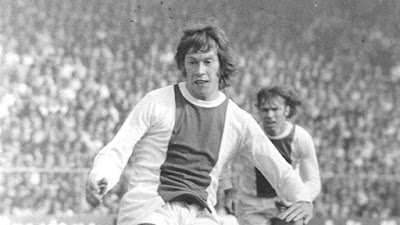
Dutch football has blessed us with some great footballers, amazingly they also have a strong history in providing great families of footballers, with many famous brothers and also twins. The Dutch brothers I want to shine light on though are the Mühren brothers.
Gerrie Mühren and his younger brother Arnold, whom British fans will recognise or at least they should. Arnold Mühren played in the Ipswich Town team, who under Sir Bobby Robson won the UEFA Cup as well as narrowly missing out on the league finishing second in England’s top flight two years running. He would then be transferred to Manchester United, helping them win the 1983 FA Cup and becoming a cult hero in the process, thanks to his thunderous left foot, he was also one of the few players outside the United Kingdom and Ireland who were playing in England in the late 70’s and early 80’s.
Gerrie, the older brother by 5 years, broke through into the A**x set up before his brother and kept him out of the team, was also a left-footer, a real artist on the pitch whose travels took him to Spain. In Seville, for Real Betis, he was part of the Betis team that won the Copa Del Rey in 1977 but was denied a winners medal as foreigners were not allowed to play in the competition at the time. He would be named Spain’s player of the year despite the restrictions to his playing time, becoming a legend of the club having only played 3 seasons. Like many of the Dutch greats, the Mühren brothers learnt their trade on the streets, not far from Amsterdam (approx 18km) in the beautiful village of Volendam; a different world entirely from the capital.
The Spanish village
Volendam is a small, beautiful fishing village, a hit with tourists for its picturesque dwellings. In the early part of the 20th century, numerous artists would treat the village as a retreat, Picasso and Renoir both spending time there, but more amazing for such a small village it has created so many talented individuals. The pop groups Band Zonder Naam (Band Without a Name) and The Cats both come from the village. The Cats made noise all over the world in the 60s-80s, BZN although having limited international success is huge in Holland.
Living up to the British stereotype, everyone in Volendam seems to be related in some way, the founder and leading member of The Cats was another Arnold Mühren, the footballer’s cousin. Jan and Pé Mühren were twins in a family of twelve, Jan was the father of the footballers while Pé became a writer.
BZN helped produce another household name in Holland, Jan Smit a singer turned TV presenter and in 2013 he became a board member on the villages professional football team FC Volendam whose stadium announcer was once Pé Mühren and he now has a stand named after him.
The club in the 90’s was a prominent figure in the top-flight Eredivisie made up of homegrown players. However, fortunes changed at the turn of the millennium. The club has only spent two seasons in the top flight since 1998, being relegated straight back down in 03/04 and 08/09 respectively. Sheffield Wednesday fans will be very familiar with the name Wim Jonk, born in Volendam the centre midfielder who was also blessed with a fantastic passing range and a hard work ethic played for A**x (winning the UEFA Cup in 1994), before heading to Inter Milan.
After returning to Holland with PSV, Jonk ended his career in England with Wednesday where he too became a cult hero. Jonk after a stint running A**x’s famous youth academy is now back home, managing FC Volendam with the vision of returning them to the Eredivisie.
As previously mentioned Volendam is situated just outside Amsterdam, however, its inhabitants have a very Latin feel to them – the village is one of the only places in Holland that is 100 per cent catholic. They say that during a war between Holland and Spain hundreds of years ago, the Basques were the ones who created Volendam, transforming it from a tiny harbour that served neighbouring Edam into the vibrant, well-knitted community it is now while leaving behind some of their Latin origins and beliefs. This helps interpret why this small village has generated so many great talents.
I’m going to start with Gerrie, not just because he is the older brother, having never played in England like his brother did his name will sometimes slip the memory when remembering the great Dutch players of the 70’s, also having both learnt their trade on the streets of their beloved home, playing together all the time means that Gerrie taught his younger brother Arnold a trick or two.
Keepy-ups in the Bernabeu.
Gerrie started his career at Volendam, in 1968 he moved to A**x, spending 8 years in Amsterdam, 8 years that included pretty much all the trophies available to players at club level. Gerrie’s early career at A**x was under the guidance of Rinus Michels, the man who developed and made famous the ‘total football’ brand of football. A**x famously won three back-to-back European Cups in the years 1970-73, with Michels leaving after the first triumph to be replaced by Stefan Kovacs who led A**x to the latter two victories in Europe.
A**x were dominating Europe even after Michels had left for Barcelona, it was still his beliefs and with help of the golden age of players A**x were enjoying meant that Kovacs management approach, was that of taking a back seat. He made slight tactical tweaks but would let his assistant Bobby Haarms organize training and the day to day stuff.
Johan Cruyff and Piet Kaiser were given extra power over the team, understandably when taking into account their talent, however, it was Gerrie who was given the duty of slotting penalties away, remembering that the Dutch are famously poor at spot-kicks, Gerrie was a master. Gerrie was an ever-present on the left side of midfield, his vision and technique brought great balance to the teams attack and his late runs into the box brought him plenty of goals, it’s his character and the way him, his brother and so many Dutchmen look at the game that I love most though.
Despite all the trophies, the dominating performances and fantastic individuals, the most cherished moment from this team, one of the greatest ever, happened in Madrid in April 1973. In the semi-final of the European Cup second leg, A**x won the first leg at home 2-1 against Real Madrid.
In front of a hostile crowd of 110,000 in the Bernabeu, Gerrie was playing against the team he supported as a child, mainly because the great Madrid team of Puskas and Di Stefano was the first European football to be televised in Holland. “When I was young, we saw Real on TV. They played nice attacking football. It was my dream to play nice soccer against Real Madrid” Gerrie was quoted saying this in an interview for the book ‘Brilliant orange’. Gerrie, when he grew up from watching his heroes would go on to play Real Madrid seven times in his career. Winning seven times.
In the 1973 semi-final however it wasn’t just the victory that has stuck in everyone’s head. Gerrie scored in the first half to put A**x ahead. In the second half, would be the moment that really stamped home that the most dominant team on the continent was no longer Real Madrid but A**x. Gerrie received a looping cross-field pass from Wim Suurbier to the left of the centre circle, unbelievably he caught the ball on his left foot and proceeded to begin juggling the ball, left-right-left-right-left. In-front of 110,000, he was doing keepy-ups in the European Cup semi-final.
The crowd erupted into contagious applause, it spread all over the towering terraces. A moment that seemed to last an age, Mühren ended it by simply allowing the ball to drop and played a simple pass to Krol who went charging in from left-back, charged from the moment he just witnessed he burst passed two Madrid defenders before narrowly shooting over the bar.
This sounds like the act of a showman, although it did rile up the Madrid players and Gerrie received some backlash from his teammates for doing it as they ended up being kicked up a height, you have to take into account the type of character Gerrie was. He claimed afterwards it was all he could think of doing while waiting on Krol to catch up with play.
After that game in Madrid, the Mühren brothers walked away from the stadium together, surrounded by Madrid fans who were discussing what they had just seen with great excitement. They saw the Mühren brothers but did not recognize them. In fact they thought they were merely fans of A**x.
They approached the brothers who couldn’t speak Spanish and started mimicking the juggling motion. Arnold pointed at his brother and went “this is the guy who did the juggling”. They didn’t believe him though as they couldn’t imagine that a superstar footballer would just be walking the streets with normal people. Gerrie’s beliefs on being a celebrity were very egalitarian and deeply Dutch. “A doctor came to me to ask for my autograph and I asked him for his autograph instead. it is only luck that we could play soccer; we could not see how good we were. We needed the crowd; the crowd needed us” Gerrie also went on to say, “Its better to be modest. In Holland, they are a little bit cool and I prefer that. No one here has ever asked for my autograph. I am one of them. In Volendam it is normal; everyone lives normal lives.”
Seville: a home from home.
At the start of the 1974-75 season, it was looking more likely that Cruyff would eventually join his old mentor Michels in Catalunya. After A**x claimed there third consecutive European Cup, Kovacs left and was replaced by a new coach. George Knobel, who got off to a terrible start when he allegedly ordered a team meeting to decide who would be captain for the upcoming season. He decided to take Kovacs back seat approach to new levels, asking the squad to anonymously vote who they wanted to be the captain for the upcoming season (Knobel later declared he was only following the tradition of the club and that Haarms had telt him that’s how it was always done).
It caused great divides in an already tired group. Cruyff lost his captaincy, receiving between 3-7 votes (the actual results have never been disclosed) and the squad was slowly dissolving. Cruyff left for Barcelona, igniting a mass exodus. Gerrie Mühren signed for Real Betis.
Gerrie was once dubbed the ‘forgotten football hero’ of Dutch football, something that he never really seen as a big deal due to his humble nature. In the city of Seville however, he is far from forgotten. “In Seville, they treat me like a king. I don’t like it. It’s better to be modest.”
Gerrie and his family loved their time in Seville, his wife talked about the similarities to Volendam. Grietje Mühren, talked fondly of the city they lived in during the time her husband spent playing for Real Betis “The people are hospitable just like in Volendam. When people meet outside on the street, we would have dinner with them in the evening, or they would come to us”.
Gerrie arrived at Real Betis in 1976, the Hungarian manager Ferenc Szusza was to be his new coach and they put together arguably one of the greatest ever Real Betis squads in their history. Legendary forward Rafael Gordillo also joined the squad in the same season, after being promoted from the B team.
Real Betis would go on to win the Copa Del Rey that season, as previously mentioned without Gerrie due to the laws on foreign players. Remarkably though despite not being part of the cup winning squad, his class was rewarded from the federation as Gerrie Mühren was named the Spanish footballer of the year.
This was his most cherished award and sat in a prime position in his living room back in Volendam once he retired. The main reason he cherished it so much was he won this award when his old friends Johan Cruyff and Johan Neeskens were at Barcelona and Johnny Rep was at Valencia and it was Gerrie who won the prize.
In his first game, he was put up against city rivals Sevilla, on the first impression, Gerrie would win over the whole Real Betis fanbase in the most bizarre but most ‘Mühren way’ possible.
The fans knew of his footballing talents, but after a shocking team performance and more importantly a defeat at the hands of their fierce rivals, the Betis fans were furious at full-time, with several hundred of them surrounding the stadium to express their feelings. The players and staff were diverted to a back exit where they knew they wouldn’t run into any furious supporters.
Gerrie walked straight out the front door.
At first, there was silence, then they broke into applause, the fans dubbed him ‘hombre de cojones’ which translates to ‘man with balls’. In his first season, he played fantastically as a midfielder just like he did at A**x, mainly operating on the left. He spent three seasons at Betis and towards the end started to play more as a defensive midfielder in a free role, picking the ball up and starting the attacks from deep. Betis were relegated the season after the cup triumph but were very unlucky to find themselves in the relegation zone, inconsistency proving fatal. They bounced straight back up in Gerrie’s final season. Betis fans are known for being quite aggressive but Gerrie Mühren certainly won them over and will always be remembered as one of their true greats.
Life after Betis.
Gerrie was given the perfect goodbye gift from Betis, in the summer of 1979, it was announced that Gerrie would be returning home. Real Betis organised a friendly match with FC Volendam to wave goodbye to their hero. In the first half, Gerrie was playing for Real Betis, after the break, he swapped the green and white jersey for the orange FC Volendam shirt. The fans in the crowd were brought to tears, they just weren’t ready to see him leave.
Gerrie had spent 10 years at the top of the European game, after making his debut for A**x in 1968 to the transfer back to where it all started for him in 1979. He spent a season back at Volendam before moving to MVV Maastricht for a season in 1980/81. Seiko SA was the best team in Hong Kong in the ’80s and Gerrie Mühren added 2 league titles to his honours in the two seasons he played for them in 81/82.
He returned to Holland with Football Club Dordrecht (DS’79) in 1982 in the two seasons he spent with them he won promotion before being relegated back down to the Eerste Divisie the following season. Before retiring Gerrie had one last stint at his beloved Volendam, he called it a day on the most spectacular but not widely enough respected career in 1985.
As club careers go his 10 years at A**x and Real Betis should have been enough to cement him in football history books forever, maybe his lack of presence in the Dutch national squad prevented his name from being mentioned with the worlds greatest. He had a chance to announce his presence to the world in 1974 when Rinus Michels took Holland so famously close to winning the World Cup.
Gerrie would have been one of the certified starters in that squad and was called up, however, he put his family first and decided not to go to the tournament as his son was ill, despite his wife telling him to play he decided against it and to stay in Volendam that summer. He made 10 appearances for his country leading up to that tournament but would never play again.
After retiring he never stayed far away from the game, he had a scouting job with A**x, him and his brother Arnold also with financial support from Reebok travelled the Netherlands coaching. Visiting around 150 amateur clubs, teaching basic technique and passing skills.
This sums up how Gerrie approached the game, not just as a spectacle but mainly a strategical game that the players must enjoy just as much as the spectators. ”I didn’t like the crowd making noise. You have to be able to listen. Atmosphere is good but if there was a noise near me, I would move to the other side of the stadium. I want to hear the game, the players, the ball…”.
Sadly on the 19th of September 2013, Gerrie Mühren passed away. He died of Myelodysplastic syndrome (MDS) in his home town of Volendam. His legacy will live on forever but especially in the hearts of A**x and Real Betis fans, his name did reach admirers from all over the world it must be said despite the previously mentioned nickname of the ‘forgotten hero’. In Jamaica at the Museum that accompanies Bob Marley’s grave is a book, In the book, are names of people whom Bob Marley admired. Gerrie Mühren is included.
I for one am glad I haven’t forgotten (discovered due to my age) the career of Geradus Dominicus Hyacinthus Mühren, to give you his birth name, as it has given me great joy in watching back that great A**x team and discovering these great stories about him. If from reading this you think the name Mühren has given enough to the world of football then think again. To get the full picture of the Mühren legacy we have to look at his younger brother Arnold. But that’s for another day I suppose….

www.footballpink.net
Dutch football has blessed us with some great footballers, amazingly they also have a strong history in providing great families of footballers, with many famous brothers and also twins. The Dutch brothers I want to shine light on though are the Mühren brothers.
Gerrie Mühren and his younger brother Arnold, whom British fans will recognise or at least they should. Arnold Mühren played in the Ipswich Town team, who under Sir Bobby Robson won the UEFA Cup as well as narrowly missing out on the league finishing second in England’s top flight two years running. He would then be transferred to Manchester United, helping them win the 1983 FA Cup and becoming a cult hero in the process, thanks to his thunderous left foot, he was also one of the few players outside the United Kingdom and Ireland who were playing in England in the late 70’s and early 80’s.
Gerrie, the older brother by 5 years, broke through into the A**x set up before his brother and kept him out of the team, was also a left-footer, a real artist on the pitch whose travels took him to Spain. In Seville, for Real Betis, he was part of the Betis team that won the Copa Del Rey in 1977 but was denied a winners medal as foreigners were not allowed to play in the competition at the time. He would be named Spain’s player of the year despite the restrictions to his playing time, becoming a legend of the club having only played 3 seasons. Like many of the Dutch greats, the Mühren brothers learnt their trade on the streets, not far from Amsterdam (approx 18km) in the beautiful village of Volendam; a different world entirely from the capital.
The Spanish village
Volendam is a small, beautiful fishing village, a hit with tourists for its picturesque dwellings. In the early part of the 20th century, numerous artists would treat the village as a retreat, Picasso and Renoir both spending time there, but more amazing for such a small village it has created so many talented individuals. The pop groups Band Zonder Naam (Band Without a Name) and The Cats both come from the village. The Cats made noise all over the world in the 60s-80s, BZN although having limited international success is huge in Holland.
Living up to the British stereotype, everyone in Volendam seems to be related in some way, the founder and leading member of The Cats was another Arnold Mühren, the footballer’s cousin. Jan and Pé Mühren were twins in a family of twelve, Jan was the father of the footballers while Pé became a writer.
BZN helped produce another household name in Holland, Jan Smit a singer turned TV presenter and in 2013 he became a board member on the villages professional football team FC Volendam whose stadium announcer was once Pé Mühren and he now has a stand named after him.
The club in the 90’s was a prominent figure in the top-flight Eredivisie made up of homegrown players. However, fortunes changed at the turn of the millennium. The club has only spent two seasons in the top flight since 1998, being relegated straight back down in 03/04 and 08/09 respectively. Sheffield Wednesday fans will be very familiar with the name Wim Jonk, born in Volendam the centre midfielder who was also blessed with a fantastic passing range and a hard work ethic played for A**x (winning the UEFA Cup in 1994), before heading to Inter Milan.
After returning to Holland with PSV, Jonk ended his career in England with Wednesday where he too became a cult hero. Jonk after a stint running A**x’s famous youth academy is now back home, managing FC Volendam with the vision of returning them to the Eredivisie.
As previously mentioned Volendam is situated just outside Amsterdam, however, its inhabitants have a very Latin feel to them – the village is one of the only places in Holland that is 100 per cent catholic. They say that during a war between Holland and Spain hundreds of years ago, the Basques were the ones who created Volendam, transforming it from a tiny harbour that served neighbouring Edam into the vibrant, well-knitted community it is now while leaving behind some of their Latin origins and beliefs. This helps interpret why this small village has generated so many great talents.
I’m going to start with Gerrie, not just because he is the older brother, having never played in England like his brother did his name will sometimes slip the memory when remembering the great Dutch players of the 70’s, also having both learnt their trade on the streets of their beloved home, playing together all the time means that Gerrie taught his younger brother Arnold a trick or two.
Keepy-ups in the Bernabeu.
Gerrie started his career at Volendam, in 1968 he moved to A**x, spending 8 years in Amsterdam, 8 years that included pretty much all the trophies available to players at club level. Gerrie’s early career at A**x was under the guidance of Rinus Michels, the man who developed and made famous the ‘total football’ brand of football. A**x famously won three back-to-back European Cups in the years 1970-73, with Michels leaving after the first triumph to be replaced by Stefan Kovacs who led A**x to the latter two victories in Europe.
A**x were dominating Europe even after Michels had left for Barcelona, it was still his beliefs and with help of the golden age of players A**x were enjoying meant that Kovacs management approach, was that of taking a back seat. He made slight tactical tweaks but would let his assistant Bobby Haarms organize training and the day to day stuff.
Johan Cruyff and Piet Kaiser were given extra power over the team, understandably when taking into account their talent, however, it was Gerrie who was given the duty of slotting penalties away, remembering that the Dutch are famously poor at spot-kicks, Gerrie was a master. Gerrie was an ever-present on the left side of midfield, his vision and technique brought great balance to the teams attack and his late runs into the box brought him plenty of goals, it’s his character and the way him, his brother and so many Dutchmen look at the game that I love most though.
Despite all the trophies, the dominating performances and fantastic individuals, the most cherished moment from this team, one of the greatest ever, happened in Madrid in April 1973. In the semi-final of the European Cup second leg, A**x won the first leg at home 2-1 against Real Madrid.
In front of a hostile crowd of 110,000 in the Bernabeu, Gerrie was playing against the team he supported as a child, mainly because the great Madrid team of Puskas and Di Stefano was the first European football to be televised in Holland. “When I was young, we saw Real on TV. They played nice attacking football. It was my dream to play nice soccer against Real Madrid” Gerrie was quoted saying this in an interview for the book ‘Brilliant orange’. Gerrie, when he grew up from watching his heroes would go on to play Real Madrid seven times in his career. Winning seven times.
In the 1973 semi-final however it wasn’t just the victory that has stuck in everyone’s head. Gerrie scored in the first half to put A**x ahead. In the second half, would be the moment that really stamped home that the most dominant team on the continent was no longer Real Madrid but A**x. Gerrie received a looping cross-field pass from Wim Suurbier to the left of the centre circle, unbelievably he caught the ball on his left foot and proceeded to begin juggling the ball, left-right-left-right-left. In-front of 110,000, he was doing keepy-ups in the European Cup semi-final.
The crowd erupted into contagious applause, it spread all over the towering terraces. A moment that seemed to last an age, Mühren ended it by simply allowing the ball to drop and played a simple pass to Krol who went charging in from left-back, charged from the moment he just witnessed he burst passed two Madrid defenders before narrowly shooting over the bar.
This sounds like the act of a showman, although it did rile up the Madrid players and Gerrie received some backlash from his teammates for doing it as they ended up being kicked up a height, you have to take into account the type of character Gerrie was. He claimed afterwards it was all he could think of doing while waiting on Krol to catch up with play.
After that game in Madrid, the Mühren brothers walked away from the stadium together, surrounded by Madrid fans who were discussing what they had just seen with great excitement. They saw the Mühren brothers but did not recognize them. In fact they thought they were merely fans of A**x.
They approached the brothers who couldn’t speak Spanish and started mimicking the juggling motion. Arnold pointed at his brother and went “this is the guy who did the juggling”. They didn’t believe him though as they couldn’t imagine that a superstar footballer would just be walking the streets with normal people. Gerrie’s beliefs on being a celebrity were very egalitarian and deeply Dutch. “A doctor came to me to ask for my autograph and I asked him for his autograph instead. it is only luck that we could play soccer; we could not see how good we were. We needed the crowd; the crowd needed us” Gerrie also went on to say, “Its better to be modest. In Holland, they are a little bit cool and I prefer that. No one here has ever asked for my autograph. I am one of them. In Volendam it is normal; everyone lives normal lives.”
Seville: a home from home.
At the start of the 1974-75 season, it was looking more likely that Cruyff would eventually join his old mentor Michels in Catalunya. After A**x claimed there third consecutive European Cup, Kovacs left and was replaced by a new coach. George Knobel, who got off to a terrible start when he allegedly ordered a team meeting to decide who would be captain for the upcoming season. He decided to take Kovacs back seat approach to new levels, asking the squad to anonymously vote who they wanted to be the captain for the upcoming season (Knobel later declared he was only following the tradition of the club and that Haarms had telt him that’s how it was always done).
It caused great divides in an already tired group. Cruyff lost his captaincy, receiving between 3-7 votes (the actual results have never been disclosed) and the squad was slowly dissolving. Cruyff left for Barcelona, igniting a mass exodus. Gerrie Mühren signed for Real Betis.
Gerrie was once dubbed the ‘forgotten football hero’ of Dutch football, something that he never really seen as a big deal due to his humble nature. In the city of Seville however, he is far from forgotten. “In Seville, they treat me like a king. I don’t like it. It’s better to be modest.”
Gerrie and his family loved their time in Seville, his wife talked about the similarities to Volendam. Grietje Mühren, talked fondly of the city they lived in during the time her husband spent playing for Real Betis “The people are hospitable just like in Volendam. When people meet outside on the street, we would have dinner with them in the evening, or they would come to us”.
Gerrie arrived at Real Betis in 1976, the Hungarian manager Ferenc Szusza was to be his new coach and they put together arguably one of the greatest ever Real Betis squads in their history. Legendary forward Rafael Gordillo also joined the squad in the same season, after being promoted from the B team.
Real Betis would go on to win the Copa Del Rey that season, as previously mentioned without Gerrie due to the laws on foreign players. Remarkably though despite not being part of the cup winning squad, his class was rewarded from the federation as Gerrie Mühren was named the Spanish footballer of the year.
This was his most cherished award and sat in a prime position in his living room back in Volendam once he retired. The main reason he cherished it so much was he won this award when his old friends Johan Cruyff and Johan Neeskens were at Barcelona and Johnny Rep was at Valencia and it was Gerrie who won the prize.
In his first game, he was put up against city rivals Sevilla, on the first impression, Gerrie would win over the whole Real Betis fanbase in the most bizarre but most ‘Mühren way’ possible.
The fans knew of his footballing talents, but after a shocking team performance and more importantly a defeat at the hands of their fierce rivals, the Betis fans were furious at full-time, with several hundred of them surrounding the stadium to express their feelings. The players and staff were diverted to a back exit where they knew they wouldn’t run into any furious supporters.
Gerrie walked straight out the front door.
At first, there was silence, then they broke into applause, the fans dubbed him ‘hombre de cojones’ which translates to ‘man with balls’. In his first season, he played fantastically as a midfielder just like he did at A**x, mainly operating on the left. He spent three seasons at Betis and towards the end started to play more as a defensive midfielder in a free role, picking the ball up and starting the attacks from deep. Betis were relegated the season after the cup triumph but were very unlucky to find themselves in the relegation zone, inconsistency proving fatal. They bounced straight back up in Gerrie’s final season. Betis fans are known for being quite aggressive but Gerrie Mühren certainly won them over and will always be remembered as one of their true greats.
Life after Betis.
Gerrie was given the perfect goodbye gift from Betis, in the summer of 1979, it was announced that Gerrie would be returning home. Real Betis organised a friendly match with FC Volendam to wave goodbye to their hero. In the first half, Gerrie was playing for Real Betis, after the break, he swapped the green and white jersey for the orange FC Volendam shirt. The fans in the crowd were brought to tears, they just weren’t ready to see him leave.
Gerrie had spent 10 years at the top of the European game, after making his debut for A**x in 1968 to the transfer back to where it all started for him in 1979. He spent a season back at Volendam before moving to MVV Maastricht for a season in 1980/81. Seiko SA was the best team in Hong Kong in the ’80s and Gerrie Mühren added 2 league titles to his honours in the two seasons he played for them in 81/82.
He returned to Holland with Football Club Dordrecht (DS’79) in 1982 in the two seasons he spent with them he won promotion before being relegated back down to the Eerste Divisie the following season. Before retiring Gerrie had one last stint at his beloved Volendam, he called it a day on the most spectacular but not widely enough respected career in 1985.
As club careers go his 10 years at A**x and Real Betis should have been enough to cement him in football history books forever, maybe his lack of presence in the Dutch national squad prevented his name from being mentioned with the worlds greatest. He had a chance to announce his presence to the world in 1974 when Rinus Michels took Holland so famously close to winning the World Cup.
Gerrie would have been one of the certified starters in that squad and was called up, however, he put his family first and decided not to go to the tournament as his son was ill, despite his wife telling him to play he decided against it and to stay in Volendam that summer. He made 10 appearances for his country leading up to that tournament but would never play again.
After retiring he never stayed far away from the game, he had a scouting job with A**x, him and his brother Arnold also with financial support from Reebok travelled the Netherlands coaching. Visiting around 150 amateur clubs, teaching basic technique and passing skills.
This sums up how Gerrie approached the game, not just as a spectacle but mainly a strategical game that the players must enjoy just as much as the spectators. ”I didn’t like the crowd making noise. You have to be able to listen. Atmosphere is good but if there was a noise near me, I would move to the other side of the stadium. I want to hear the game, the players, the ball…”.
Sadly on the 19th of September 2013, Gerrie Mühren passed away. He died of Myelodysplastic syndrome (MDS) in his home town of Volendam. His legacy will live on forever but especially in the hearts of A**x and Real Betis fans, his name did reach admirers from all over the world it must be said despite the previously mentioned nickname of the ‘forgotten hero’. In Jamaica at the Museum that accompanies Bob Marley’s grave is a book, In the book, are names of people whom Bob Marley admired. Gerrie Mühren is included.
I for one am glad I haven’t forgotten (discovered due to my age) the career of Geradus Dominicus Hyacinthus Mühren, to give you his birth name, as it has given me great joy in watching back that great A**x team and discovering these great stories about him. If from reading this you think the name Mühren has given enough to the world of football then think again. To get the full picture of the Mühren legacy we have to look at his younger brother Arnold. But that’s for another day I suppose….
Last edited by a moderator:
The Mühren Brothers: Arnold Mühren (Part Two)
 by James Jackson
June 16, 2020
www.thefootballpink.net

In part one I managed just about to sum up Gerrie Mühren’s career, his brother Arnold will be the focus of part two. As you are reading this I want you to try and envision them as an extension of each other. Both made their own great legacies in the game but their core beliefs and talents were much the same. Gerrie was the older brother, laying the base on the streets of Volendam where the brothers would first play together. Their played together at A**x in the ’70s but when the A**x team was dismantled and Gerrie headed for Spain, Arnold stayed in Holland keeping his brothers’ modesty and thunderous left foot but paving his own way and spreading the Mühren name across the continent.
Learning from the best
“My brother played with his friends, when I was five or six I started joining in” Arnold recalls back to his childhood in the ‘Brilliant Orange’ book by David Winner. “We weren’t exceptional. Everybody could play to a high standard. If you couldn’t play football, bad luck you had to go in goal.” Arnold also says that playing with a tennis ball most of the time is what gave him and his brother the great technique. The hard ground of the road meant that he learned to keep his balance to avoid being hurt when falling and the speed at which the games were played on the hard ground helped them play quickly. “No one ever told us how to play. It was all natural. When we joined Volendam when we were twelve, we already knew how to play.” Arnold’s attitude along with this experience of round the clock street football allowed him to become the perfect professional.
He met his wife when he was nineteen and never took his eye off the goal of becoming the best player he could be. “I was only interested in football – I lived like a monk! No smoking, no drinking, go to bed early. People say I didn’t have a youth but I’ve had the best life.’’ Arnold, despite his professional approach, maintained his core reasons for playing football were always as he enjoyed playing it. “It started off as a hobby, to take part with a group of players. When I ended my career it was still a hobby – a well-paid hobby. You have to see it as a hobby.”
After graduating from Volendam’s academy, Arnold followed in his brothers’ footsteps by heading to A**x at the age of 20. Arnold was still young and didn’t make that many appearances, his older brother the preferred choice. Arnold was waiting for his chance. Armed with the same modesty as his brother Arnold once said “It’s in our character (the Mühren brothers), putting yourself in the service of others. Football is a team sport in which you have to use each other’s qualities. We were at the service of the better players’’. This quote shows the professionalism and determination of Arnold, something his team-mates would take note of, most importantly Johan Cruyff who would eventually end up calling on Arnold’s services 12 years after the two played together.
Despite his bit-part role, Arnold still managed to pick up some silverware in his first two seasons at A**x. Picking up two league titles, the KNVB Cup and the last of the triumphant trio of European Cups with Arnold starting in the famous second leg in the Bernabeu. When the team was broken up the season after the third European Cup, Arnold was one of the few names that stayed. He played on earning more game time in the 73/74 season before leaving and heading for FC Twente in the summer of 1974.
On the opposite end of the country to Amsterdam and Volendam is the city of Enschede. This would be Arnold’s new stomping ground, spending for 4 years at FC Twente taking the club to the final of the UEFA Cup in 1975, losing to Borussia Mönchengladbach.
He would also add another KNVB Cup to his cabinet as FC Twente won the competition in 1977. Now he was playing a more prominent role in the team compared to his role at A**x he was starting to get the recognition that his talents deserved, although relationships with the management deteriorated at the end of the 1977-78 season. Arnold had hoped for a move back to his home FC Volendam but lack of funds prevented that, he spent the summer back at his home in Volendam contemplating his next move, when he had a knock at the door.
The Tractor Boys
His performances for Twente would catch the eye of the late great Sir Bobby Robson, so much so that when Robson heard of his availability regarding the fall out at Twente he got on the next flight to Amsterdam and headed for Volendam himself. Robson turned up at the door of the Mühren’s home in Volendam with the hope of persuading Arnold to join the club, after Robson left Arnold sat with his wife as they researched everything about the club and the area of Suffolk, he knew it would be a huge risk to play in England but it also would be a chance to jump-start his career.
The next day Arnold and his wife Geerie boarded a private plane hired by Robson to take them to Ipswich. A final touch from Robson was organised as the jet flew over Portman road and the training pitches adjacent. There was a training session being held, all the players and staff looked up and gave the welcoming guests a wave, upon landing the Mühren’s were welcomed with a swarm of fans chanting Arnold’s name.
Bobby was trying all his tricks but when Arnold left to return home without agreeing to sign, Sir Bobby thought he had missed his chance. However, Arnold who was most impressed by Robson’s approach during the visit would call as soon as he got home to confirm that he would sign.
Robson had been at Ipswich for nine years before he signed Arnold, taking them to becoming a comfortable top six side in England’s top flight. However, despite winning the FA Cup in 1977-78 Robsons’ team needed some fresh blood. £150,000, a pretty hefty sum of money back in 1978 is what it took Ipswich to land Arnold Mühren.
In the following February, Ipswich went out and bought Frans Thijssen who was a team-mate of Arnolds at Twente, the duo formed a ‘semi-wide midfield’ partnership, anyone who’s familiar with the term ‘half-space’ will know the areas in which these two operated, well before the term became famous amongst analysts of the game. These two would ensure that Ipswich stayed away from the long ball style of play, their newly mastered fluid football would send the team flying up the league table.
Like all foreign imports to the English game, the first question is always ‘will they handle it?’ as if the game over here is far superior to anywhere else in the world. Well, Arnold replied to that question in the best way possible. He would ask the question, would England handle him? Instead of him adapting to the English game, he made the English game adapt to him.
He had the perfect manager to help him achieve this in Sir Bobby Robson, not known for his excellent tactical approach, but what made him one of the best was more his second to none man-management and ability to develop new players thanks to his caring and enthusiastic manner which would get the most out of his players.
Arnold talked about his debut for Ipswich with David Winner for the book ‘Brilliant Orange’, he remembered it was against Liverpool and he was up against Terry McDermott, “He was a very good runner and we ran up and down the wing all day. Neither of us touched the ball because it kept going over our heads”. This was a major culture shock to Arnold who was now noticing the difference compared to that in his home nation.
After the game, Arnold went straight to see his manager and told Robson, “It’s better to put the linesman in instead of me. He can run up and down all day, too. If you want to get the best out of me, you have to give me the ball. That’s what I need. That’s why you bought me.”
Now I talked about his humble nature and his ability to sit back and let others take the lead role, however, this act on his debut amongst a team that were all British and played in the same way for years, shows that Arnold also knew when to become the leader, not for his own personal gains, he didn’t want to be the star player he just wanted to get the most out of his teammates and that’s exactly what he did.
Ipswich eventually learned to feed Arnold the ball and when Frans Thijssen arrived the two Dutchmen gave Ipswich another dimension. Their vision and skill would bring and poise and intelligence to the team but Arnold also really admired the English players saying “They have things I didn’t have. So strong in the air, strong tacklers. You can run all day. If you could put Dennis Bergkamp’s skills with Tony Adams’s strength and spirit, you’d have the complete player.’’
In the 13 years in which Robson was manager of the club he only signed 18 players, instead of bringing in new signings he was able to promote players through the ranks of the well-stocked academy. One of those youth players is now my Sunday League team’s manager, he made the trip from Newcastle to Suffolk as a schoolboy and tells some great tales of his time at the club.
Kevin Dodds, a left-back looking to take the place of legendary full-back Mick Mills was part of the Ipswich set up for around 18 months and can vouch for the tales of Robson’s great nature and how it was Robson’s beliefs in making all players as equal as possible that would help create the great atmosphere that would bring the club so much success.
Kevin recalls many a training session or match-day where members of the first team would stay behind to watch the youngsters and give them tips on their playing styles and attitudes. Kevin remembers Arnold Mühren being one of these players, even if it wasn’t always technical pointers Arnold and his team-mates would offer attitude and lifestyle tips on how to make sure they landed a pro contract. Arnold was the best man to give advice on professionalism as even by the time he reached England he still hadn’t changed his ways, it was still no drinking and early nights.
“Mühren was a wonderful passer, great vision. I cannot think of anyone I would rate higher as a professional than Arnold. No one works harder and when the match is over, he won’t go out drinking. He goes to bed.’’ To have this said about you from anyone would be credible enough to make you happy, these were the words of Sir Bobby Robson though, so they carry a lot more meaning and help show just the impact Arnold had on the Ipswich team.
Their first season together was slightly stop-start but that’s understandable considering Mühren and Thijssen were still settling and making their mark. The 1980/81 season is remembered by Ipswich Town fans as one of the best ever for the clubs despite them coming so close to winning their first title it was their performance in the UEFA Cup that booked the players into the history books. They won the trophy beating AZ Alkmaar 5-4 on aggregate. The competition was a two-legged final back then, Ipswich won 3-0 at Portman Road. Despite losing 4-2 in the Olympic Stadium in Amsterdam, Ipswich had conquered Europe and Arnold Mühren had added the UEFA Cup to the European Cup he won with A**x.
The Move Up North
In his final season at Ipswich, the club would again be pushing for the title and would again come up just short, finishing second for the second season in a row. Arnold felt like it was time for a change, Manchester United came calling. Arnold was now 31 so he thought a move to Manchester United would be his last chance to play for such a big club.
His first season was certainly a success, playing to his trademark style, using his wand of a left foot to dazzle opponents and burst the net. The most famous of his United goals was to be in the FA Cup final where he would score a penalty in the replay against Brighton, handing Manchester United the cup.
Ron Atkinson would be his manager at Manchester United, a stark contrast to what he dealt with at Ipswich and Sir Bobby. The team was famous for its off-field drinking culture and as it’s not known whether Arnold kept up his no-alcohol lifestyle while at Manchester United, you can still guess that it was a bit of a different environment for Arnold to properly settle though. Remembered by fans as a fantastic player nonetheless and still spent 3 seasons in Manchester before he got a call from an old friend. Manchester United would not be his last chance at a big club in the end.
At the age of 35, with his career at Manchester United nearing its apparent end, when he wasn’t even named in the squad for the final of the FA Cup in 1985, Johan Cruyff was back at A**x, but this time he was the manager. Cruyff called upon Arnold, after remembering those great qualities shown from their time playing together but also having seen just how great Arnold had become during his time in England.
Winning Everything UEFA had to offer
His time back at A**x would give him the last European Cup competition that club football has to offer, the now-defunct European Cup Winners’ Cup. A**x beat Lokomotive Leipzig, with a very young side excusing Mühren. Marco van Basten, Frank Rijkaard and Dennis Bergkamp all featured but Mühren insisted he never felt like the father figure of the team. His performances back in his homeland would finally get him the recognition he deserved for his international side too.
For how great Mühren was performing throughout his career, it is criminal that he never made an appearance at a World Cup for his country, the only saving grace for Holland was the fact that they had such depth in quality players. It was just such a shame that Arnold was always overlooked and underrated as a player. However, he would end up having a bigger impact than many when he finally got a decent run in the squad and was called up for the European Championships in 1988.
Mühren as modest as ever never held any grudge on being overlooked, when the tournament came round he stepped up to the plate, as he had done throughout his career at club level. He was 37 when the tournament began and he played as beautiful as ever, helping or to word it better, assisting his country to their first major tournament win, as it was from a cross by Arnold Mühren that Marco van Basten would score the famous impossible volley that clinched the trophy in a 2-0 win over the Soviet Union.
This triumph meant that Arnold Mühren had won every competition that UEFA had to offer, bearing in mind his great assist helped his country win the title, surely Mühren would gloat a little, but no. “Everyone said it was the best cross I ever made but that’s nonsense. Marco made a not very good pass look very good. Before the ball reached my feet, I saw him running free near the penalty area. If I’d controlled the ball, there would have been another situation, so I decided to play the first time. I was trying to play the ball about two yards in front of him. I thought he would control the ball and bring it back into the penalty area. But he finished it! I’ve never seen anything like it.”
Arnold would return to A**x for another season after the tournament, before retiring in 1989 aged 38. As mentioned in part one, upon retirement the Mühren brothers travelled Holland coaching. Arnold has kept his hand in the coaching pot and after stints at Volendam, he is now coaching full time as part of A**x’s Academy set-up.
His legacy on the pitch will ring round the world forever thanks to the cross in that final, although Arnold himself also prizes the moment of lifting the Euro 88 trophy with Holland as his own personal career highlight, it must be said he has made plenty other memories to challenge them. Just ask Twente, Ipswich, Manchester United and A**x fans. I guarantee they will all tell you how brilliant he was.
The Mühren way is the best way
To conclude this two-part piece on the great Mühren brothers, I want to finish with a quote from Arnold, found in the fantastic book by David Winner ‘the brilliant orange’. It helps understand the tactical thought process which helped Arnold become so fantastic, a thought process that he certainly shared with his older brother Gerrie.
“Its a thinking game. It’s not a running around everywhere and just working hard, though of course, you have to work hard too. Every Dutch player wants to control the game. We play the ball from man to man; we wait for openings. That’s how to play football: with your brains not with your feet. You don’t have to be a chess player, but you must think ahead. Before I had the ball I knew exactly what I would do with it. I always knew two or three moves ahead. Before I get the ball I can already see someone moving in front of me, so when the ball arrives I don’t have to think about it. And I don’t have to watch the ball because I have the right technique.”
June 16, 2020
www.thefootballpink.net
In part one I managed just about to sum up Gerrie Mühren’s career, his brother Arnold will be the focus of part two. As you are reading this I want you to try and envision them as an extension of each other. Both made their own great legacies in the game but their core beliefs and talents were much the same. Gerrie was the older brother, laying the base on the streets of Volendam where the brothers would first play together. Their played together at A**x in the ’70s but when the A**x team was dismantled and Gerrie headed for Spain, Arnold stayed in Holland keeping his brothers’ modesty and thunderous left foot but paving his own way and spreading the Mühren name across the continent.
Learning from the best
“My brother played with his friends, when I was five or six I started joining in” Arnold recalls back to his childhood in the ‘Brilliant Orange’ book by David Winner. “We weren’t exceptional. Everybody could play to a high standard. If you couldn’t play football, bad luck you had to go in goal.” Arnold also says that playing with a tennis ball most of the time is what gave him and his brother the great technique. The hard ground of the road meant that he learned to keep his balance to avoid being hurt when falling and the speed at which the games were played on the hard ground helped them play quickly. “No one ever told us how to play. It was all natural. When we joined Volendam when we were twelve, we already knew how to play.” Arnold’s attitude along with this experience of round the clock street football allowed him to become the perfect professional.
He met his wife when he was nineteen and never took his eye off the goal of becoming the best player he could be. “I was only interested in football – I lived like a monk! No smoking, no drinking, go to bed early. People say I didn’t have a youth but I’ve had the best life.’’ Arnold, despite his professional approach, maintained his core reasons for playing football were always as he enjoyed playing it. “It started off as a hobby, to take part with a group of players. When I ended my career it was still a hobby – a well-paid hobby. You have to see it as a hobby.”
After graduating from Volendam’s academy, Arnold followed in his brothers’ footsteps by heading to A**x at the age of 20. Arnold was still young and didn’t make that many appearances, his older brother the preferred choice. Arnold was waiting for his chance. Armed with the same modesty as his brother Arnold once said “It’s in our character (the Mühren brothers), putting yourself in the service of others. Football is a team sport in which you have to use each other’s qualities. We were at the service of the better players’’. This quote shows the professionalism and determination of Arnold, something his team-mates would take note of, most importantly Johan Cruyff who would eventually end up calling on Arnold’s services 12 years after the two played together.
Despite his bit-part role, Arnold still managed to pick up some silverware in his first two seasons at A**x. Picking up two league titles, the KNVB Cup and the last of the triumphant trio of European Cups with Arnold starting in the famous second leg in the Bernabeu. When the team was broken up the season after the third European Cup, Arnold was one of the few names that stayed. He played on earning more game time in the 73/74 season before leaving and heading for FC Twente in the summer of 1974.
On the opposite end of the country to Amsterdam and Volendam is the city of Enschede. This would be Arnold’s new stomping ground, spending for 4 years at FC Twente taking the club to the final of the UEFA Cup in 1975, losing to Borussia Mönchengladbach.
He would also add another KNVB Cup to his cabinet as FC Twente won the competition in 1977. Now he was playing a more prominent role in the team compared to his role at A**x he was starting to get the recognition that his talents deserved, although relationships with the management deteriorated at the end of the 1977-78 season. Arnold had hoped for a move back to his home FC Volendam but lack of funds prevented that, he spent the summer back at his home in Volendam contemplating his next move, when he had a knock at the door.
The Tractor Boys
His performances for Twente would catch the eye of the late great Sir Bobby Robson, so much so that when Robson heard of his availability regarding the fall out at Twente he got on the next flight to Amsterdam and headed for Volendam himself. Robson turned up at the door of the Mühren’s home in Volendam with the hope of persuading Arnold to join the club, after Robson left Arnold sat with his wife as they researched everything about the club and the area of Suffolk, he knew it would be a huge risk to play in England but it also would be a chance to jump-start his career.
The next day Arnold and his wife Geerie boarded a private plane hired by Robson to take them to Ipswich. A final touch from Robson was organised as the jet flew over Portman road and the training pitches adjacent. There was a training session being held, all the players and staff looked up and gave the welcoming guests a wave, upon landing the Mühren’s were welcomed with a swarm of fans chanting Arnold’s name.
Bobby was trying all his tricks but when Arnold left to return home without agreeing to sign, Sir Bobby thought he had missed his chance. However, Arnold who was most impressed by Robson’s approach during the visit would call as soon as he got home to confirm that he would sign.
Robson had been at Ipswich for nine years before he signed Arnold, taking them to becoming a comfortable top six side in England’s top flight. However, despite winning the FA Cup in 1977-78 Robsons’ team needed some fresh blood. £150,000, a pretty hefty sum of money back in 1978 is what it took Ipswich to land Arnold Mühren.
In the following February, Ipswich went out and bought Frans Thijssen who was a team-mate of Arnolds at Twente, the duo formed a ‘semi-wide midfield’ partnership, anyone who’s familiar with the term ‘half-space’ will know the areas in which these two operated, well before the term became famous amongst analysts of the game. These two would ensure that Ipswich stayed away from the long ball style of play, their newly mastered fluid football would send the team flying up the league table.
Like all foreign imports to the English game, the first question is always ‘will they handle it?’ as if the game over here is far superior to anywhere else in the world. Well, Arnold replied to that question in the best way possible. He would ask the question, would England handle him? Instead of him adapting to the English game, he made the English game adapt to him.
He had the perfect manager to help him achieve this in Sir Bobby Robson, not known for his excellent tactical approach, but what made him one of the best was more his second to none man-management and ability to develop new players thanks to his caring and enthusiastic manner which would get the most out of his players.
Arnold talked about his debut for Ipswich with David Winner for the book ‘Brilliant Orange’, he remembered it was against Liverpool and he was up against Terry McDermott, “He was a very good runner and we ran up and down the wing all day. Neither of us touched the ball because it kept going over our heads”. This was a major culture shock to Arnold who was now noticing the difference compared to that in his home nation.
After the game, Arnold went straight to see his manager and told Robson, “It’s better to put the linesman in instead of me. He can run up and down all day, too. If you want to get the best out of me, you have to give me the ball. That’s what I need. That’s why you bought me.”
Now I talked about his humble nature and his ability to sit back and let others take the lead role, however, this act on his debut amongst a team that were all British and played in the same way for years, shows that Arnold also knew when to become the leader, not for his own personal gains, he didn’t want to be the star player he just wanted to get the most out of his teammates and that’s exactly what he did.
Ipswich eventually learned to feed Arnold the ball and when Frans Thijssen arrived the two Dutchmen gave Ipswich another dimension. Their vision and skill would bring and poise and intelligence to the team but Arnold also really admired the English players saying “They have things I didn’t have. So strong in the air, strong tacklers. You can run all day. If you could put Dennis Bergkamp’s skills with Tony Adams’s strength and spirit, you’d have the complete player.’’
In the 13 years in which Robson was manager of the club he only signed 18 players, instead of bringing in new signings he was able to promote players through the ranks of the well-stocked academy. One of those youth players is now my Sunday League team’s manager, he made the trip from Newcastle to Suffolk as a schoolboy and tells some great tales of his time at the club.
Kevin Dodds, a left-back looking to take the place of legendary full-back Mick Mills was part of the Ipswich set up for around 18 months and can vouch for the tales of Robson’s great nature and how it was Robson’s beliefs in making all players as equal as possible that would help create the great atmosphere that would bring the club so much success.
Kevin recalls many a training session or match-day where members of the first team would stay behind to watch the youngsters and give them tips on their playing styles and attitudes. Kevin remembers Arnold Mühren being one of these players, even if it wasn’t always technical pointers Arnold and his team-mates would offer attitude and lifestyle tips on how to make sure they landed a pro contract. Arnold was the best man to give advice on professionalism as even by the time he reached England he still hadn’t changed his ways, it was still no drinking and early nights.
“Mühren was a wonderful passer, great vision. I cannot think of anyone I would rate higher as a professional than Arnold. No one works harder and when the match is over, he won’t go out drinking. He goes to bed.’’ To have this said about you from anyone would be credible enough to make you happy, these were the words of Sir Bobby Robson though, so they carry a lot more meaning and help show just the impact Arnold had on the Ipswich team.
Their first season together was slightly stop-start but that’s understandable considering Mühren and Thijssen were still settling and making their mark. The 1980/81 season is remembered by Ipswich Town fans as one of the best ever for the clubs despite them coming so close to winning their first title it was their performance in the UEFA Cup that booked the players into the history books. They won the trophy beating AZ Alkmaar 5-4 on aggregate. The competition was a two-legged final back then, Ipswich won 3-0 at Portman Road. Despite losing 4-2 in the Olympic Stadium in Amsterdam, Ipswich had conquered Europe and Arnold Mühren had added the UEFA Cup to the European Cup he won with A**x.
The Move Up North
In his final season at Ipswich, the club would again be pushing for the title and would again come up just short, finishing second for the second season in a row. Arnold felt like it was time for a change, Manchester United came calling. Arnold was now 31 so he thought a move to Manchester United would be his last chance to play for such a big club.
His first season was certainly a success, playing to his trademark style, using his wand of a left foot to dazzle opponents and burst the net. The most famous of his United goals was to be in the FA Cup final where he would score a penalty in the replay against Brighton, handing Manchester United the cup.
Ron Atkinson would be his manager at Manchester United, a stark contrast to what he dealt with at Ipswich and Sir Bobby. The team was famous for its off-field drinking culture and as it’s not known whether Arnold kept up his no-alcohol lifestyle while at Manchester United, you can still guess that it was a bit of a different environment for Arnold to properly settle though. Remembered by fans as a fantastic player nonetheless and still spent 3 seasons in Manchester before he got a call from an old friend. Manchester United would not be his last chance at a big club in the end.
At the age of 35, with his career at Manchester United nearing its apparent end, when he wasn’t even named in the squad for the final of the FA Cup in 1985, Johan Cruyff was back at A**x, but this time he was the manager. Cruyff called upon Arnold, after remembering those great qualities shown from their time playing together but also having seen just how great Arnold had become during his time in England.
Winning Everything UEFA had to offer
His time back at A**x would give him the last European Cup competition that club football has to offer, the now-defunct European Cup Winners’ Cup. A**x beat Lokomotive Leipzig, with a very young side excusing Mühren. Marco van Basten, Frank Rijkaard and Dennis Bergkamp all featured but Mühren insisted he never felt like the father figure of the team. His performances back in his homeland would finally get him the recognition he deserved for his international side too.
For how great Mühren was performing throughout his career, it is criminal that he never made an appearance at a World Cup for his country, the only saving grace for Holland was the fact that they had such depth in quality players. It was just such a shame that Arnold was always overlooked and underrated as a player. However, he would end up having a bigger impact than many when he finally got a decent run in the squad and was called up for the European Championships in 1988.
Mühren as modest as ever never held any grudge on being overlooked, when the tournament came round he stepped up to the plate, as he had done throughout his career at club level. He was 37 when the tournament began and he played as beautiful as ever, helping or to word it better, assisting his country to their first major tournament win, as it was from a cross by Arnold Mühren that Marco van Basten would score the famous impossible volley that clinched the trophy in a 2-0 win over the Soviet Union.
This triumph meant that Arnold Mühren had won every competition that UEFA had to offer, bearing in mind his great assist helped his country win the title, surely Mühren would gloat a little, but no. “Everyone said it was the best cross I ever made but that’s nonsense. Marco made a not very good pass look very good. Before the ball reached my feet, I saw him running free near the penalty area. If I’d controlled the ball, there would have been another situation, so I decided to play the first time. I was trying to play the ball about two yards in front of him. I thought he would control the ball and bring it back into the penalty area. But he finished it! I’ve never seen anything like it.”
Arnold would return to A**x for another season after the tournament, before retiring in 1989 aged 38. As mentioned in part one, upon retirement the Mühren brothers travelled Holland coaching. Arnold has kept his hand in the coaching pot and after stints at Volendam, he is now coaching full time as part of A**x’s Academy set-up.
His legacy on the pitch will ring round the world forever thanks to the cross in that final, although Arnold himself also prizes the moment of lifting the Euro 88 trophy with Holland as his own personal career highlight, it must be said he has made plenty other memories to challenge them. Just ask Twente, Ipswich, Manchester United and A**x fans. I guarantee they will all tell you how brilliant he was.
The Mühren way is the best way
To conclude this two-part piece on the great Mühren brothers, I want to finish with a quote from Arnold, found in the fantastic book by David Winner ‘the brilliant orange’. It helps understand the tactical thought process which helped Arnold become so fantastic, a thought process that he certainly shared with his older brother Gerrie.
“Its a thinking game. It’s not a running around everywhere and just working hard, though of course, you have to work hard too. Every Dutch player wants to control the game. We play the ball from man to man; we wait for openings. That’s how to play football: with your brains not with your feet. You don’t have to be a chess player, but you must think ahead. Before I had the ball I knew exactly what I would do with it. I always knew two or three moves ahead. Before I get the ball I can already see someone moving in front of me, so when the ball arrives I don’t have to think about it. And I don’t have to watch the ball because I have the right technique.”

Backbiter
An Untouchable
- Messages
- 8,510
- Reaction score
- 4,136
This probably won't go down well with the blue half of Glasgow, but this is a terrific compilation of one of the great wingers (cue compilations of Davie Cooper, Willie Johnston, and hopefully Charlie Cooke and Wee Pat):
Last edited by a moderator:

Boyne
We Are The People
- Messages
- 29,858
- Reaction score
- 34,837
4 hours ago, Backbiter said:
This probably won't go down well with the blue half of Glasgow, but this is a terrific compilation of one of the great wingers (cue compilations of Davie Cooper, Willie Johnston, and hopefully Charlie Cooke and Wee Pat):
This probably won't go down well with the blue half of Glasgow, but this is a terrific compilation of one of the great wingers (cue compilations of Davie Cooper, Willie Johnston, and hopefully Charlie Cooke and Wee Pat):
Boyne
We Are The People
- Messages
- 29,858
- Reaction score
- 34,837
It's bizarre that neither of them played many games for Scotland. Willie won 29 caps and Jinky 23. Bud, Charlie, Pat and Super Davie Cooper each won fewer than 30 caps. Crazy given their talents.Both Jimmy Johnstone and Willie Henderson were brilliant wingers for their respective clubs and Scotland.
Agreed! I know Scotland had good players back then. However…It's bizarre that neither of them played many games for Scotland. Willie won 29 caps and Jinky 23. Bud, Charlie, Pat and Super Davie Cooper each won fewer than 30 caps. Crazy given their talents.
I remember watching a documentary in the late 1980s. The footage showed Jimmy Johnstone helping with a Celtic first team training session. It came to a seven or eight a side game and none of the then current Celtic first team players, could get anywhere near taking the ball off him!

Last edited by a moderator: