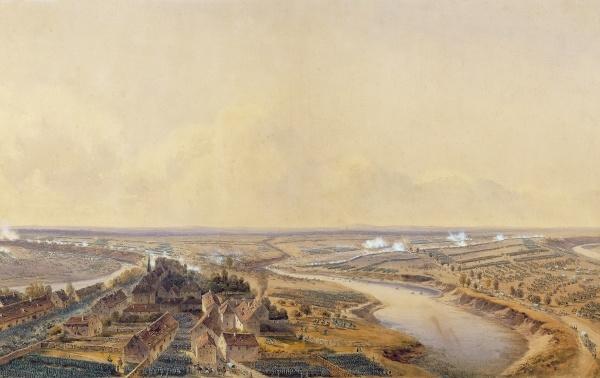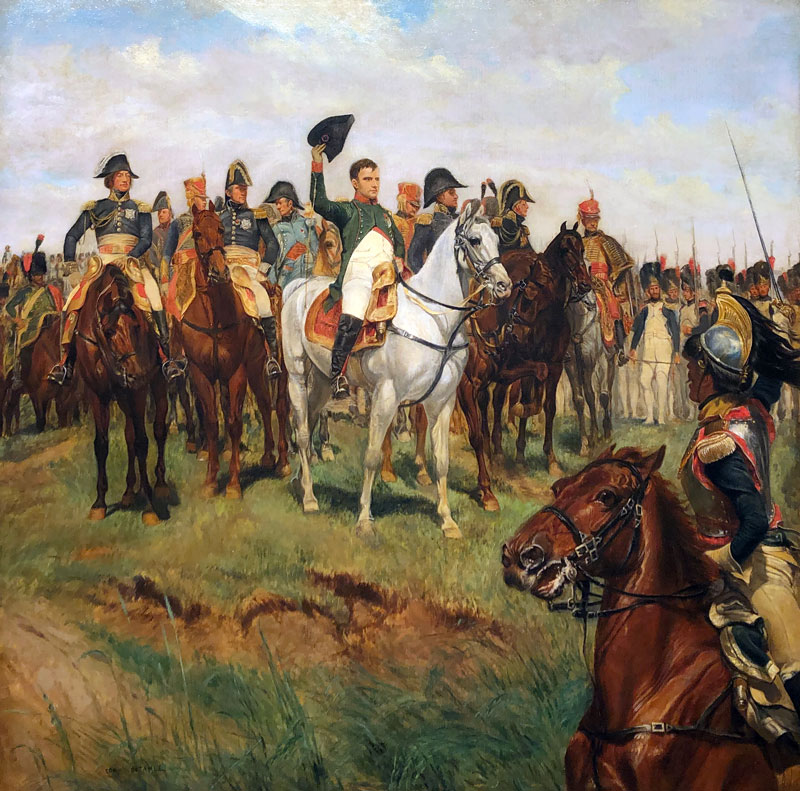
Lets have some History Thread

Gol15

Defender of the faith
Messages
14,967
Reaction score
9,376
From the glorious games such as Rome Total War to the magnificent WW2 documentaries in colour, this is the place for this epic community to enjoy and discuss things about world history and stuff like that...

I choose to start this thread with a mad lad called Napo de la Bonapetite and I shall keep updating it, so enjoy and feel free to post historical things (I have noticed some interesting pics and posts in other threads that were related to some historical aircraft and what not so this wasn't totally random I have a feeling that some people here might like to talk about some history or wars and so on).
PS. In case of a non-stop-serious trolling (if there is such a thing) of a peculiar cat that "hard parties" or whatever, it shouldn't be encouraged, you have been warned.


Napoleon the Great

We begin in the late summer of 1792, where we will follow this particular man that will change the course of European history forever (it probably began years earlier but you get the picture), the place where we start this amazing journey is by all means at this time period the cultural center of the world, (probably the main reason why they still have so many Michelin 3-Star restaurants even with all the frog eating) welcome to France!
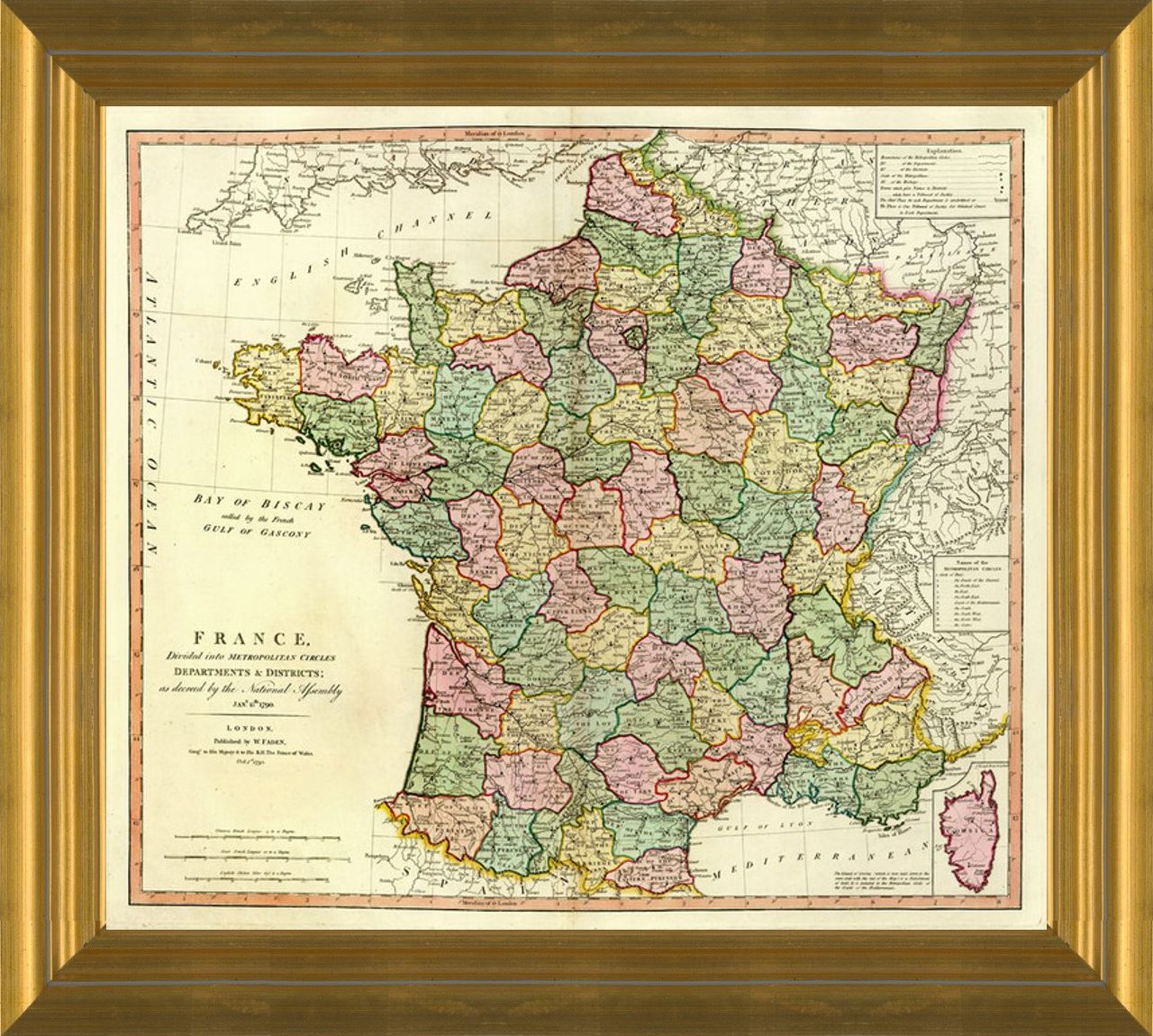
big-archival-canvas-23059-23456-fm400.jpg


10th August 1792, second lieutenant-colonel of his battalion (a natural artillerist) Napoleon Bonaparte witnesses the Assault on the Tuileries (the Royal Palace) and the overthrowing of the monarchy.

10aout1792.jpg


The famous Insurrection of the 10th August happened 5 days before Napoleon turned 23 years old, this is how he looked at the time:

Napoleon-age-22-211x300.png


On the 15th September he escorted his sister, Elisa, back to Corsica where they are originally from.
One day short from a year after, Bonaparte was
  given command of the artillery besieging Toulon against the Royalists, which became known as Napoleons first success. In the end, General Dugommier, who was the commanding officer in front of Toulon, sent to the Convention a letter in praise of citizen "Buona Parte". Toulon worked well for him as he was promoted first to Major during the siege and became Brigadier General when it was all done, he was 24 years old at the time.

1793 

Pellerin-Napoleon-Toulon.jpg


Enjoy this first video from youtube:


A painting of Napoleon entering Berlin, the top left of the picture shows the complete Brandenburg Gate, Napoleon took the horses and the Woman from the top and ordered for it to be brought to France, it was in Paris for 7 years.
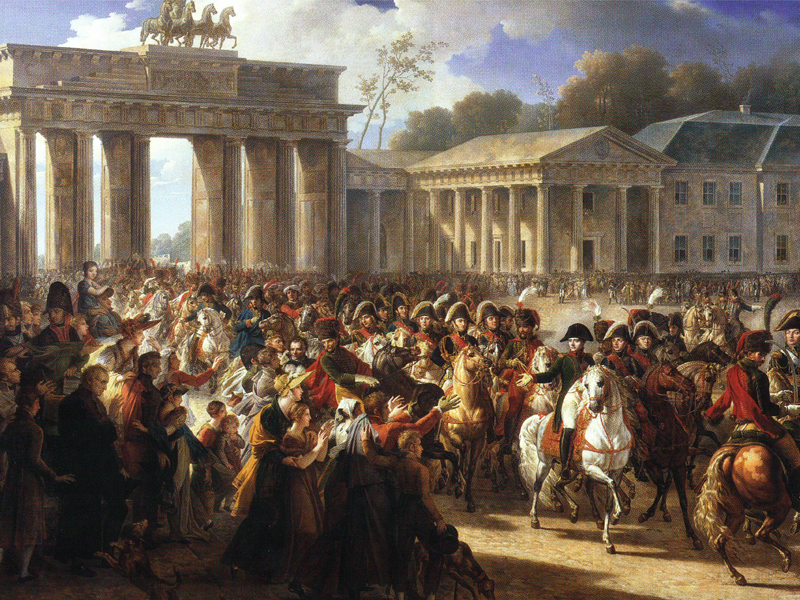
tce1000522.jpg


I will be happy to further update the years of Bonaparte if someone is interested.

 
Last edited by a moderator:
Gol15:Cheers for starting a History Thread mate. :drinks: ::clap2::

I admit I have posted quite a lot of military related picture on the Annoying Pictures Thread.

To paraphrase a certain song: "History's Coming Home !' :biggrin:

 
Last edited by a moderator:
@Gol15 Thanks for starting this thread. I think I'll be spending a lot of time in this thread. I've mentioned a couple of times before that after family and friends my two great loves and interests are history and friends.

Great introduction to the life of Napoleon.

Slightly off subject but there is a great series on BBC Radio 4 called The Long View. The programme compares current and recent events to past happenings e.g. comparing the current Covid 19 pandemic to the Black Death of the 14th century. 

I reckon that by studying history it shows us how that so often what we experience now has been experienced by our ancestors. Studying history can allow us to see how our ancestors reacted and perhaps teach us how we should now react and possible affect and change our thinking.

P.S. Forgot to add the link to the BBC Radio 4 programme.

https://www.bbc.co.uk/programmes/b006s7d6/episodes/player

 
Last edited by a moderator:
greenock_blitz_damage-640x319.jpg


This map, showing GIS data overlaid an aerial map, shows the locations of bombs dropped on the Port Glasgow, Greenock, and Gourock areas during the nights of 6-7 May 1941. Image Credit.

https://www.warhistoryonline.com/world-war-ii/forgotten-blitz-scotland-left-thousands-dead-x.html

On the 6th and 7th of May 1941 Greenock was bombed by the Luftwaffe as they targeted the many ships and shipyards around the town.

The civilians took the brunt of the attack during the blitz which began around midnight on May 6th, and 271 people were killed and more than 10,200 injured during the intense bombing. 5,000 homes were completely destroyed and a further 25,000 were damaged. Residents fled to the tunnels at the east end of the town and this managed to reduce the casualties and dead in the second night.

On the second night an Air Ministry decoy was lit which consisted of mounds of combustible materials lit over a wide part of moorland to appear as a burning urban area from the sky. The decoy was a success and dozens of bomb craters were found in an inspection once the raid had ended. In Greenock a distillery had been blazing from the first night which acted as a beacon for the bombers to bomb. The final wave came at 2am when parachute land mines were dropped and by 3.30am the entire town appeared to be alight. Damage to the shipyards was minimal but the factories, distillery and sugar refineries were damaged.

Three local firemen were awarded the George Medal after entering a burning building to control and stop a fire which would have destroyed a mass amount of materials contributing to the war effort.

During the Greenock Blitz British night fighters from nearby Ayr engaged with the bombers and this meant bombs were dropped all over south-west Scotland, however only three Nazi planes were shot down in the attack.

The Clydebank and Greenock blitzes saw 1000 tonnes of explosives dropped over Scotland, but these weren’t the only attacks, Edinburgh, Montrose and Fraserburgh were all bombed more than a dozen times each during the war.

https://www.bbc.co.uk/history/ww2peopleswar/stories/73/a5856573.shtml


The Port Glasgow Blitz of 1941


By Ruby McKeag

On the night the German bombers came over Port Glasgow we had no shelters, only closed shuttered with iron and a baffle wall built in front of the close entrance to act as protection from a raid. Naturally we residents looked for somewhere safe to go. We lived in Glen Avenue, second top flat. From our window you looked up the stairs to Birkmyre Park, the bowling green and the swing park. They dropped their bomb on the hilly bit of the park straight up from our window. If it had fallen a few yards further down there would be no Birkmyre Bowling Club left. We were told next day how lucky we were that the park was on a hill much higher than our building, therefore the blast from the bomb went over the top of the building. So not one window was broken. On going up to the park the next day and seeing the large crater the bomb had left, we knew we were very lucky. From then on as a place to feel safe in, it was avoided. I’m now 85 years old but I can still remember it.

https://www.bbc.co.uk/history/ww2peopleswar/stories/92/a2449992.shtml

This contribution is taken from the collections of the McLean Museum and Art Gallery Greenock.

By Peter Caldwell, JP

ARP was very important at that time so I became a warden and was serving at the time of the Greenock blitz when we had 3 major incidents in Port Glasgow. One was at Woodhall where a mine fell on a shelter killing about 30 people and I myself was stationed at the bowling green just above Glen Avenue. A second mine fell on the Football Park killing about 10 people in the burn beside it - I was just going to the door of the Bowling Green shelter and was lifted about 6 feet by the blast. The worst incident was in Shankland Road where a mine fell demolishing all the houses but hardly damaged two red sandstone houses opposite the blast seeming to pass around them resulting in the destruction of houses behind.

I had to go immediately to the Football Park to see to the people in the burn - the works section of the ARP arrived at the same time and were getting the people out.

By the time I got to Shankland Road the worst was over.

We knew the enemy planes would have to follow the route of the River Clyde to get at the ships at the Tail of the Bank. Anti-Aircraft batteries were stationed either side of the river which made it too hot for the planes so that they had to take a long way round. We had built decoy fires on the hillside to try and make the pilots think that that was the target to be bombed. As the route of the planes had to be across the river from side to side they could not release their bombs in time to damage the ships and many landed on the opposite bank. This was repeated and repeated and not a ship was hit. As Port Glasgow was long and thin this was the main feature that ensured we were very lightly dealt with.

The blast from the land mine at the Football Park is as much as I ever wish to experience. I felt as if my breath was stopping. I was trembling and it was a ghastly experience. The noise upset a number of people - also you could see the tracer and the shell bursts. I would not like to see it again."

"What about the children?"

"The children were wonderful - many were in the Glen Avenue closes which were shored up by props. The entrances were shielded by specially built walls. As remarked earlier we missed the worst but it must have made a great impression on some of the children.

This is a personal one for me as my Grandfather was an Air Raid warden during WW2. 

This isn't his recollections above I must point out here. Although he certainly would have known Mr Caldwell.

His beat included the 'Woodhall Incident' and he was in attendance 

He also saw a house hit just in front of where he and my Grandmother lived.

He was first on the scene and had the grim task of helping carry out a dead friend of his who had been killed by the blast.

 
Thanks for starting this thread. I think I'll be spending a lot of time in this thread. I've mentioned a couple of times before that after family and friends my two great loves and interests are history and friends.
A mistake, I should have written that after family and friends my two great loves and interests are history and books.

Here are some interesting links about the Derbyshire of Eyam which was affected by the Great Plague of 1665. That plague had mostly affected London but spread to the village of Eyam. After discussion amongst the villagers it was decided to go into a period of isolation. The mortality rate was very high. Food was delivered to the vilage by neighbouring towns in exchange for money and was left at a point a mile from the village centre.

The self isolation lasted fourteen months. 

https://www.theguardian.com/world/2020/mar/15/eyam-derbyshire-coronavirus-self-isolate-1665-plague

https://www.bbc.co.uk/news/uk-england-35064071

https://www.eyam-museum.org.uk/

An incredible self sacrifice by the villagers and something to bear in mind at this time. 

The 1665 plague didn't have the same impact as that of the 14th century. I'll post on that at another time.

 
@Gol15 I've read a fair amount on Napoleon, it seems his genius largely  disappeared after about 1809.

He had invaded Spain making errors by replacing the Royals and using Muslim troops to suppress a protest in Madrid and managed to turn the population against their forces. 

So as well as fighting the traditional Spanish and later British forces he was fighting an insurgency war and before resolving this he decided to march against Russia. 

 
@Gol15 I've read a fair amount on Napoleon, it seems his genius largely  disappeared after about 1809.

He had invaded Spain making errors by replacing the Royals and using Muslim troops to suppress a protest in Madrid and managed to turn the population against their forces. 

So as well as fighting the traditional Spanish and later British forces he was fighting an insurgency war and before resolving this he decided to march against Russia. 
I will try to find the time in the near future and expand on that, Napoleons Spainish campaign was really a blunder for him so I agree! My goal is to obviously come to the invasion of Russia sooner or later!

 
@erskblue @Boyne Thank you! Looking forward to see and post exciting content in the future! Cheers mates!
You're welcome. Am looking forward to the posts in this thread.

A bit different but still on the history theme, I've been doing some research into my family history or to be accurate my late Mum started the research a few years back and I've carried on her great work. It's amazing what we've found. Have been able to trace one branch of the family back to the 17th century. One of my ancestors ran a pub. My Mum's maternal Grand-father may have come from Ireland but it's difficult to find evidence. A trip to the public records office in Dublin may be required. 

My paternal grand-parents both had nine siblings so goodness knows how many distant cousins I have. 

 
I’ve not long started doing some research about the Airships that were built near where I stay.

Posted a few pics and some relevant info on The Annoying Pictures Thread a couple of weeks ago.

Aiming to get some more background reading when the library reopens.

 
Thought I was the class history expert when I went in with my Ladybird Books on Napoleons and Nelson!  Primary 4 I should add.


Thought I was the class history expert when I went in with my Ladybird Books on Napoleons and Nelson!  Primary 4 I should add.
 
Ah, the good old Ladybird books. I still have mine somewhere at home. The first one I had was about Captain Scott which was given to me as a Christmas present.

 
Ah, the good old Ladybird books. I still have mine somewhere at home. The first one I had was about Captain Scott which was given to me as a Christmas present.
Have found the book about Captain Scott and about ten other Ladybird books.  The book cost two shillings and sixpence (12.5 in new money).  Henry 'Birdie' Bowers who went with Scott to the South Pole in 1910-1912 lived in the town where I now live during his childhood. There is a Blue Plaque on the house where he lived.

 
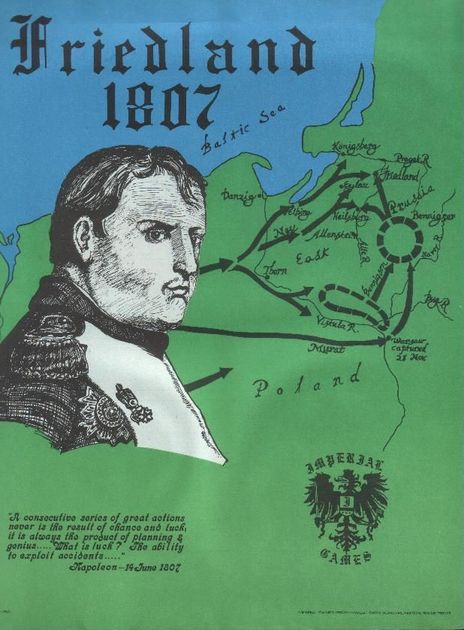
We continue with this theme then, the year is 1807 - A rare winter battle, Napoleon vs Russia!

Battle of Eylau

Battle_of_Eylau_1807_by_Jean-Antoine-Sim%C3%A9on.jpg


1280px-Antoine-Jean_Gros_-_Napoleon_on_the_Battlefield_of_Eylau_-_Google_Art_Project.jpg


eylauattackmoscowreg.jpg


Historical accounts say that this was a draw but only four months after this battle, Napoleon won a decisive victory; Battle of Friedland!

pic61684.jpg


Casualties and losses

  • Grande Armée: 1,500 killed; 4,000 injured. 
  • Russian army: 25 000 men killed, lost or injured; 10,000 prisoners. 

ce40eba78f913e9d30dec9740f62ee4c.png


166559.JPG


Edouard-Detaille-Napoleon-reviewing-troops.jpg


While Napoleon's genius was clearly shown here, an amazing personality stepped up, I present, Marshal Murat, one of the most epic cavalry men of his time he charged with his 10.000 strong cavalry and made a huge impact!

joachim_murat_1767_1815_horse_hi.jpg


57b27fa7d8579b723972768493929305.png


Enjoy another good video, Eylau and Friedland:


Last edited by a moderator:
11 hours ago, Gol15 said:

We continue with this theme then, the year is 1807 - A rare winter battle, Napoleon vs Russia!

Battle of Eylau


Historical accounts say that this was a draw but only four months after this battle, Napoleon won a decisive victory; Battle of Friedland!

pic61684.jpg


Casualties and losses

  • Grande Armée: 1,500 killed; 4,000 injured. 
  • Russian army: 25 000 men killed, lost or injured; 10,000 prisoners. 


166559.JPG


While Napoleon's genius was clearly shown here, an amazing personality stepped up, I present, Marshal Murat, one of the most epic cavalry men of his time he charged with his 10.000 strong cavalry and made a huge impact!

joachim_murat_1767_1815_horse_hi.jpg


57b27fa7d8579b723972768493929305.png


Enjoy another good video, Eylau and Friedland:


This thread will keep me away from most sports page after last nights result !

 
R34%20Trial%20crew%202,000%20over%20Renfrew%20Scotland_r.jpg
R34_Launch.jpg


The R34 at and flying over.Inchinnan in 1919.

https://www.airshipsonline.com/airships/r34/index.html

R34 made her first flight on 14 March 1919 and was delivered to her service base at East Fortune on 29 May after a 21-hour flight from Inchinnan. R34 had set out the previous evening, but thick fog made navigation difficult, and after spending the night over the North Sea the airship was unable to moor in the morning due to fog. After cruising as far south as Yorkshire R34 returned to East Fortune to dock at about 3 p.m. The airship made her first endurance trip of 56 hours over the Baltic from 17 to 20 June

 
Last edited by a moderator:
Back
Top