
You are using an out of date browser. It may not display this or other websites correctly.
You should upgrade or use an alternative browser.
You should upgrade or use an alternative browser.
Lets have some History Thread
- Thread starter Gol15
- Start date

View attachment 13000
Posted by Boyne in 'The Annoying Pictures' Thread.
Thought it worth reposting here.
Hope you don't mind mate.
Posted by Boyne in 'The Annoying Pictures' Thread.
Thought it worth reposting here.
Hope you don't mind mate.


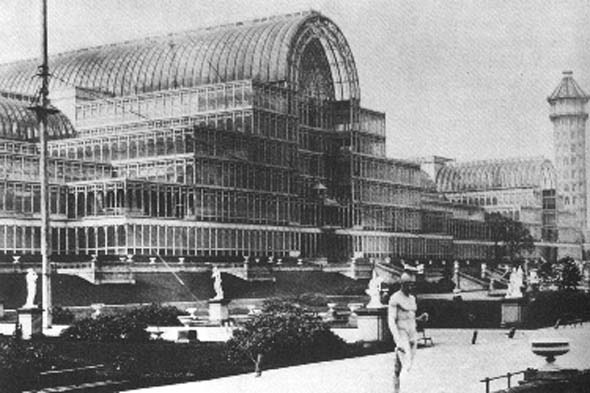
Crystal Palace at Sydenham UK, F.G.O. Stuart, 1870 - 1900 (Photo by: Sepia Times/Universal Images Group via Getty Images)
http://www.engineering-timelines.com/scripts/engineeringItem.asp?id=61
Last edited by a moderator:

Boyne
We Are The People
- Messages
- 29,895
- Reaction score
- 34,876
No problem mate, it's a great pictureView attachment 13000
Posted by Boyne in 'The Annoying Pictures' Thread.
Thought it worth reposting here.
Hope you don't mind mate.
Boyne
We Are The People
- Messages
- 29,895
- Reaction score
- 34,876
Watched it last night @Munkworth Did you watch it last night as well?https://www.channel5.com/show/the-battle-of-britain-3-days-that-saved-the-nation/
The Battle of Britain: 3 Days that Saved the Nation
Channel 5 9pm -10 pm tonight. tomorrow and Thursday
Thought you lot would be interested.
I thought it was very good with looking at the experiences of those who took part at the front line as it were rather than primarily looking at tactics and the leading figures such as Dowding, Park and Goering
Good that Galland was mentioned, a great fighter pilot
I recognised a couple of the RAF names including Deere who served at Biggin Hill which is about ten miles from where I live

Munkunku
Local Idiot
- Messages
- 23,476
- Reaction score
- 21,824
No I was watching the football and forgot to record it, I’ll watch it on demand later!Watched it last night @Munkworth Did you watch it last night as well?
I thought it was very good with looking at the experiences of those who took part at the front line as it were rather than primarily looking at tactics and the leading figures such as Dowding, Park and Goering
Good that Galland was mentioned, a great fighter pilot
I recognised a couple of the RAF names including Deere who served at Biggin Hill which is about ten miles from where I live
Driving down Purley Way in Croydon earlier, there’s signs for a Battle of Britain Memorial that I’ve never noticed (it’s been there since 1991, no idea how I didn’t know
 ) so I’ll check that out one day.
Boyne
We Are The People
- Messages
- 29,895
- Reaction score
- 34,876
Found a picture of the Memorial near Croydon, looks impressive and a great tribute to those who served in the RAFNo I was watching the football and forgot to record it, I’ll watch it on demand later!
Driving down Purley Way in Croydon earlier, there’s signs for a Battle of Britain Memorial that I’ve never noticed (it’s been there since 1991, no idea how I didn’t know

About 20 miles from where I live is the village of Shoreham and in it is a brilliant museum
http://www.shoreham-aircraft-museum.co.uk/
Simple, yet vey poignant.Found a picture of the Memorial near Croydon, looks impressive and a great tribute to those who served in the RAF
About 20 miles from where I live is the village of Shoreham and in it is a brilliant museum
http://www.shoreham-aircraft-museum.co.uk/
Lest we forget.

WW1 US Forces Baseball at the Bridge July 1918
Lots of info and historic pictures in the thread below, worth a read and thought it worth posting in here too.
https://artsandculture.google.com/exhibit/the-great-war-baseball-match/HAJiSz8x5TjhKA
Boyne
We Are The People
- Messages
- 29,895
- Reaction score
- 34,876
Great picture The ANZACs were fine troops
'WW1 Anzacs selecting footballs for the front. 1916.'
Thought this picture was worth posting in here as well the Best Football Images Thread.
Hope nobody minds.
I notice that there are different types of football I guess for "soccer", Rugby and Aussie Rules
Boyne
We Are The People
- Messages
- 29,895
- Reaction score
- 34,876
Indeed Another very interesting episode of the Battle of Britain programme on Channel 5Simple, yet vey poignant.
Lest we forget.
Great to see the legendary 303 Squadron and the wonderful work of the Polish pilots
Elspeth Henderson who served at Biggin Hill was mentioned in the episode Here's some more information about her
https://bhmm.org.uk/womens-history-month-corporal-elspeth-henderson/
Elspeth with Helen Turner and Joan Mortimer all recipients of the Military Medal


Great action photo.
Though I would say that about a Mosquito picture.


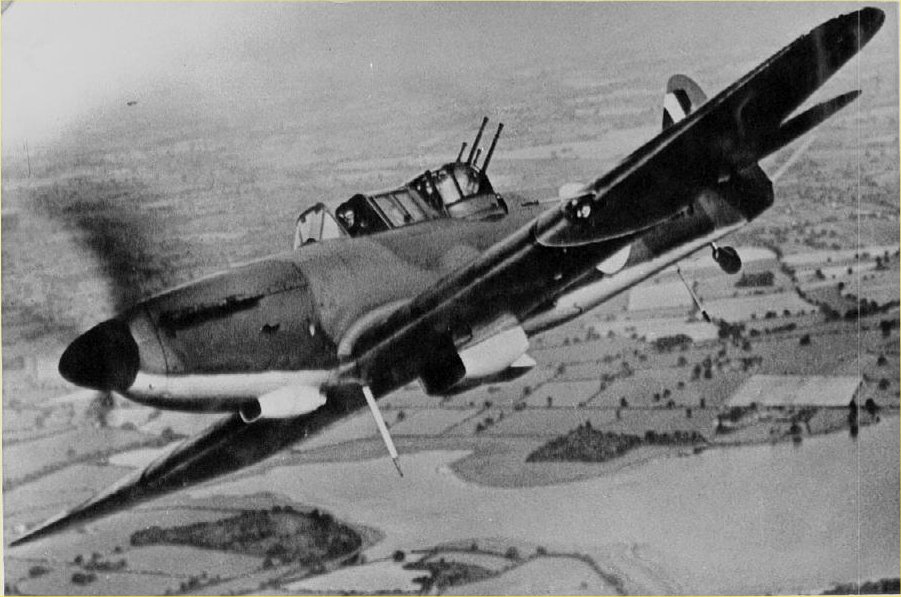

The Boulton Paul Defiant was from 'a different age' reality from the Me 262 in reality.
Outdated by it's inception and without any forward firing guns ! This fact still amazes me today !
During the Greenock Blitz of May 1941. 141 Squadron Ayr based night fighter Defiants got amongst the German bombers and caused all sorts of confusion.
It should on this occasion be remembered, that the German bombers had no fighter escort
Below is taken from historyofwar.org
The 1930s saw rapid developments in aircraft design. Most significant was the appearance of the monoplane, and especially the monoplane fighters with their greatly increased speed. This produced a great deal of uncertainty about the future of aerial combat, including a belief that these greatly increased speeds would make fighter dogfights almost impossible.
One product of this uncertainty was the Boulton Paul Defiant turret armed fighter. It was believed that fire from a powered turret would be more accurate than that provided by fixed forward firing guns. The turret would also have the advantage of a wider field of fire, and would reduce the stress on the pilot.
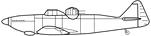
Boulton Paul Defiant I side plan
Boulton Paul was one of the first British companies to get involved in the production of powered gun turrets, having developed a nose turret for their own Sidestrand bomber (the resulting aircraft was known as the Overstrand). In 1935 they had acquired the rights to manufacture and develop a turret designed by the French engineer J. B. A. de Boysson. This was a fully enclosed turret, powered by a hydraulic system, and carrying four machine guns. After further work at Boulton Paul it would emerge as the Boulton Paul Type A turret, armed with four .303in Browning machine guns, and would be used in several aircraft including the Blackburn Roc and Handley Page Halifax.
The new turret greatly impressed the Air Ministry. Specification F.9/35 was written around the turret, and called for a day and night fighter. Boulton Paul were only one of five companies that responded to this specification. Designs from Armstrong Whitworth, Bristol and Supermarine were rejected at the first stage, leaving only Boulton Paul and Hawker in the contest. The Hawker Hotspur progressed as far as the unarmed prototype stage, but Hawker were now increasingly busy producing the Hurricane, and withdrew from the contest. This left the Boulton Paul Project 82, soon called the Defiant, as the only contender in the field.
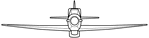
Boulton Paul Defiant I front plan
The first Defiant prototype flew on 11 August 1937, without its turret. Superficially it resembled the Hurricane, especially in the lines of the rear fuselage, with the obvious exception of the Boulton Paul Type A Mk IID turret, just behind the pilot’s cockpit. The turret placement was well designed, causing relatively little drag. However, the weight of the turret meant that the Defiant was 1,500lbs heavier than the Hurricane, despite being powered by the same Rolls Royce Merlin engine. Even so, the prototype had a top speed of 302 mph. The Defiant was one of a number of aircraft (amongst then the Fairey Battle) ordered into production before the flight of the first prototype. In the case of the Defiant, the first order, for 87 aircraft, was placed on 28 April 1937.
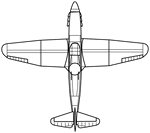
Boulton Paul Defiant I top plan
Development was slow, partly because official tests on the turret took too long. The first production aircraft did not fly until 30 July 1939. Squadron deliveries began in December 1939, when No. 264 Squadron became the first to receive the new aircraft. Comparative tests against the Hurricane and Spitfire quickly revealed that the Defiant was comparatively slow and had limited manoeuvrability.
Despite this, the Defiant had a spectacular combat debut over Dunkirk. German fighter pilots were not expecting to encounter a turret armed fighter of this size. Encountering a formation of Defiants, the German fighters would attack from above and behind, the blind spot for most fighters, and run into a hail of bullets from the turret. On one day alone (29 May) the Defiants claimed 37 victories, although this would appear to be something of an overestimate.
The Germans did not take long to realise what was happening, and after that the Defiant’s days as a day fighter were numbered. It was highly vulnerable to attacks from below or from the front. On 31 May seven Defiants were lost, and No. 264 Squadron was soon transferred to convoy patrol duty. A second Defiant squadron, No. 141, remained operational from 1 July to 21 July before being withdrawn after suffering heavy losses.
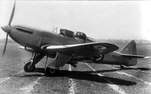
Boulton Paul Defiant
K8310
This was not the end of the Defiant's career. The RAF had very few aircraft capable of operating as night fighters. The Bristol Blenheim, while had quickly been pressed into that role, lacked the speed to catch German bombers, while the Bristol Beaufighter was only just coming into service at the end of 1940. However, there were a large number of Defiants coming off the production lines. The main problem faced by the Defiant as a night fighter over the crucial winter of 1940-1 was that the contemporary radar equipment was too bulky to fit into the aircraft, and so its first winter as a night fighter saw it achieve very little, although some confirmed kills were made.
During 1941 AI Mk IV and Mk IV appeared, both of which could fit in the Defiant. When equipped with radar, the Defiant was designated as the NF.Mk IA, and in this configuration became a relatively successful night fighter, equipping thirteen night fighter squadrons, seven retaining the type well in 1942.
The Defiant had a final lease of life with training units, both as a target tug and as a gunnery trainer, even serving with the Royal Navy. Production continued until 1943. The Defiant had been designed to fill a possible gap if the new generation of high speed forward firing fighter aircraft failed in combat. In the event the Supermarine Spitfire and Messerschmitt Bf 109 proved that the high speed, manoeuvrable fixed gun fighter was the superior design, but in 1935 such aircraft had yet to prove themselves in combat.
Specification
Mk I
Engine: Merlin II
Max Speed: 304 mph at 17,000 ft
Cruising Speed: 259mph at 15,000 ft
Ceiling: 30,350
Range: 465 miles
Span: 39 ft 4 in
Length: 35 ft 4in
Armament: Four .303in Browning machine guns in Boulton Paul Type A turret.
Mk II
Engine: Merlin XX
Horsepower: 1,280 hp
Maximum Speed: 313 mph at 19,000 ft
Cruising Speed: 260 mph at 20,000 ft
Ceiling: 30,350ft
Range: 515 miles
Span: 39 ft 4 in
Length: 35ft 8 in
Armament: Four .303in Browning machine guns in Boulton Paul Type A turret.
Production Figures
Mk I: 705
Mk II: 220
TT. Mk I: 140
Total: 1,065
Boyne
We Are The People
- Messages
- 29,895
- Reaction score
- 34,876
https://www.dailymail.co.uk/news/article-8507915/The-girl-13-helped-win-Battle-Britain.html
Heard about this on the news this morning. It's about a 13 year old girl who worked with her father on a project to convince the Air Ministry etc that Hurricanes and Spitfires should be armed with eight rather than four guns.
Heard about this on the news this morning. It's about a 13 year old girl who worked with her father on a project to convince the Air Ministry etc that Hurricanes and Spitfires should be armed with eight rather than four guns.
https://www.bbc.co.uk/news/uk-scotland-north-east-orkney-shetland-53138152
The Italian prisoners who found 'escape' in football
By Daniel Bennett BBC Scotland

Gino (second from left, standing) was the left-winger for the Camp 34 team Orkney Library & Archive
Coriolano "Gino" Caprara is the last surviving Italian prisoner of war to have been held in the Orkney Islands during World War Two. Now aged 100, he has been recalling how football came to play an important role in camp life.
"I played for the Camp 34 team against the soldiers. We always played tournaments - and we always lost!"
Gino was a prisoner on the island of Burray from 1942 until 1945.
He arrived on Orkney at the age of 25 after being captured in North Africa.
Italy surrendered to the Allied forces in 1943, but the 1,000 men being held in the two camps in Orkney could not be returned to their native country because of Nazi Germany's influence in the region.
That meant the prisoners had to stay in the camps until the end of the war.

The Camp 60 team which played in the match in August 1944
Author Donald S Murray said their presence was troubling for many Orcadians, whose relatives were themselves being held in prisoner of war camps.
"I was told stories of them being attacked in the street," he recalled.
As relationships improved between the military leaders and prominent figures among the prisoners, a degree more freedom was granted - the freedom to work, to socialise, and eventually to host leisure activities in the camps.
Local farmers received help in gathering crops, something Donald says the prisoners "loved" doing.
"There was a prisoner who worked on a farm and ended up weeping after he had a meal in their house. He started saying 'like my family, I am people again'," he said.
In April 1944 the prisoners formed what was known as an Italian Labour Battalion. They were no longer escorted by armed British guards, and were given free time in the evenings and Sundays off.
The prisoners helped to build the Churchill Barriers, a series of sea defences, as well as creating the Italian Chapel. This ornate chapel was fashioned from two Nissen Huts and a concrete façade.
Author Donald S Murray said their presence was troubling for many Orcadians, whose relatives were themselves being held in prisoner of war camps.
"I was told stories of them being attacked in the street," he recalled.
As relationships improved between the military leaders and prominent figures among the prisoners, a degree more freedom was granted - the freedom to work, to socialise, and eventually to host leisure activities in the camps.
Local farmers received help in gathering crops, something Donald says the prisoners "loved" doing.
"There was a prisoner who worked on a farm and ended up weeping after he had a meal in their house. He started saying 'like my family, I am people again'," he said.
In April 1944 the prisoners formed what was known as an Italian Labour Battalion. They were no longer escorted by armed British guards, and were given free time in the evenings and Sundays off.
Author Donald S Murray said their presence was troubling for many Orcadians, whose relatives were themselves being held in prisoner of war camps.
"The prisoners helped to build the Churchill Barriers, a series of sea defences, as well as creating the Italian Chapel.
An ornate chapel below was fashioned from two Nissen Huts and a concrete façade.

The Italian prisoners who found 'escape' in football
By Daniel Bennett BBC Scotland
Gino (second from left, standing) was the left-winger for the Camp 34 team Orkney Library & Archive
Coriolano "Gino" Caprara is the last surviving Italian prisoner of war to have been held in the Orkney Islands during World War Two. Now aged 100, he has been recalling how football came to play an important role in camp life.
"I played for the Camp 34 team against the soldiers. We always played tournaments - and we always lost!"
Gino was a prisoner on the island of Burray from 1942 until 1945.
He arrived on Orkney at the age of 25 after being captured in North Africa.
Italy surrendered to the Allied forces in 1943, but the 1,000 men being held in the two camps in Orkney could not be returned to their native country because of Nazi Germany's influence in the region.
That meant the prisoners had to stay in the camps until the end of the war.
The Camp 60 team which played in the match in August 1944
Author Donald S Murray said their presence was troubling for many Orcadians, whose relatives were themselves being held in prisoner of war camps.
"I was told stories of them being attacked in the street," he recalled.
As relationships improved between the military leaders and prominent figures among the prisoners, a degree more freedom was granted - the freedom to work, to socialise, and eventually to host leisure activities in the camps.
Local farmers received help in gathering crops, something Donald says the prisoners "loved" doing.
"There was a prisoner who worked on a farm and ended up weeping after he had a meal in their house. He started saying 'like my family, I am people again'," he said.
In April 1944 the prisoners formed what was known as an Italian Labour Battalion. They were no longer escorted by armed British guards, and were given free time in the evenings and Sundays off.
The prisoners helped to build the Churchill Barriers, a series of sea defences, as well as creating the Italian Chapel. This ornate chapel was fashioned from two Nissen Huts and a concrete façade.
Author Donald S Murray said their presence was troubling for many Orcadians, whose relatives were themselves being held in prisoner of war camps.
"I was told stories of them being attacked in the street," he recalled.
As relationships improved between the military leaders and prominent figures among the prisoners, a degree more freedom was granted - the freedom to work, to socialise, and eventually to host leisure activities in the camps.
Local farmers received help in gathering crops, something Donald says the prisoners "loved" doing.
"There was a prisoner who worked on a farm and ended up weeping after he had a meal in their house. He started saying 'like my family, I am people again'," he said.
In April 1944 the prisoners formed what was known as an Italian Labour Battalion. They were no longer escorted by armed British guards, and were given free time in the evenings and Sundays off.
Author Donald S Murray said their presence was troubling for many Orcadians, whose relatives were themselves being held in prisoner of war camps.
"The prisoners helped to build the Churchill Barriers, a series of sea defences, as well as creating the Italian Chapel.
An ornate chapel below was fashioned from two Nissen Huts and a concrete façade.
Part 2. Pressed wrong button !
As the PoWs became more ingrained in everyday Orkney life, sport became an increasingly important part of life in the camps.
In August 1944 the Italians organised a sports day at Camp 60, and a delegation was allowed to travel from Camp 34 to take part. Gino said he came first in the high jump.
There was also a football match, which the weekly POW newspaper, Notiziario Dai Campi, described as a contest "for the not-so-young".
The players were described as demonstrating "the speed of snails, internal pains, and feet in the air" which got "healthy laughter from the spectators". The match ended with a 2-0 win for the Rossi over the Verdi.
The prisoners also played against local teams.

The teams were praised for their entertainment value Orkney Library & Archive
Speaking in 1992, local man John Rosie recalled being impressed at the Italians' presence on the pitch when he played against them.
"They were very good footballers - naturally I don't remember names now, but the ones you remember best are the ones that kicked you hardest.
"The first time I saw an overhead kick was by the Italians, that's how it was introduced to Orkney.
"Good players, but a bit quick in the temper too."

Finding their range - two Italian boxers compete in the sports day Orkney Library & Archive
When asked about the football team, Gino said they had some "fantastic" players.
"One of our forwards was really clever. He was against a British soldier, who was very fast, in a match.
"So the British soldier ran past him and our striker says (in Italian) 'Oh basta'!"
The game was stopped because the soldiers thought he had sworn at them in a show of disrespect.
"But what he actually said in Italian was 'Oh, enough!" Gino laughed.
"We explained what happened, but we were shaking."

The sports day drew a crowd of PoWs and British soldiers Orkney Library & Archive
Donald S Murray believes that playing football and building the chapel were important forms of escapism for the prisoners.
"If you're imprisoned, artistry of any kind provides that means of escape from reality," he said.
"It's the right to dream expressed on the football field, pretending to be your footballing hero for five minutes."
Gino said the chapel and football had also provided emotional connections to his home while he was in the camp.
He has returned to Orkney a number of times to visit the Italian Chapel and the friends he has made in the intervening years.
And a number of Orcadians were represented at his 100th birthday celebrations earlier this year.
As the PoWs became more ingrained in everyday Orkney life, sport became an increasingly important part of life in the camps.
In August 1944 the Italians organised a sports day at Camp 60, and a delegation was allowed to travel from Camp 34 to take part. Gino said he came first in the high jump.
There was also a football match, which the weekly POW newspaper, Notiziario Dai Campi, described as a contest "for the not-so-young".
The players were described as demonstrating "the speed of snails, internal pains, and feet in the air" which got "healthy laughter from the spectators". The match ended with a 2-0 win for the Rossi over the Verdi.
The prisoners also played against local teams.
The teams were praised for their entertainment value Orkney Library & Archive
Speaking in 1992, local man John Rosie recalled being impressed at the Italians' presence on the pitch when he played against them.
"They were very good footballers - naturally I don't remember names now, but the ones you remember best are the ones that kicked you hardest.
"The first time I saw an overhead kick was by the Italians, that's how it was introduced to Orkney.
"Good players, but a bit quick in the temper too."
Finding their range - two Italian boxers compete in the sports day Orkney Library & Archive
When asked about the football team, Gino said they had some "fantastic" players.
"One of our forwards was really clever. He was against a British soldier, who was very fast, in a match.
"So the British soldier ran past him and our striker says (in Italian) 'Oh basta'!"
The game was stopped because the soldiers thought he had sworn at them in a show of disrespect.
"But what he actually said in Italian was 'Oh, enough!" Gino laughed.
"We explained what happened, but we were shaking."
The sports day drew a crowd of PoWs and British soldiers Orkney Library & Archive
Donald S Murray believes that playing football and building the chapel were important forms of escapism for the prisoners.
"If you're imprisoned, artistry of any kind provides that means of escape from reality," he said.
"It's the right to dream expressed on the football field, pretending to be your footballing hero for five minutes."
Gino said the chapel and football had also provided emotional connections to his home while he was in the camp.
He has returned to Orkney a number of times to visit the Italian Chapel and the friends he has made in the intervening years.
And a number of Orcadians were represented at his 100th birthday celebrations earlier this year.
Never noticed that, cheers for pointing it out.Great picture The ANZACs were fine troops
I notice that there are different types of football I guess for "soccer", Rugby and Aussie Rules