
You are using an out of date browser. It may not display this or other websites correctly.
You should upgrade or use an alternative browser.
You should upgrade or use an alternative browser.
Lets have some History Thread
- Thread starter Gol15
- Start date

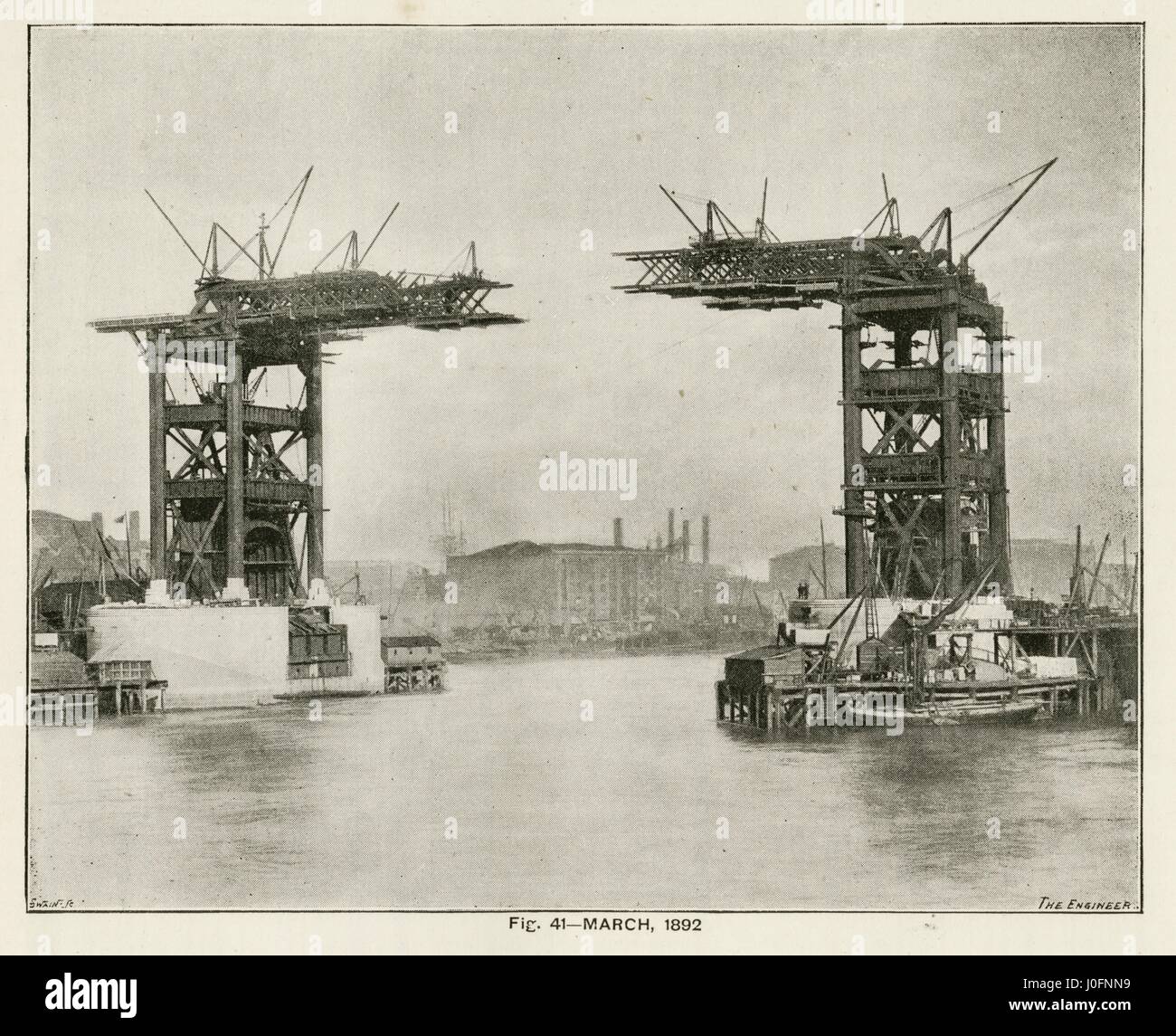

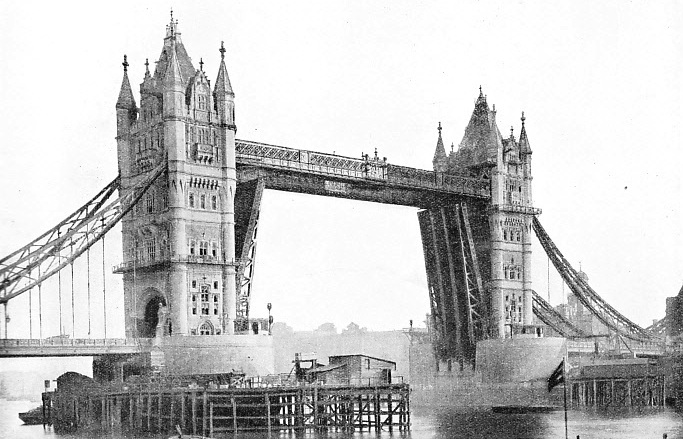

Workmen on the construction of Tower Bridge.
More here.
https://www.towerbridge.org.uk/about-us/history
Fears WW2 plane in Netherlands lake could be recovered with 'grabber'
Image caption The Short Stirling Bomber BK716 was lost when returning from a bombing raid in Germany
Plans that could see an RAF World War Two bomber lifted from a lake in the Netherlands by a crane grabber rather than using a dam have been criticised.
The Short Stirling Bomber, based at RAF Downham Market in Norfolk, was lost returning from a 1943 raid on Germany.
Plane enthusiast Rick Brooks has voiced anger Dutch authorities could use a crane he likened to an arcade "machine where you grab a teddy" to lift it.
Almere city council said it had not yet announced the recovery method.
The aircraft BK716 was found earlier this year submerged in Lake Markermeer, near Amsterdam, and it is thought the remains of the crew would still be on board.
Mr Brooks, who has been involved in previous operations to recover aircraft, said in the past when wartime aircraft were recovered from rivers or a lakes a cofferdam was used so the site could be properly excavated and the remains of the crew could be carefully retrieved with any items found near their remains.
A cofferdam allows water to be pumped out, creating a dry area for land reclamation work to proceed.

Lost bomber crew
 Image copyright Getty Images
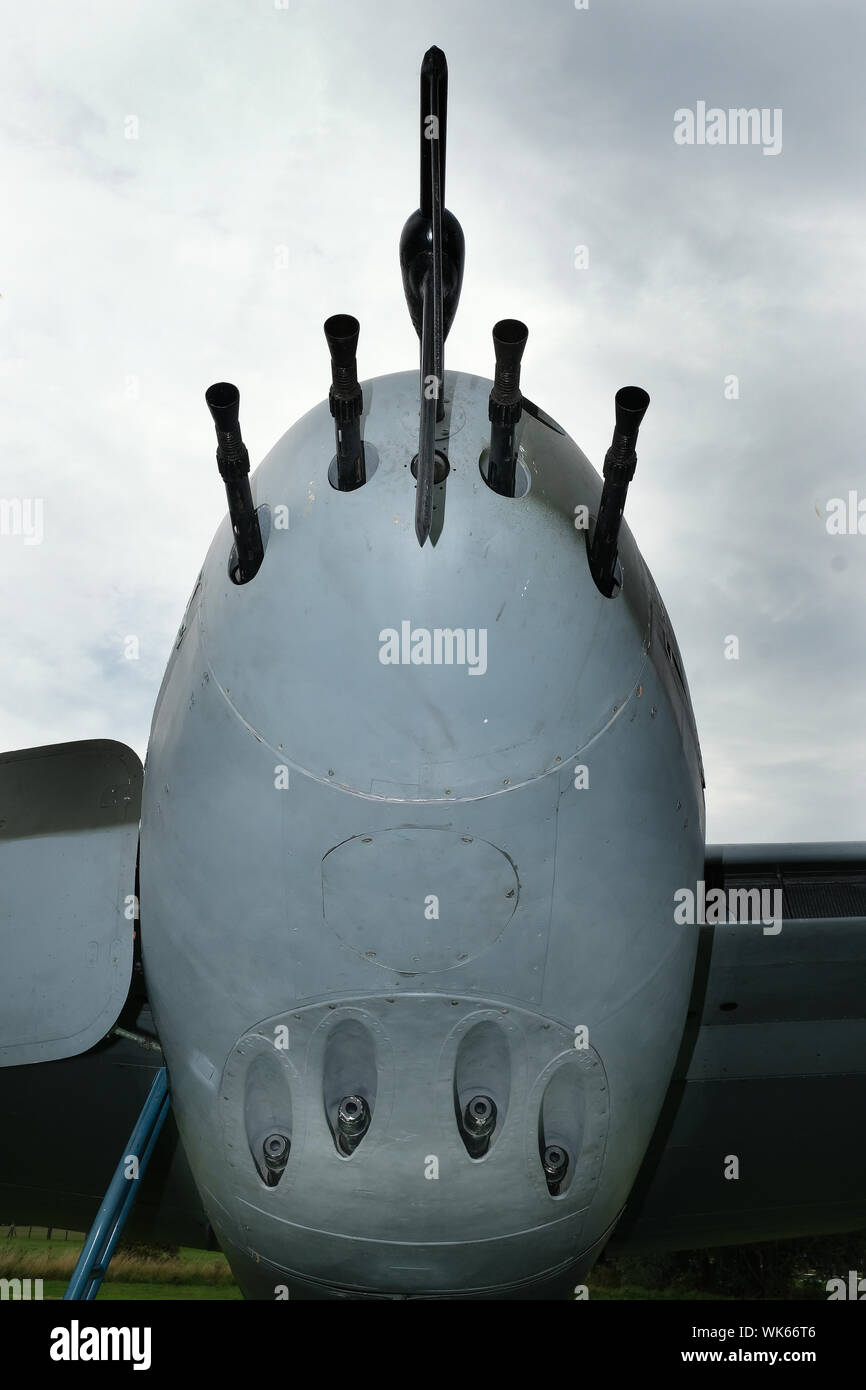
Image caption This is the type of plane flown by the crew
The crew of Short Stirling BK716 were:
But Mr Brooks, who has been in contact with teams involved in recovery operations in the Netherlands, said he believed Almere council had been looking at the cheaper method he compared to an amusement arcade machine.
Mr Brooks, who lives in Ashford, Kent, said to respect the memory of the seven man crew the bomber should be properly excavated.
He said through the use of cofferdams, teams have had "success in finding those small items that mean so much to the airmen's surviving relatives".
Mr Brooks said a grabber would be "destructive" and would leave behind body parts and "small items like a wedding ring or a watch" that he said could help identify the remains.
Almere council said it had "decided to respect the wishes of relatives to salvage the aircraft, and to honour the killed crew members".
"Care and respect are first priority, both towards relatives and in the method of recovery as decided by the (Dutch) Ministry of Defence," it said.
"We will soon announce the chosen method of recovery and the start date of the recovery process."
https://www.bbc.co.uk/news/uk-england-norfolk-53199977

Image copyright Durham Constabulary
Image caption The Short Stirling Bomber BK716 was lost when returning from a bombing raid in Germany
Plans that could see an RAF World War Two bomber lifted from a lake in the Netherlands by a crane grabber rather than using a dam have been criticised.
The Short Stirling Bomber, based at RAF Downham Market in Norfolk, was lost returning from a 1943 raid on Germany.
Plane enthusiast Rick Brooks has voiced anger Dutch authorities could use a crane he likened to an arcade "machine where you grab a teddy" to lift it.
Almere city council said it had not yet announced the recovery method.
The aircraft BK716 was found earlier this year submerged in Lake Markermeer, near Amsterdam, and it is thought the remains of the crew would still be on board.
Mr Brooks, who has been involved in previous operations to recover aircraft, said in the past when wartime aircraft were recovered from rivers or a lakes a cofferdam was used so the site could be properly excavated and the remains of the crew could be carefully retrieved with any items found near their remains.
A cofferdam allows water to be pumped out, creating a dry area for land reclamation work to proceed.
Lost bomber crew
Image caption This is the type of plane flown by the crew
The crew of Short Stirling BK716 were:
- Sgt Charles Armstrong Bell, 29, from Langley Park, County Durham
- Pilot Officer John Michael Campbell, 30, from Golders Green, north London
- Flying Officer Harry Gregory Farrington, 24, from Niagara Falls, Ontario, Canada
- Flying Officer John Frederick Harris, 29, from Swindon, Wiltshire
- Sgt Ronald Kennedy, 22, from Newcastle-upon-Tyne
- Sgt John Francis James McCaw, 20, from Belleville, Ontario, Canada
- Sgt Leonard Richard James Shrubsall, 30, from Iwade, Kent
But Mr Brooks, who has been in contact with teams involved in recovery operations in the Netherlands, said he believed Almere council had been looking at the cheaper method he compared to an amusement arcade machine.
Mr Brooks, who lives in Ashford, Kent, said to respect the memory of the seven man crew the bomber should be properly excavated.
He said through the use of cofferdams, teams have had "success in finding those small items that mean so much to the airmen's surviving relatives".
Mr Brooks said a grabber would be "destructive" and would leave behind body parts and "small items like a wedding ring or a watch" that he said could help identify the remains.
Almere council said it had "decided to respect the wishes of relatives to salvage the aircraft, and to honour the killed crew members".
"Care and respect are first priority, both towards relatives and in the method of recovery as decided by the (Dutch) Ministry of Defence," it said.
"We will soon announce the chosen method of recovery and the start date of the recovery process."


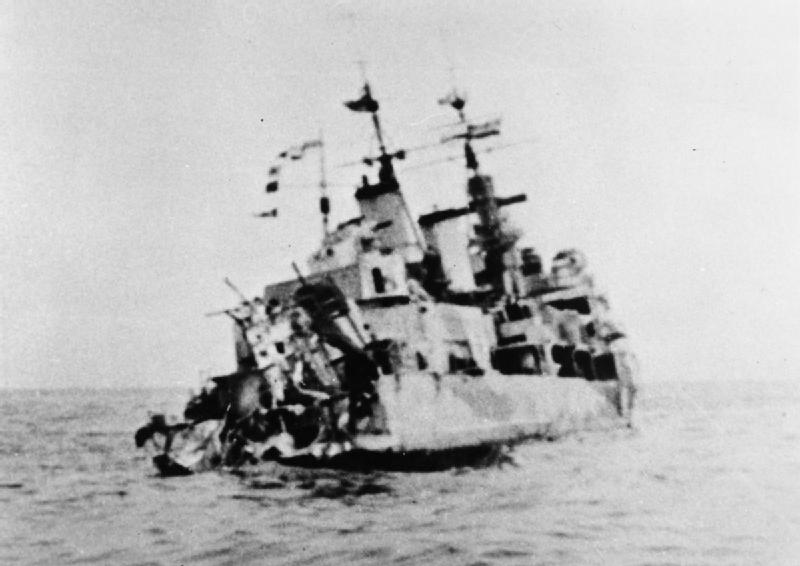
A photograph clearly showing the severe damage to the stern of HMS Edinburgh caused by a German torpedo whilst travelling with convoy QP11.
The damage was so great that HMS EDINBURGH had to be sunk by a torpedo of the British destroyer HMS FORESIGHT.
Photo by IWM.
http://www.lbma.org.uk/assets/blog/alchemist_articles/Alch74Blagg.pdf
Salvage of the Century, HMS
Edinburgh and Her Cargo of Gold
By Dr Michele Blagg, Research Associate at the Institute of Contemporary British History (ICBH)
I worked in the same Dept as someone involved with the recovery.
https://www.bbc.co.uk/history/ww2peopleswar/stories/18/a2076518.shtml
This story was written by my father David Moore for publication in Warship World 1990.
"THE LOSS OF HMS EDINBURGH"
HARRIER AND THE SWEEPERS
HMS Harrier was leader of the British minesweeping force in North Russia at the time of the Edinburgh sinking. Originally sent to the White Sea in August 1941, the 6th Minesweeping Flotilla had been tasked with keeping the approaches to Archangel clear of mines for the incoming Allied convoys. When the White Sea was closed by ice in the autumn, the 'fleet' minesweepers had been moved to a base in the Kola Inlet. Here they were assigned to reinforcing the warships escorting the convoys as they approached and departed form the ice-free port of Murmansk during the winter of '41 to '42. Harrier and the sweepers under her command were little shallow-draught ships of some 800 tons with the latest British minesweeping gear and the new 10-cm wavelength surface warning radars. They were too slow (maximum speed only 14 knots) and lightly armed (one 4- inch gun and two light Oerlikon anti-aircraft guns) to be very effective as escorts. But they had sonar and depth charges, and every little helped when the shortage of escorts was so desperate.
HMS Edinburgh, flying the flag of Rear- Admiral Stuart Bonham-Carter, was providing strong support in close proximity to convoy QP1 1 of 17 ships which left the Kola lnlet for the UK on 28 April 1942. The close escort consisted of four destroyers, four corvettes and a trawler, the strongest yet allocated to a Russian convoy. In addition the Harrier, with three of her sweepers (Hussar Gossamer and Niger) backed up the convoy screen for the first part of the voyage. The air temperature was still below freezing, and frequent snowstorms, low cloud and heavy seas provided some protection. However, at this time of the year daylight extended nearly all night and the ice pack prevented a wide detour to the north to keep the convoy further away from the German air and naval bases in northern Norway.
After little more than a day in company the minesweepers were detached to return to the Kola Inlet. But the convoy had already been found and reported by German aircraft and U- boats. On the evening of the next day (30 April) Harrier had just completed re-fuelling from a tanker in the Kola Inlet, when we received a signal informing us that Edinburgh had been torpedoed by a U-boat.
This news was as surprising as it was unwelcome, because Edinburgh, zigzagging at high speed some distance ahead of the convoy, was a far more difficult target to hit than any of the slow-moving merchant ships. It is known that U-456 had made the most of a golden opportunity presented by Edinburgh altering course towards her on a fresh leg of her zigzag, and had obtained two torpedo hits, the first amidships and the second in the stern. The latter virtually destroyed the stern abaft the after turret and most of it subsequently sank including the rudder and at least one propeller. Amazingly two propeller shafts were still working, and Edinburgh though almost unable to steer, was struggling slowly in the direction of Murmansk, some 200 miles to the south, escorted by two British destroyers (Foresight and Forester) and two Russian ones.
In the minesweepers our expectation of a warm night in harbour rapidly disappeared as we were ordered to proceed to sea again at full speed to find and assist the stricken cruiser. Our captain in the Harrier, Commander Eric Hinton, took ail this in his stride. He was a fine seaman, expert in shiphandling. Beneath his unassuming and humorous manner, there was an irreducible core of courage. The minesweepers were never intended to engage enemy surface ships, but we ail knew that our Captain would never entertain the thought of running away,, even from a German battleship. My job as Flotilla Navigating Officer was not only to navigate Harrier and the sweepers under our command, but to act generally as the Captain's staff officer in organising any operations on which our flotilla was engaged.
At 2018 on 30 April, four hours after the Edinburgh had been struck, we passed outwards from Kola Inlet and began to retrace our course along the convoys track towards Edinburgh's reported position, which we naturally assumed might in the circumstances be considerably in error. By midday on 1 May we were near this position, still searching to the northward with Gossamer and Niger spread out to the westward to obtain the maximum width of radar coverage. Hussar was following somewhere astern escorting a Russian tug to the scene. That evening we ran into the edge of the ice pack and were forced to turn back to the south. In doing so we spread our search line to the eastward and by great good luck we sighted Hussar soon after midnight (it was twilight all night) and she told us that she had just found Edinburgh. Visibility was now varying from about one to five miles because of continual snowstorms.
By this time, early on 2 May, Edinburgh was still valiantly struggling to return to port, possibly making about 3 or 4 knots in a southerly direction. The two Russian destroyers, short of fuel, had left, but a little Russian gunboat, named Rubin, had round her. Foresight and Forester were circling round to provide anti-submarine protection. Soon the Russian tug was attempting to tow the Edinburgh but unfortunately she was not powerful enough to make any headway. As an alternative, Gossamer was then secured by a wire rope to the stern of the cruiser to try to keep her on a steady course, white the Edinburgh pushed away with her two remaining propellers, thereby continuing to make slow progress. Meanwhile the two destroyers, the minesweepers and the Rubin circled round to keep U-boats at bay.
I was half asleep in the charthouse when I heard a shout form Lieutenant Holgate, who was our Officer-of-the-Watch, to come up to the Bridge immediately. Going up the ladder I was thinking 'My god, this is it'- expecting to see the German battleship Tirpitz, which was stationed in Northern Norway and might well have been sent to finish off the damaged British cruiser. In fact it was a German Z-class destroyer, and her initial salvoes were straddling Hussar, who, like Harrier, was between Edinburgh and the German attackers. The time was 0627.
Admiral Bonham-Carter had signalled the Senior Officer 6th Minesweeping Flotilla previously that, in the event of meeting enemy surface forces, the sweepers were to retire under a smoke screen. Either we never received this signal or Cdr Hinton kept it to himself and chose to ignore it. At any rate, he immediately turned Harrier straight towards the German destroyer, increased to our full speed of 14 knots and opened fire with our single 4 in gun, We obtained one range of the destroyer of four miles, but our radar then went out of action with the vibration of the gunfire. Soon three German destroyers came in sight intermittently, dodging in and out of the snowstorms, and making smoke that increased the haze. Edinburgh opened fire with the three 6 in guns in her "B" turret, which was practically the only one of her four turrets still able to fire. Foresight and Forester came dashing over from the other side of the flagship and began to engage the Germans, who kept their distance at four or five miles and refrained from approaching any closer.
Seeing gun-flashes coming from five separate directions, the Germans probably imagined that they were confronting a superior force. Each of these heavy destroyers was armed (we subsequently discovered) with five 5.9 in guns in addition to torpedoes, so had they pressed in they might easily have sunk every ship in our force. However, Harrier and the other .'fleet' minesweepers looked not unlike destroyers when seen end-on, so probably the Captain's action in heading straight for the enemy had saved our lives.
Minutes later a 4-gun salvo of shells fell 500 yards from us, another straddled our forecastle and then another fell at the correct range just astern, but fortunately we were not hit. Hussar was also engaging the enemy. The action continued, with the Germans disappearing from view from time to time, until 0652 when we sighted ahead a torpedo, apparently running on or near the surface in the direction of Edinburgh. The latter had cast off Gossamer and was moving ahead, although constrained in a series of circles. Unfortunately one of these circles carried Edinburgh right into the path-of another torpedo from this salvo which was running deep and struck her amidships exactly opposite the previous hit from U-456. It was now estimated that only the upperdeck plating and a somewhat shaky keel were holding the two ends of the ship together, and clearly she was in danger of breaking in two at any moment. Had the ship's company taken to the water in this event, few would have kept alive long enough to be rescued, the longest survival time in this water temperature being (as we knew from previous sinkings) only about 10 to 20 minutes at most.
The Admiral therefore immediately ordered Gossamer alongside his starboard side, and Harrier, his port side, and both the minesweepers began to embark the sick and wounded men, some of whom, injured in previous convoys, were taking passage home in the Edinburgh. Following this the entire ship's company was transferred, some 440 men to Gossamer and about 400 to Harrier. Fortunately the heavy sea had subsided and it was almost flat calm while this was going on. Meanwhile, Edinburgh was listing further and further until she reached an angle of 17 degrees. Despite the list, the cruiser's "S" turret continued to fire on local control with Captain Faulkner shouting down the bearings of the German destroyers, whenever they were in sight, from the bridge to the lieutenant in charge of the turret just below him. Such was our concentration on the battle and the job in hand that it never occurred to us that the Edinburgh might capsize on top of us. It was about this time that the Rubin, having misunderstood a signal, attempted to come alongside Harrier', and in doing so caused some slight damage - of this more later. Eventually the 6 in turret was so far depressed that the guns could no longer be brought to bear, and the whole transfer having been completed in an orderly fashion, the Admiral and his staff came on board Harrier. We lay off, expecting the cruiser to founder almost at once.
Harrier had now become the Admiral's flagship, and it was necessary to hoist the appropriate flag designating a Rear-Admiral. The nearest we had was a white flag with a red cross, but two red balls needed to be added to complete it correctly. I instructed my Yeoman to improvise these with the red ink from the charthouse, and the flag was duly hoisted.
Admiral Bonham-Carter was a jovial character, but with exceptionally sound tactical judgement and shrewd common-sense. He was imperturbable in this misfortune, but was now faced with the embarrassing fact that -the Edinburgh, despite the colossal damage caused by the three torpedoes, obstinately refused to sink. Harrier was ordered to encourage the process and fired twenty 4 in shells into the ship at point-blank range, but these had little effect. We then steamed close alongside firing depth charges set to explode at the shallowest possible depth. One of these actually rolled down the side of the ship and went off immediately underneath her, but still without result. Bonham-Carter began to think of going back on board with a skeleton crew when the Foresight re-appeared form the murk, having finally driven off the Germans. She was asked: 'Have you any torpedoes left?' - to which she replied: 'One'. It so happened that this torpedo had misfired when Foresight had fired her entire outfit at the enemy.
The Admiral now ordered the destroyer to sink the Edinburgh with her remaining torpedo, and we watched her position herself at point- blank range (1500 yards) abeam of the cruiser and saw the torpedo dive into the sea. There followed the longest two minutes that I can remember, towards the end of which the Admiral was saying: 'She's missed': but just at this moment the torpedo struck and exploded, and we witnessed the sad end of this fine cruiser as she rolled over and sank.
We made our way back to Murmansk, and as we got further from the scene of action without any more interference from the enemy, our spirits rose. The sun actually appeared through the clouds, and I was able to make observations with the sextant. Cdr Honnywill, the admiral's Staff Navigating Officer, worked out the sights for me, and I still have his calculations written on the back of the Admiralty signal informing convoy QP1 1 that it was being shadowed by a U-boat. These sun sights enabled us to fix the position of Harrier fairly accurately during the afternoon of 2 May, and we made a good landfall and safely entered the Kola Inlet at 2040 on that day, some 12 hours after the Edinburgh had sunk. Our 'chicks' - the Niger, Hussar and Gossamer - were with us. Foresight and Forester also got back unmolested, but they had both sustained damage and casualties. Between them and Edinburgh there was a total of 74 killed and 43 wounded in this action, but all the minesweepers had escaped unscathed. It transpired later that one of the German destroyers had been scuttled after sustaining heavy damage, and that the other two had retired at high speed after rescuing the crew.
On the way back Cdr Hinton had pointed out with some pride to the Admiral how we had correctly improvised his flag with the red balls and hoisted it, to which Stuart Bonham- Carter's reply was: 'Two balls! That's more that I expected to have this afternoon !'
A few days after our return to harbour, the Captain of Harrier received a letter, written in English, from the Captain of the Rubin, which I reproduce here, and which perhaps forms a fitting tail-piece to this story:
"From Commander of Divisions, U S S R Gunboat Rubin 4th Day of May 1942
Dear Sir,
Soviets seamen was witness of heroic battle English seamen with predominants powers of enemy. English seamen did observe their sacred duty before Fatherland. We are proud of staunchness and courage English seamens - our allies.
I am very sorry what injured your ship by approach to board for what I must to beg pardon.
Commander of Division."
As published in Warship World Vol 3 No8 Autumn 1990
© Copyright of content contributed to this Archive rests with the author. Find out how you can use this.
Last edited by a moderator:
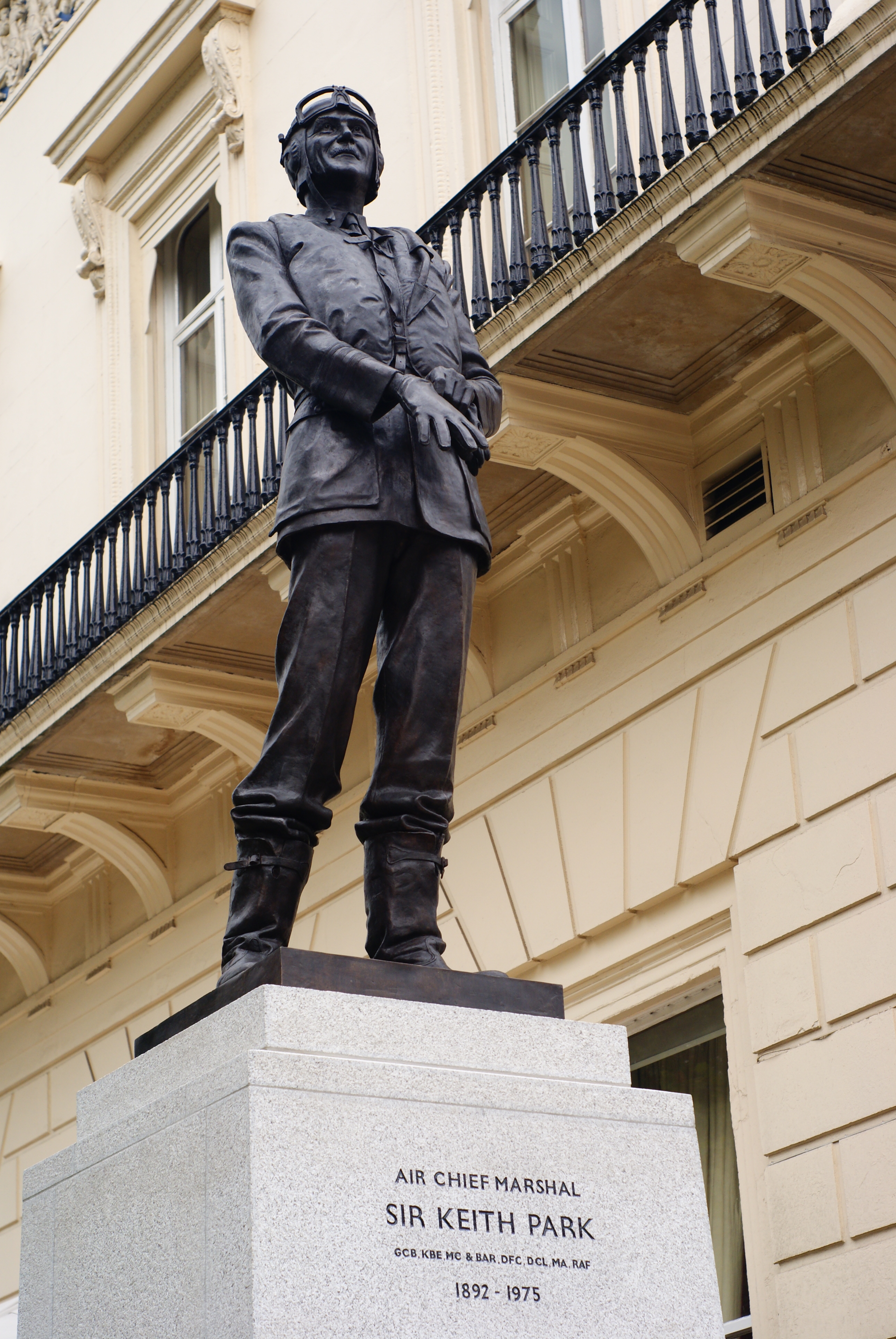
Sir Keith Park was very highly rated by pilots and ground crew alike. He knew what made the system work and tried his best to ensure it did.
New Zealander Sir Keith Park. Park was head of 11 Group of RAF Fighter Command during the Battle of Britain. A shame that he and Hugh Dowding, Head of Fighter Command were stitched-up by Leigh-Mallory and Bader.
Sir Winston Churchill should have prevented the stitch up by Leigh Mallory and Bader.
Park went out to Malta and ran the air defence of the beleaguered island brilliantly.He was,again tactically brilliant.
Just watched the first two episodes. Amazing stories.Indeed Another very interesting episode of the Battle of Britain programme on Channel 5
Great to see the legendary 303 Squadron and the wonderful work of the Polish pilots
Elspeth Henderson who served at Biggin Hill was mentioned in the episode Here's some more information about her
https://bhmm.org.uk/womens-history-month-corporal-elspeth-henderson/
Elspeth with Helen Turner and Joan Mortimer all recipients of the Military Medal




Boyne
We Are The People
- Messages
- 29,921
- Reaction score
- 34,903
Some interesting articles and comments about the Battle of Britain. There is an article about the Royal Navy's role in the Battle of Britain. The article points out that even if the RAF had been beaten it was unlikely that a German invasion force would have been overwhelmed by the Royal Navy.
https://www.historyextra.com/period/second-world-war/battle-of-britain-ww2-facts-what-happened-who-won-spitfire-raf-luftwaffe/?utm_source=Adestra&utm_medium=Email&utm_content=HEXT&utm_campaign=Newsletter 12%2F07%2F20_371000_BBC History_Newsletters
https://www.historyextra.com/period/second-world-war/battle-of-britain-ww2-facts-what-happened-who-won-spitfire-raf-luftwaffe/?utm_source=Adestra&utm_medium=Email&utm_content=HEXT&utm_campaign=Newsletter 12%2F07%2F20_371000_BBC History_Newsletters

Munkunku
Local Idiot
- Messages
- 23,478
- Reaction score
- 21,827
Could have dedicated more than one or two sentences to 303 Squadron. Should have got them in the air much sooner!
One of the many things that annoys me with the ‘go back to your own country’ morons these days is that if it wasn’t for other nationalities fighting on our soil we might not have our own country as we know it. Ignorant w**kers.
One of the many things that annoys me with the ‘go back to your own country’ morons these days is that if it wasn’t for other nationalities fighting on our soil we might not have our own country as we know it. Ignorant w**kers.
Boyne
We Are The People
- Messages
- 29,921
- Reaction score
- 34,903
Good point about 303 Squadron and people from other nations fighting on our soil and elsewhere. Some of that was down to the Empire but also because of the number of military personnel who fled from Nazi occupied nations.Could have dedicated more than one or two sentences to 303 Squadron. Should have got them in the air much sooner!
One of the many things that annoys me with the ‘go back to your own country’ morons these days is that if it wasn’t for other nationalities fighting on our soil we might not have our own country as we know it. Ignorant w**kers.
You only have to look at the number of Poles and Czechs who fought in the Battle of Britain and also the number of Canadians, New Zealanders and Australians who served in Fighter and Bomber Commands.
There is also the 14th Army commanded by Bill Slim. The number of different nationalities who served in that was incredible. Included Gurkhas and Sikhs.
There is an argument that the Poles made one of the greatest contributions to WW2 when three Polish mathematicians presented British and French military intelligence information about the Enigma machine. There is a monument to the Polish Code-breakers at Bletchley Park.
The role of the Spaniard Juan Pujol Garcia in the D-Day landings was immense.
Sorry, I'll stop there as I could go on for ever.
Munkunku
Local Idiot
- Messages
- 23,478
- Reaction score
- 21,827
If only these things were highlighted a lot more in history lessons in schools, rather than just mentioned in passing while we’re taught how the good old British graft and determination achieved this that and the other. We might have a few less bigoted idiots running around!There is an argument that the Poles made one of the greatest contributions to WW2 when three Polish mathematicians presented British and French military intelligence information about the Enigma machine. There is a monument to the Polish Code-breakers at Bletchley Park.
The role of the Spaniard Juan Pujol Garcia in the D-Day landings was immense.
Sorry, I'll stop there as I could go on for ever.
I was also going to talk about the decision to sink the French fleet being a necessary evil to stop the Nazi’s strength of their not so great Naval Fleet and what a horrible decision that was to make.
As you’ve said, we could go on forever!

Boyne
We Are The People
- Messages
- 29,921
- Reaction score
- 34,903
The way that history is taught in schools and elsewhere is interesting. I wonder if the politics of the teachers and writers influence the way lessons are given. I'm a bit of touch with the history curriculum in schools as it's over 40 years since I left school so it's probably changed a lot since then. When I studied O-level history at school it was about the period 1066 to 1485. I was fortunate that I had a great history teacher who encouraged debate and questions.If only these things were highlighted a lot more in history lessons in schools, rather than just mentioned in passing while we’re taught how the good old British graft and determination achieved this that and the other. We might have a few less bigoted idiots running around!
I was also going to talk about the decision to sink the French fleet being a necessary evil to stop the Nazi’s strength of their not so great Naval Fleet and what a horrible decision that was to make.
As you’ve said, we could go on forever!
There have been some monumental decisions in history: some have been good and some bad. How different would our history be if different decisions had been made. There is a temptation to look at history and query why people did what they did and it's easy to mock what they did (that's not a criticism of anyone) but the trick is to try and get in to the minds of our ancestors.
One of my pet hates is the use of the term the Dark Ages as it suggests that there were no developments or improvements in the period from the fall of the Roman Empire to the Renaissance which started in the late 15th century. Such a description overlooks the scientific advances made by the likes of Roger Bacon. I think that the term renaissance was created in the Victorian era. I suspect that one of the reasons for that was due to people looking back at the invention of the printing press and the start of European exploration of the New World and the Far East.
Sorry, I'm doing it again.
Boyne
We Are The People
- Messages
- 29,921
- Reaction score
- 34,903
It's a repeat but there is a good series on the BBC about the Rise of the Nazis in the 1930s. Another example of what may have been.
https://www.bbc.co.uk/iplayer/episode/m00084tb/rise-of-the-nazis-series-1-1-politics
Another repeat on BBC is British History's Biggest Fibs. The latest episode was about the Glorious Revolution in 1688 and the arrival of William of Orange.
https://www.bbc.co.uk/iplayer/episodes/b08bs0hn/british-historys-biggest-fibs-with-lucy-worsley
The arrival of William of Orange was one of many invasions of this country since 1066. Baffles me when it's stated that 1066 was the last year this country was invaded.
Time to stop again.
https://www.bbc.co.uk/iplayer/episode/m00084tb/rise-of-the-nazis-series-1-1-politics
Another repeat on BBC is British History's Biggest Fibs. The latest episode was about the Glorious Revolution in 1688 and the arrival of William of Orange.
https://www.bbc.co.uk/iplayer/episodes/b08bs0hn/british-historys-biggest-fibs-with-lucy-worsley
The arrival of William of Orange was one of many invasions of this country since 1066. Baffles me when it's stated that 1066 was the last year this country was invaded.
Time to stop again.
