The book I am reading

As mentioned before I don't read as much fiction as I used to but am about a quarter of the way through Crooked Cross by Sally Carson. Heard about in when listening to the Today Programme on BBC Radio 4 a few months ago. Written in 1934 and a fictional account of a German family at the time of the rise of the Nazi party in 1933. The book was adapted as a play and performed in a Birmingham theatre.

Persephone Books
sally_carson_skiing_1200x1200.jpg
Crooked CrossAt its heart a love story, CROOKED CROSS is also an extraordinarily prescient account of the rise of the Nazi regime in Germany seen through the eyes of the fictional Kluger family.
PREFACE BY LAURA FREEMAN
380pp
ISBN 9781910263426

First published in 1934, Crooked Cross describes, through the eyes of one ordinary family, the Nazis’ growth in power between December 1932 and June 1933. It is extraordinarily prescient, anticipating all the horrors they were about to inflict on the world, and in this respect it joins a small group of novels, PB no. 39 Manja and PB no. 136 The Oppermanns among them, which were written to try to alert the world to what was happening.

The main focus of the novel is on disaffected German youth: it shows with great subtlety that by the early 1930s there was huge unemployment, and a corresponding feeling of futility, and that what the Nazis did so skilfully was to provide a sense of purpose. Crooked Cross is the best account we've read of why some young men who feel disaffected, lost or ignored turn towards authoritarian governments.

"‘Do you want another war, Helmy?’ asked Frau Kluger quietly, keeping her eyes on the bread she was cutting.

‘I don’t know,’ he answered miserably. ‘I don’t know what I want. I want something – we all want something – we all want to be somebody, want to have something – make something.’

‘You mean you all want to break something,’ broke in Lexa sharply. ‘And when you’ve broken everything you can touch – what d’you think you’ll do then?’"

The heroine of the novel, Lexa, watches her brothers being seduced by National Socialism, as she observes her Catholic fiancé losing his job because he has a Jewish name and, by the summer of ’33, is deprived of basic human rights like sitting on a park bench. But despite the grimness of all this, the novel remains intensely readable as it implicitly asks the question: how could the country of Beethoven and Goethe, Freud and the Bauhaus, be descending into barbarism? Why would the rest of the world not intervene before it was too late? 

When Crooked Cross was published in 1934 the Daily Mirror thought it ‘gripping and moving’, the Observer called it ‘a very good novel’, the Times Literary Supplement congratulated Sally Carson on ‘the delicacy of the love story which she has placed in this grim setting’ and the Coventry Herald thought it ‘a book everyone should read – and remember’. A year later it was turned into a West End play and then she wrote two sequels, The Prisoner (1936) and A Traveller Came By (1938). But with the outbreak of war, and Sally Carson’s death in 1941, her work was forgotten – until now. 

Endpapers

The endpapers for Crooked Cross are taken from a curtain material – machine cord embroidery on a linen background – that's just the sort of thing Frau Kluger might have had hanging in her kitchen. It was manufactured in Germany in 1930 and sold at the Hohenzollern-Kunstgewerbehaus Friedmann & Weber GmbH in Berlin (which was forced to close in 1936) © Kunstsammlungen Chemnitz/May Voigt. 

Picture Caption

'Members of the Hitler Youth' march through Berlin, 1933 © Mary Evans / Sueddeutsche Zeitung.

 
The podcast The Rest is History is my favourite history pod, and now one of the co-presenters has teamed up with one of the producers in an excellent book podcast, imaginatively called The Book Club. Even when you haven't read the book they're discussing (cough), it's highly enjoyable. Highly recommended!

 
image.png

One of my first books.From the early 1970s. Great illustrated pictures.

I still have it in very good condition in my bookcase!

I won’t ruin the ending about how he got on at Bannockburn. 23-24th June 1314…😀

 
image.png

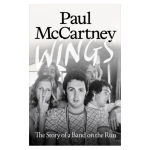
Next up. Published in 2025.

This is the story, in their own words, of a band that came to define a generation. Wings: The Story of a Band on the Run tells the madcap history of Paul McCartney and his newly formed band, from their humble beginnings in the early 1970s to their dissolution barely a decade later.

Drawn from over 500,000 words of interviews with McCartney, family and band members, and other key participants, with a cast of characters including John Lennon, Ringo Starr, George Harrison, Chrissie Hynde, Mick Jagger and more, Wingsrecounts the musical odyssey taken by a man searching for his identity in the aftermath of The Beatles’ breakup. Soon joined by his wife – American photographer Linda McCartney – on keyboard and vocals, drummer Denny Seiwell and guitarist Denny Laine, McCartney sowed the seeds for a new band that would provide the soundtrack to the decade.

Organised chronologically around
McCartney, RAM and nine Wings albums, the narrative begins when a twenty-seven-year-old superstar, rumoured to be dead, fled with his new wife to a remote sheep farm in Scotland amid a sea of legal and personal rows. Being there gave McCartney time to create and was where this new band emerged. Wings then follows the group as they play unannounced shows at university halls, tour in a sheared-off double-decker bus with their children, survive a robbery on the streets of Nigeria, and eventually perform blockbuster stadium shows on their world tour, all while producing some of the most enduring music of the time.

With extraordinary recollections collected by Oscar-winning director Morgan Neville and edited into a genre-defining oral history by Ted Widmer,
Wings transports the reader to the grit and glamour of the 1970s. Introduced with a heartfelt foreword by McCartney, Wings: The Story of a Band on the Run contains 150 black-and-white and colour photographs, many previously unseen, as well as timelines, a gigography and a full discography, in an art form all its own

 
As mentioned before I don't read as much fiction as I used to but am about a quarter of the way through Crooked Cross by Sally Carson. Heard about in when listening to the Today Programme on BBC Radio 4 a few months ago. Written in 1934 and a fictional account of a German family at the time of the rise of the Nazi party in 1933. The book was adapted as a play and performed in a Birmingham theatre.

Persephone Books
sally_carson_skiing_1200x1200.jpg
Crooked CrossAt its heart a love story, CROOKED CROSS is also an extraordinarily prescient account of the rise of the Nazi regime in Germany seen through the eyes of the fictional Kluger family.
PREFACE BY LAURA FREEMAN
380pp
ISBN 9781910263426

First published in 1934, Crooked Cross describes, through the eyes of one ordinary family, the Nazis’ growth in power between December 1932 and June 1933. It is extraordinarily prescient, anticipating all the horrors they were about to inflict on the world, and in this respect it joins a small group of novels, PB no. 39 Manja and PB no. 136 The Oppermanns among them, which were written to try to alert the world to what was happening.

The main focus of the novel is on disaffected German youth: it shows with great subtlety that by the early 1930s there was huge unemployment, and a corresponding feeling of futility, and that what the Nazis did so skilfully was to provide a sense of purpose. Crooked Cross is the best account we've read of why some young men who feel disaffected, lost or ignored turn towards authoritarian governments.

"‘Do you want another war, Helmy?’ asked Frau Kluger quietly, keeping her eyes on the bread she was cutting.

‘I don’t know,’ he answered miserably. ‘I don’t know what I want. I want something – we all want something – we all want to be somebody, want to have something – make something.’

‘You mean you all want to break something,’ broke in Lexa sharply. ‘And when you’ve broken everything you can touch – what d’you think you’ll do then?’"

The heroine of the novel, Lexa, watches her brothers being seduced by National Socialism, as she observes her Catholic fiancé losing his job because he has a Jewish name and, by the summer of ’33, is deprived of basic human rights like sitting on a park bench. But despite the grimness of all this, the novel remains intensely readable as it implicitly asks the question: how could the country of Beethoven and Goethe, Freud and the Bauhaus, be descending into barbarism? Why would the rest of the world not intervene before it was too late? 

When Crooked Cross was published in 1934 the Daily Mirror thought it ‘gripping and moving’, the Observer called it ‘a very good novel’, the Times Literary Supplement congratulated Sally Carson on ‘the delicacy of the love story which she has placed in this grim setting’ and the Coventry Herald thought it ‘a book everyone should read – and remember’. A year later it was turned into a West End play and then she wrote two sequels, The Prisoner (1936) and A Traveller Came By (1938). But with the outbreak of war, and Sally Carson’s death in 1941, her work was forgotten – until now. 

Endpapers

The endpapers for Crooked Cross are taken from a curtain material – machine cord embroidery on a linen background – that's just the sort of thing Frau Kluger might have had hanging in her kitchen. It was manufactured in Germany in 1930 and sold at the Hohenzollern-Kunstgewerbehaus Friedmann & Weber GmbH in Berlin (which was forced to close in 1936) © Kunstsammlungen Chemnitz/May Voigt. 

Picture Caption

'Members of the Hitler Youth' march through Berlin, 1933 © Mary Evans / Sueddeutsche Zeitung.
An excellent book and one of the best fictionalised accounts of an event in history which I have read. The author brilliantly captures what was happening in Germany in 1933 with the rise of the Nazis and the attacks on Jews, Communists etc. The story centres around one family i.e. parents and their two sons and one daughter and their different responses to the Nazism. The daughter is an relationship with a German who no isn't Jewish has a Jewish sounding surname and sadly that was enough for some to ostracise such people. Her brothers are members of the Nazi party and one of them is a very ardent supporter of the fascist movement.

In the 1920s and 1930s there was a great fear of Communism following the Russian Revolution in 1917 and that it would spread across Europe and beyond. However as the years went by there was a realisation that Fascism was an equal if not greater threat.

Two subsequent books about the era were written by the author Sally Carson. I'll have to try and track them down. I will lend the Crooked Cross to one of my colleagues at the Biggin Hill Memorial Museum. As part of her studies at University she studied the rise of the Nazi party and the impact on Germany. Will be interesting to hear her views on the book.

 
Next book to read is:

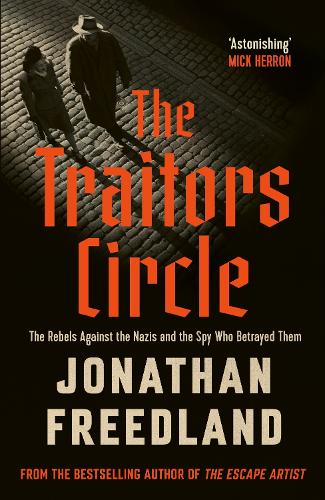
9781399813679.jpg


A thrilling true story of courage, resistance and ultimately betrayal in the Third Reich, captured by internationally bestselling author and prize-winning journalist Jonathan Freedland.

The Traitors Circle tells the true, but scarcely known, story of a group of secret rebels against Hitler. Drawn from Berlin high society, they include army officers, government officials, two countesses, an ambassador's widow and a former model - meeting in the shadows, whether hiding and rescuing Jews or plotting for a Germany freed from Nazi rule. One day in September 1943 they gather for a tea party - unaware that one among them is about to betray them all to the Gestapo. But who is the betrayer of a circle themselves branded 'traitors' by the cruellest regime in history?

In another page-turning work of nonfiction that reads like a thriller, Jonathan Freedland, acclaimed author of The Escape Artist, sheds light on one of the most dramatic episodes of the second world war, telling a story of courage, resistance and ultimate betrayal that has deep moral resonance for our own time, and asks what kind of person it takes to risk everything and stand up to tyranny.

 
The Paul McCartney ‘Wings’ book was a really good read!

Next up is ‘Dresden. The Fire and the Darkness.

image.png

Paperback Edition from Sept 20.

In February 1945 the Allies obliterated Dresden, the 'Florence of the Elbe'. Explosive bombs weighing over 1,000 lbs fell every seven and a half seconds and an estimated 25,000 people were killed.

Was Dresden a legitimate military target or was the bombing a last act of atavistic mass murder in a war already won?

From the history of the city to the attack itself, conveyed in a minute-by-minute account from the first of the flares to the flames reaching almost a mile high - the wind so searingly hot that the lungs of those in its path were instantly scorched - through the eerie period of reconstruction, bestselling author Sinclair McKay creates a vast canvas and brings it alive with touching human detail.

Along the way we encounter, among many others across the city, a Jewish woman who thought the English bombs had been sent from heaven, novelist Kurt Vonnegut who wrote that the smouldering landscape was like walking on the surface of the moon, and 15-year-old Winfried Bielss, who, having spent the evening ushering refugees, wanted to get home to his stamp collection. He was not to know that there was not enough time.

Impeccably researched and deeply moving, McKay uses never-before-seen sources to relate the untold stories of civilians and vividly conveys the texture of contemporary life.

Dresden is invoked as a byword for the illimitable cruelties of war, but with the distance of time, it is now possible to approach this subject with a much clearer gaze, and with a keener interest in the sorts of lives that ordinary people lived and lost, or tried to rebuild.

Writing with warmth and colour about morality in war, the instinct for survival, the gravity of mass destruction and the manipulation of memory, this is a master historian at work

 
image.png

From 2014.

Known to posterity as Scottorum Malleus - the Hammer of the Scots - Edward I was one of medieval England's most formidable rulers.

In this meticulously researched new history, David Santiuste offers a fresh interpretation of Edward's military career, with a particular focus on his Scottish wars.

This is in part a study of personality: Edward was a remarkable man. His struggles with tenacious opponents - including Robert the Bruce and William Wallace - have become the stuff of legend. 

There is a clear and perceptive account of important military events, notably the Battle of Falkirk,

However, the narrative also encompasses the wider impact of Edward's campaigns. He attempted to mobilize resources - including men, money and supplies - on an unprecedented scale.

His wars affected people at all levels of society, throughout the British Isles. David Santiuste builds up a vivid and convincing description of Edward's campaigns in Scotland, whilst also exploring the political background.

Edward emerges as a man of great conviction, who sought to bend Scotland to his will, yet also, on occasion, as a surprisingly beleaguered figure.

He is presented here as the central character in a turbulent world, as commander and king.

 
This one does. Convicted of snow dropping.

View attachment 39697
That might be on the heavy side for me @dermott

Gosh, Enid Blyton, that' a blast from the past. I read some books of hers in my childhood. Something about kid detectives. Or twin girls in boarding school, not sure. Perhaps she wrote about both.

 
That might be on the heavy side for me @dermott

Gosh, Enid Blyton, that' a blast from the past. I read some books of hers in my childhood. Something about kid detectives. Or twin girls in boarding school, not sure. Perhaps she wrote about both.
You might have missed this one.

blyton.jpg

 
image.png

I Chose The Sky.

First published back in 1977. Republished in 2015.

The memoirs of veteran flyer 'Tich' Rochford, who writes about his action-packed two years serving with No.3 (Naval) Squadron in Sopwith Pups and Camels.

Out of print for over 30 years, this is a very welcome reprint (nicely re-typeset and produced to very high standards) of a classic first-hand account told in vivid detail throughout.

In these exciting memoirs, Tich Rochford writes about his two action-filled years as a World War I fighter pilot with the famous No. 3 (Naval) Squadron when he flew planes such as the Sopwith Pup and the Sopwith Camel.

While flying many hundreds of hours in operations he was credited with many single-handed victories or driven out of control, and he vividly recalls these engagements in the air and the exploits of the pilots with whom he flew, names that include other fighter aces like Raymond Collishaw, who has written a foreword to this book, T. F. Havell, R. H. Mulock and L. S. Breadner.

A member of his flight, Lt. Col. Kirkpatrick said of him, I always had the impression that what he did came naturally to him. If he saw an enemy aircraft and decided to attack, that was that. He went screaming down on it and we all had our work cut out to keep up with him. One could be pretty sure of the victim going down in flames.

 
Last edited by a moderator:
I’m halfway through the Bobiverse but foolishly started with the Special Editions without realising from Waterstones, so no am slowly waiting for them to catch up to the releases!

Started Dungeon Crawler Carl in the meantime and it’s another high energy fast paced easy read.

Highly recommend both series if anyone likes their SciFi genre.

 
image.png

Next up. My ‘local RAF Squadron. The City of Glasgow.’

From 1985. 1st Edition.

Foreword by Air Vice-Marshal Sandy Johnstone CB DFC AE DI RAF (Retd)

During the Battle of Britain 602 Squadron's success was outstanding. It was the longest serving squadron on the front line, had the second highest total of 'kills' and the lowest pilot loss rate. Throughout the rest of the war, they became the first to use the Spitfire as a dive-bomber striking V1 and V2 sites and the first aerial interception of a V2. They also put Rommel out of the war by strafing his staff car. 

 
Next book to read is:

9781399813679.jpg


A thrilling true story of courage, resistance and ultimately betrayal in the Third Reich, captured by internationally bestselling author and prize-winning journalist Jonathan Freedland.

The Traitors Circle tells the true, but scarcely known, story of a group of secret rebels against Hitler. Drawn from Berlin high society, they include army officers, government officials, two countesses, an ambassador's widow and a former model - meeting in the shadows, whether hiding and rescuing Jews or plotting for a Germany freed from Nazi rule. One day in September 1943 they gather for a tea party - unaware that one among them is about to betray them all to the Gestapo. But who is the betrayer of a circle themselves branded 'traitors' by the cruellest regime in history?

In another page-turning work of nonfiction that reads like a thriller, Jonathan Freedland, acclaimed author of The Escape Artist, sheds light on one of the most dramatic episodes of the second world war, telling a story of courage, resistance and ultimate betrayal that has deep moral resonance for our own time, and asks what kind of person it takes to risk everything and stand up to tyranny.
A brilliant book. Showed that not all Germans were supporters of Nazism and hoped for better times during and post Third Reich. Many suffered for their beliefs and some were imprisoned, tortured and executed for their beliefs and were described as traitors for wanting an alternative to Nazism and believed that Germany could and should do better.

The "dissidents" came from all walks of life and included diplomats, teachers and members of the Prussian nobility. Some of them objected to the Nazis' attack on Christianity and the Fascists putting Hitler above Christ.

Some of the so called Traitors ended up at concentration camps e.g. Ravensbruck. Many years ago I read If This Is A Woman by Sarah Helm. That book told about the experiences and sufferings of women at that camp. There are only two books I've read - and I've read thousands - which have made me feel ill and that was one of them.

 
Back
Top